


Sometimes it’s so much more enlightening to speak to a retired CEO than a current one. Existing CEOs obviously have enormous responsibilities, many of which entail not unnecessarily infuriating one or other constituency; staff or unions, or shareholders … or government. It’s just endless.
But once they are retired, all those responsibilities slide away somewhat, and what’s left is a whole bucketload of experience and history and knowledge. In few instances has this been more visible than with Gerrie Fourie, who has been joyfully and gloriously forthcoming about his experience as CEO of Capitec.
Fourie’s experience, like that of the bank, has been extraordinary. He joined practically at the founding of Capitec when it was just a collection of hundreds of microlenders, which founder Michiel le Roux was planning to use as a launchpad for a bank. When he took over from Riaan Stassen in 2014 the bank was well on its way, but it’s obvious Fourie turbocharged its success. The client base skyrocketed from 5-million in 2013 to more than 25-million when he retired in 2025.
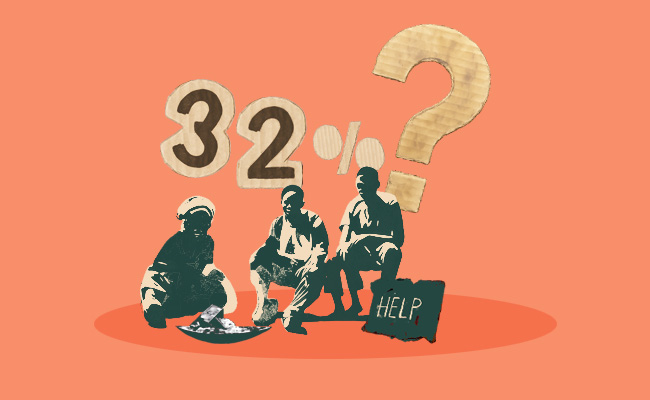
Since retirement, Fourie has been brutally honest and outspoken about a variety of different topics, and the one that got him into hot water was his claim that South Africa’s unemployment rate was probably not 32%, but somewhere between 10% and 15%. Once the claim was made, the national economics priesthood reached for the incense.
It’s part of South Africa’s ritual flagellation that the claim is so often made that we have “the highest unemployment rate in the world”, along with its close companion, that “South Africa is the most unequal country in the world”. Why would government in particular cling to this claim, you might ask? Doesn’t it reflect badly on those in government?
The answer is obvious: it’s part of the ANC’s founding lore that South Africans are essentially victims, waiting and aching in their suffering for their political saviours to rescue them from their dire predicament, which in the ANC’s mind is … well, them.
I don’t mean to minimise victimhood or poverty, which is everywhere. But ideologically, in the ANC mind, the high unemployment rate constitutes not just proof of victimhood but is also justification for a small mountain of interventionist actions that are notionally to the benefit of the “poorest of the poor”.
So, tautologically, South Africa’s dire economic stats, which would normally drive a government out of office, are held up as an odd kind of clarion call. And South Africa’s statistical and economic fellow travellers go along with this line, sometimes when it is not fictional but also sometimes when it is.
‘Research by looking’
Recently, in a discussion on a webinar held by investment house Efficient Group, Fourie repeated his claim despite the critique. “Our unemployment rate is definitely not 32%,” he told economist Dawie Roodt and portfolio manager Christiaan van Wyk. “Nobody will convince me that it’s 32%.”
But this time he went further, explaining more exactly how he not only knew this, but also why South Africa’s carefully conducted employment surveys might be wrong. And the reason is, and this is the thumper, that large numbers of people are defrauding the state by claiming government grants even though they probably don’t qualify.
“Now your problem is if you ask a person who gets a social grant, are you employed or unemployed? The moment he says employed, he loses his social grant. And there’s no way he’s going to answer employed.
“The interesting thing is we’ve gone through all our stats in Capitec on all our people who are getting social grants, because we can see it and their income levels,” he said. “And sometimes their actual deposits are five times their government grant.”
Fourie’s conviction that South Africa’s unemployment is lower than official stats also comes from another source. He said when he visited Mexico, he was struck by the unemployment rate of 3%-4%. “I said, ‘It can’t be.’” Then he started walking around. “I walk the streets. I don’t like meetings and things. I wanna see what’s happening.”
What he saw was that Mexico treats informality not as an embarrassment to be filed under “other”, but as a working economy. He said the country’s economy is roughly 50% formal and 47% informal. Informal traders have lock-up garages, storage, support systems and some recognition from the state. They are not necessarily “unemployed” simply because they do not have a payslip.
This, Fourie argued, is the bit South Africa keeps missing.
“If you go into the informal market, and I spend a lot of time there, if you as a South African entrepreneur haven’t got products that go into the informal market, you’re dead,” he said. “It’s massive.”
He adds: “Even the ladies who sell vetkoek, they make R1,000 a day. That’s R30,000 a month.”
Obviously, revenue is not profit, and township economics is not a spreadsheet with a clean border. But Fourie’s point is that a great deal of South African economic life is happening in places where official language becomes strangely stiff.
Recently I wrote a kind of ideological biography of Leon Louw, founder of the Free Market Foundation and now head of the Freedom Foundation. One of the many great points Louw made, and has made so often, is that there is a kind of research that is fabulously underestimated. It’s called “research by looking”.
Stats SA should try it some time.
This story was first published by the Financial Mail. Currency and the Financial Mail are part of the Financial Mail Group.
ALSO READ:
- Fourie vs Stats SA: a final word
- Is unemployment really just 10%? Not likely …
- Why Fourie may be right on South African unemployment
Top image collage: Rawpixel; Currency.
Sign up to Currency’s weekly newsletters to receive your own bulletin of weekday news and weekend treats. Register here.









The StatSA survey questionnaire covers temporary informal work (asking people what they did in the last week).
Work does not disqualify you from a social grant. In fact, a married couple can earn up to R523,200 and still qualify for the child support grant. It is only the Social Relief of Distress grant (introduced in lockdown) that puts the means test at less than R624 per month, which is the closest to “requiring” unemployment.
Cape Town is the only city that allows informal trading everywhere without a permit – except areas where there is a trading plan and designated trading bays, in which case a permit is required.