

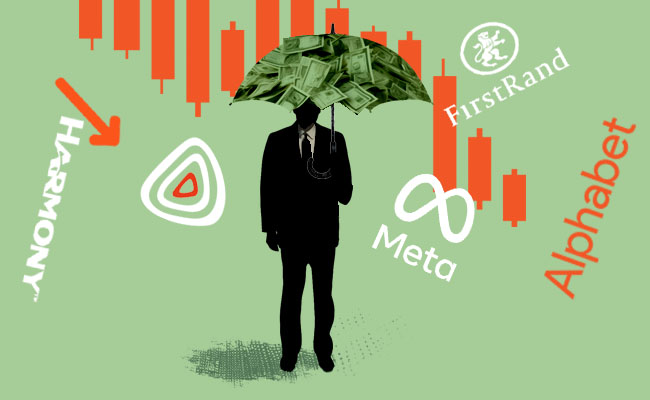

I have found holding cash to be one of the hardest disciplines in investing. Not in theory, where its virtues are clear enough, but in practice – especially when markets are rising, and the opportunity cost feels immediate and visible.
Watching others earn strong returns while a portion of my portfolio sits on the sidelines feels less like prudence and more like hesitation. It is uncomfortable to hold cash when everything else seems to be working.
This discomfort, I have come to realise, is precisely the point. Because when conditions turn, the feeling reverses with surprising speed. What once looked like caution begins to look like foresight.
Recent market moves have again exposed that shift.
Oil prices have turned volatile, platinum group metals have sold off sharply, the rand and bonds have weakened, shares have grown unsettled, and the risk of imported inflation has edged higher. None of this is unprecedented. Yet it is enough to trigger a familiar realisation: many investors are less comfortable with their portfolios than they thought – and, more often than not, it is because they hold too little cash.
The curious thing is that none of cash’s advantages is obscure. They are widely understood, frequently discussed and almost embarrassingly obvious. Cash preserves capital when risk assets fall. It provides liquidity when expenses arise at inconvenient times. It offers optionality – the ability to buy when others are forced to sell. And yet, in rising markets, these virtues are treated less as essentials than as inconveniences.
Peace of mind
Cash is the first asset investors are tempted to minimise, if not eliminate altogether. Discipline gives way to impatience; prudence begins to feel like underperformance.
It is only when volatility returns that first principles are rediscovered. Cash – properly understood as high-quality, liquid instruments such as money-market funds, Treasury bills and short-term government paper – is not a placeholder. It is a deliberate allocation, one that earns its keep precisely when other assets do not. Its practical functions are clear enough. But its most important role is rarely stated plainly: cash provides peace of mind. Investors tend to notice its absence long before they acknowledge its presence.
Those who entered the 2008 global financial crisis or the Covid market crash fully invested were often forced into decisions they would rather not have made. Assets were sold at depressed prices, not because it was rational, but because it was necessary. A cash buffer does not eliminate risk, but it changes its nature. It replaces compulsion with choice. That distinction is not merely financial – it is psychological.
Investors with sufficient liquidity are better able to tolerate uncertainty without reacting to it. They can endure market falls without translating them into permanent losses. They can think, rather than simply respond.
As financial author Morgan Housel argues in The Psychology of Money, the value of money is not only in what it can earn, but in what it allows you to do – most importantly, to remain patient and avoid being forced into bad decisions. Cash, in this sense, is not idle. It is what allows investors to stay invested.
Making portfolios survivable
How much is enough remains a matter of judgment. Retirees may require one to two years of spending in cash equivalents. Those still accumulating wealth might hold somewhere between 5% and 15%, adjusting upwards as risks mount.
In South Africa’s current environment, that judgment is sharpened by context: money-market funds are yielding about 7% – and with the South African Reserve Bank now widely expected to hold or hike rates in response to oil-driven inflation, the opportunity cost of holding cash is lower than it has been for some time.
The role of cash is not to compete with equities in good times. It is to make portfolios survivable in bad ones.
Investors often speak as though being fully invested is a virtue. In reality, it is a choice – one that leaves little room for error. Cash, by contrast, introduces flexibility. It allows for patience, for opportunism and for restraint. These qualities rarely attract attention at market highs. Those who resist the urge to deploy every rand may not look clever in the moment. They are, however, less likely to look foolish later.
Nico Marais is a founder member and the chair of Carmel Wealth (Pty) Ltd.
ALSO READ:
- The portfolio you can stick with is the only one that counts
- Start investing before you’re ready
- Smart trade for the Gulf meltdown: Don’t look
Top image: Rawpixel/Currency collage.
Sign up to Currency’s weekly newsletters to receive your own bulletin of weekday news and weekend treats. Register here.







I like this article. I was tempted to invest more cash into my portfolio when things were going great a couple of months ago, even advised by my financial advisor to do so, but something said to me “don’t, keep a reasonable amount of cash”. So I did, and very glad I did so. As you say, it gives one peace of mind and avoids making rash decisions to sell in a panic. I’ll patiently wait till the market turns up again, which it will sooner or later.
My father, who grew up in the big depression, gave me two pieces of financial advice. 90% of your money in cash and no debt. Worked well for me for 50 years. Other investments require two correct decisions – when to buy and when to sell. Get any one a little wrong and the results can be dire.