
Last year, a cool R3.6bn of pensioners’ money was wiped out by the Public Investment Corporation (PIC). To any other investment firm, that would be a stunning loss, but for a company managing R3.6-trillion in assets, and specifically R2-trillion of state workers’ pension funds, well, it barely registered.
It is one of many in the PIC’s history. Despite its gargantuan size and importance to millions of South Africans, it seems to consistently enter deals that end up failing miserably.
The problem is so serious that there have been multiple inquiries into the PIC, including the Mpati commission of inquiry, whose findings were released in 2020, and an investigation commissioned in 2025 by finance minister Enoch Godongwana into the PIC’s famously dodgy unlisted portfolio.
This unlisted portfolio, known as the Isibaya Fund, is managed by the PIC on behalf of the Government Employees Pension Fund and is valued at about R162bn. Despite being only 4.5% of the entire asset pool managed by the PIC, it seems to be creating the biggest headaches for the corporation.
The PIC is constantly being criticised for its lack of transparency regarding the Isibaya Fund.
“As parliament, we have managed to extract some detail on the unlisted portfolio by summoning the PIC to the standing committee on public accounts [Scopa] and the standing committee on finance, and through written questions,” explains DA MP Andrew Bateman. “However, some of the PIC’s answers have been evasive or incomplete, and the public should not have to rely on parliament to make special requests for this information.”
The buck doesn’t stop at the Isibaya Fund. In 2025, the PIC had to admit to Scopa that more than 40% of its unlisted investments for two state funds (the Unemployment Insurance Fund, or UIF, and Compensation Fund) need rescuing and have been sent to the PIC’s business turnaround unit – the last stop before official business rescue.
Fowl investment
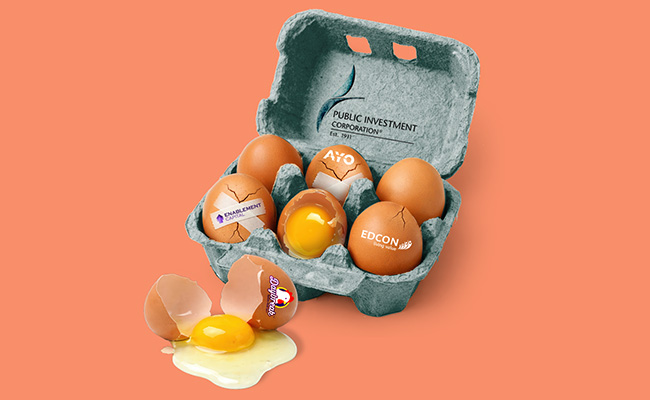
One of the PIC’s more controversial investments now in business rescue is Daybreak Foods, which was plagued by mismanagement, alleged corruption and terrible instances of animal cruelty, some so bad that chickens had resorted to cannibalism as a result of starvation.
The PIC sank more than R1.7bn in the poultry company before placing it in business rescue in 2025. Now, the PIC is seeking an equity partner to acquire more than 60% of the company’s shares, which it wholly owns.
The PIC tells Currency that four bidders were shortlisted at the start of 2026 by the business rescue practitioner, following a call for public expressions of interest in Daybreak Foods. “Submissions are currently being evaluated,” the corporation says.
Khaya Sithole, a chartered accountant and academic believes it’s “unlikely to be a comfortable deal for the PIC”. He says whoever makes a deal with it will understand that “the PIC is probably desperate”.
One investment analyst who asked not to be named is even more cynical: “The PIC will have to pay someone to take it from them. I don’t think anyone is going to pay for it.”
All that glitters …
So how did the PIC get into this position, and why does it seem to be a recurring one? There is a wide variety of reasons.
First, the PIC is constantly being caught out for not doing enough due diligence on its investments, leading it to invest in a bunch of duds – just look at the cases of Enable Capital or Ayo Technology Solutions.
In 2024, the PIC was allegedly defrauded of R100m of the R200m it had committed to Enable Capital before realising it was apparently dodgy.
Only when it discovered that Enable Capital had been placed under business rescue just two months after disbursing the funds did the PIC lay criminal charges against the company and some of its directors – but not before it was harshly criticised by Scopa for handing over the money so easily.
The PIC invested R4.3bn in Ayo Technology Solutions in December 2017, subscribing to shares in Ayo at R43 per share as part of a prelisting private placement ahead of its JSE debut.
Almost immediately, concerns emerged about the process. The Mpati commission later found that the PIC had waived its normal due diligence procedures to rush the deal through, with internal approvals either incomplete or granted after the fact.
The PIC also contended that it had been misled by Ayo itself, including by overstating a planned transaction with British Telecom South Africa that had already been called off.
Financially, the consequences were severe. Within a year, the PIC had lost more than R2.3bn of its investment. In the end, only some R619m was returned.
The PIC seems to happily advance money to businesses, “but they don’t have the operational expertise to see the red flags. That is really the gamble that the PIC keeps taking with these unlisted investments,” says Sithole.
Most of these companies presented clear signs of mismanagement, but the PIC has consistently shown a lack of due diligence. “It has a lot to do with cowboys getting involved who want to take money off you,” says Asief Mohamed, chief investment officer and founder at Aeon Investment Management. “And there’s a big pot of money at the PIC.”
Not your ordinary investor
The PIC also struggles with its “juggling act” of balancing both economic and non-economic mandates, says Sithole.
“If any other investment house was looking at an investment, there’s only one question to be asked: what are the economic returns? What tends to be the issue with the PIC is this idea that it can juggle a mandate between economic and social objectives.”
According to the PIC’s Scopa presentation, its mandated sectors of investment are economic, environmental, social, energy and SMEs. This is the Isibaya Fund’s job, which is specifically mandated to promote transformation.
The PIC’s investment in Daybreak Foods was largely based on its socio-developmental returns; in 2015, the PIC invested about R1.1bn to fund a BEE consortium’s acquisition of Daybreak Foods (which it later had to take over due to widespread mismanagement). It was positioned as a flagship empowerment deal in agriculture.
Instead, a massively successful company plummeted to a market value of zero, and 2,200 jobs were cut. “If a business fails, it doesn’t matter that you were pursuing employment, because no-one will be employed by a business that doesn’t exist,” Sithole says.
Mohamed agrees with this sentiment. He questions whether the PIC should be additionally responsible for creating social or environmental returns, or whether “all of that should be done by a developmental agency where its mandate is [to do] that”.
Going down with the ship
The PIC also tends to “throw good money after bad”, says the DA’s Bateman. It seems hesitant to cut its losses and withdraw from investments, often meaning it is stuck in failed projects for years.
“Their business model has a rehabilitation mindset,” agrees Sithole. Indeed, according to the PIC’s 2025 Scopa presentation, the corporation is invested in 17 businesses with a market value of zero.
Of course, there’s the example of Daybreak, which the PIC injected millions into even as the business was failing, but there’s also Educor, a private education provider in Southern Africa that owns brands such as Damelin, CityVarsity and Intec College. The PIC invested R355m in Educor on behalf of the UIF back in 2015, acquiring a 42% stake in its property arm.
Following the collapse of Educor’s core operations due to governance and compliance problems, it was unable to occupy or pay for its campus properties, destroying the PIC’s investment. More than 10 years later, Educor has not repaid any of the R355m invested and is also valued at zero. The property arm of Educor was placed in liquidation in October 2025 after the PIC’s turnaround unit failed to work any magic on it.
Then there’s S&S Refinery, the Mozambican palm oil refinery in which the PIC invested R492m, also in 2015. This was also a developmental-driven investment that collapsed due to economic shocks in Mozambique as well as allegations of patronage, weak governance and low returns – the PIC itself described it as a “laggard” investment in 2017. Nonetheless, the PIC remains tied up in the deal several years after the market value fell to zero. The company went into business rescue in May 2025.
And of course, all of these were unlisted investments. While the PIC is meant to grow the pensions of millions of South Africans, the Isibaya Fund’s return on investment is between 3% and 7% lower than the JSE’s. “And you need to expect to be 5% above JSE returns”, says one analyst. “They [the PIC] must suffer from loss aversion bias.”
And with the current rate of inflation in South Africa, this could easily mean that the support funds and pensions for millions of South Africans might shrink instead of grow – the total inverse of what the PIC is meant to do.
ALSO READ:
- Daybreak: A stain on South African business
- Returns, and redemption, for the GEPF
- What South Africa’s largest fund is buying now
Top image: Rawpixel/Currency collage.
Sign up to Currency’s weekly newsletters to receive your own bulletin of weekday news and weekend treats. Register here.