

Another long weekend, another round of “What to watch?”. This time, skip the fluff and dip into a Netflix doccie or two. From cults and political figures to gardens, there’s something for every taste.
Pour a glass of wine, open a packet of Chuckles (no need to panic-buy), cosy up and press play. On the watchlist: The Trials of Winnie Mandela, Trust Me: The False Prophet and This Is a Gardening Show.
Trust Me: The False Prophet
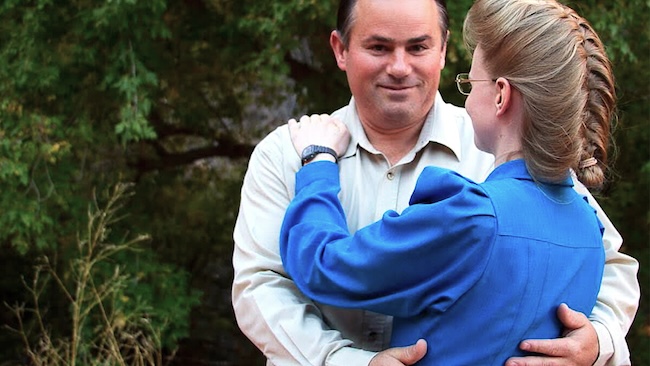
There is something endlessly fascinating, and deeply disturbing, about the Fundamentalist Church of Jesus Christ of Latter-Day Saints (FLDS), a strict breakaway Mormon fundamentalist group, generally considered a cult, whose members practise polygamy.
It’s also not the first time the group has been the subject of a documentary, book, or film. In fact, we suggest making Trust Me: The False Prophet a double bill with another Netflix docuseries, Keep Sweet: Pray and Obey.
Released in 2022, Keep Sweet: Pray and Obey is a four-part series that tracks the rise and fall of Warren Jeffs, the leader of the FLDS, and lays bare the abuses within the community. It unpacks how the group’s motto, “keep sweet”, meaning absolute, cheerful obedience to male leaders, was used to enforce control, enable sexual abuse, and sanction the forced marriage of underage girls.
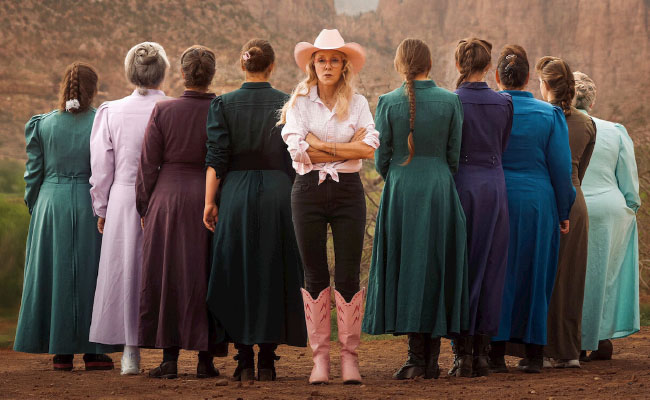
While not directly connected to Keep Sweet: Pray and Obey, Trust Me: The False Prophet picks up in the aftermath of Warren Jeffs’ imprisonment, with the FLDS community reeling after the loss of their ‘prophet’. The four-part Netflix true-crime series chronicles the ascent and takedown of Samuel Rappylee Bateman, a new polygamist leader who also claimed to be both a prophet and Jeffs’ successor.
What sets this docuseries apart is its focus on the undercover work of cult researcher Christine Marie, herself a cult survivor. Marie and her husband, videographer Tolga Katas, move into the community, gain its trust and, in the process, gather a substantial body of video footage and evidence.
This docuseries offers rare behind-the-scenes access, capturing both the absurdity and the menace of Bateman. There are moments that verge on the ridiculous and truthfully, it’s hard to believe anyone would follow him, much less see him as a prophet. From his clumsy attempts at parkour over rocks to his fondness for an OTT white leather jacket and an odd fixation on the late Queen Elizabeth II, the man has not got main character energy. But any humour is short-lived. Behind it all lies a far darker reality: the abuse and sexual assault of women and children by Bateman and other male cult members, all in the name of religion.
The series also highlights the failure of law enforcement in Colorado City to act early, as well as the dangers of self-proclaimed prophets who are followed without question. At the same time, it captures, in real time, the brainwashing and manipulation within the group, and the eventual bravery of those who break free —particularly women and children most at risk in such deeply misogynistic, dominator-style cultures. It’s a chilling watch. (Jo)
The Trials of Winnie Mandela
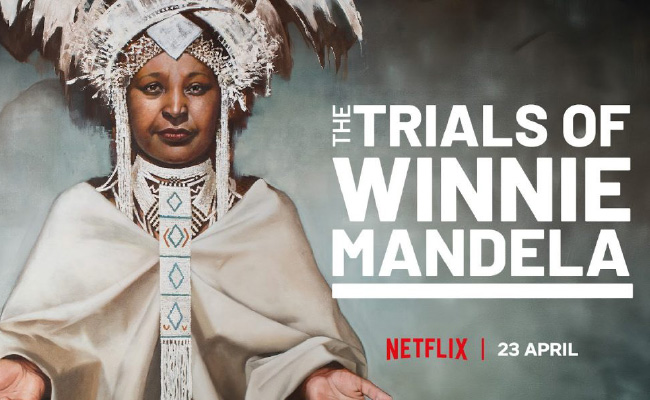
Of the new documentary about Winnie Mandela on Netflix, I’ve heard several people comment, “I know that story,” or “I just can’t face something that heavy right now.”
Both reactions do the series a disservice.
I binged the seven-part The Trials of Winnie Mandela in one night and went to bed overstimulated – lying there, wrestling with what kind of woman she really was.
The answer will surprise no one: complicated.
Much as in Jonny Steinberg’s Winnie & Nelson: Portrait of a Marriage (Jonathan Ball), the portrait is of a woman who was brave, unrepentant, vulnerable, violent, damaged and loving. You’re forced to sit with the uncomfortable truth that no one is ever just one thing, least of all someone elevated to icon status.
Structurally, the series follows a largely linear path through her life and its defining moments, but what elevates it is who is telling the story, and how.
It is co-produced by her granddaughters, Zaziwe Dlamini-Manaway and Swati Dlamini-Mandela, alongside a broader team that includes executive producer Ivor Ichikowitz, through the Ichikowitz Family Foundation. The foundation has a track record of funding large-scale African historical and legacy projects, and here it has clearly enabled both the depth of research and the decade-long production timeline.
Crucially, the Mandela family involvement doesn’t result in a sanitised spiel. Quite the opposite. They confront the darkest Winnie chapters head-on: the Mandela United Football Club, the murder of Stompie Seipei, and her Truth and Reconciliation Commission testimonies, in particular.
It’s heavy, divisive material, but the filmmakers cast the net wide: friends and enemies, Seipei’s mother, apartheid police, journalists, and Winnie herself. The footage of her speaking candidly on camera before her death in 2018 is particularly striking. These are not easy conversations. Where her granddaughters are concerned, I kept thinking: it’s hard facing up to the sins of our forefathers, now try doing that on camera!
Beyond that, the documentary spans the breakdown of the Mandela marriage, Winnie’s central role in the struggle, the trauma of detention, and her post-1994 disillusionment – all layered with extraordinary archival material. You can’t cover every nuance and moment in a TV series, but the depth of footage, photography and audio is remarkable, and the editing is tight enough to carry the weight of it.
It seems that people either love or hate Winnie, but this show makes you think about the nuances of her as a real person. Life is not black and white.
Likewise, it is a reminder of the country’s shocking and miraculous past. One that an increasingly large number of South Africans have very little handle on. (Sarah)
This is a Gardening Show
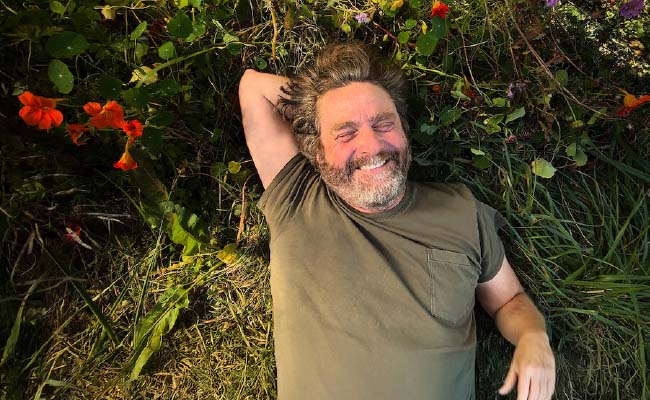
Best known for The Hangover and his deadpan celebrity interview series Between Two Ferns, comedian Zach Galifianakis has built a career on offbeat humour. Now, he turns his attention to something a little more grounded with This is a Gardening Show, a wonderfully whimsical series that leans into his genuine love of gardening, complete with the sign-offline, “the future is agrarian”.
Galifianakis is, in fact, a long-time gardener, having taken it up after moving to Los Angeles. These days, he resides in rural Canada, where his interest in growing things is more than just a passing joke.
With episodes on tomatoes, foraging, root vegetables and compost, it may not sound like a riot, but it’s surprisingly engaging. Each episode zeroes in on a single topic and really commits to it, leaving you with a newfound appreciation for what’s on your plate, whether that’s a perfectly ripe tomato or a crunchy carrot.
Along the way, Galifianakis chats to an eclectic mix of guests, including a group of quirky kids. This addition feels slightly odd at first, but quickly becomes part of the show’s charm, offering a fresh, often funny perspective. His signature deadpan interviewing style is in full force, paired with a sense of childlike curiosity and humour.
The show also brings in growers and experts, delving into processes like apple grafting, the technique of joining a cutting from one tree onto the rootstock of another so they grow as a single plant. It’s the kind of detail that deepens your appreciation for how food is grown and might just change the way you look at your next Granny Smith.
The Netflix show also digs into the history of different fruits and vegetables, uncovering some unexpected stories, from the once-suspect reputation of tomatoes to the fact that cider was historically safer to drink than water. A handy bit of trivia, and perhaps a convenient excuse for any Savanna drinkers who might be overindulging.
There’s a cool vintage feel throughout, from the retro bubble-letter titles to the quirky, collage-style animation. Time-lapse photography adds to the nostalgia, giving it the feel of an old-school educational science video. The theme song is a standout too: Something in the Air (1969) by Thunderclap Newman, which film nerds will recognise from the 2000 classic Almost Famous.
This is a Gardening Show is fun, offering little deep dives into our food and how it grows. At six episodes, each around 15 minutes long, it’s light viewing that may just inspire you to get into the garden or, at the very least, think more about what you eat and where it comes from. (Jo)
Read some of our other downtime suggestions here.
All images: Netflix
Sign up to Currency’s weekly newsletters to receive your own bulletin of weekday news and weekend treats. Register here.