
One of the strange frustrations in the life of an author is the occasional one-star review online when a book reaches the consumer in a less than premium state. Words like “filthy”, “frayed” and “damaged” seem to sit there forever. Worse still is that such a rock-bottom rating can drag down the overall appeal of the book, based not on the content but the state it was delivered in.
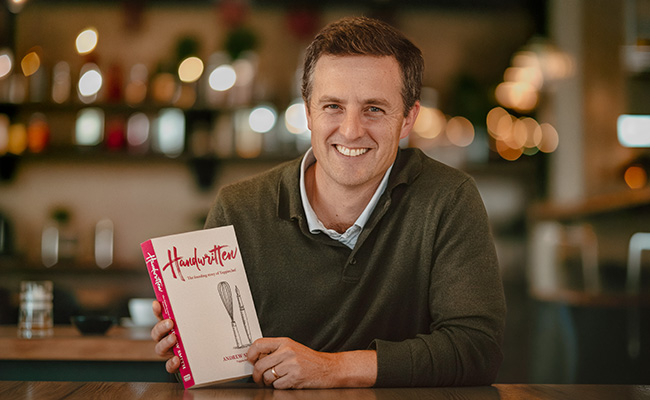
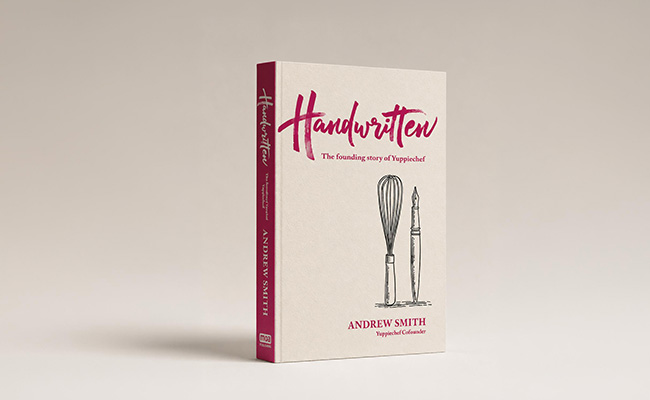
Andrew Smith, co-founder of Yuppiechef, most certainly won’t have that problem. Handwritten, his business memoir, arrives snugly gift-wrapped in a custom-sealed box and even includes a branded fridge magnet. It has the look and feel of something familiar and slightly exciting.
He is, of course, tapping into the not-all-that-ancient tradition followed by all upmarket e-commerce sites that know their stuff. The moment of “unboxing” needs to be special. And Yuppiechef, founded in 2006, was South Africa’s pioneer in the field.
When you hear the name, you think pink, don’t you? That’s what Smith and his co-founder Shane Dryden and early partner Paul Galatis managed to achieve – they owned the rose colour by sewing it into thousands of parcels. What went on behind the scenes was not always, well, that rosy.
Storytime
So now, five years after selling Yuppiechef to no-frills retailer Mr Price, Smith unboxes the story from first click to final sale. The title, Handwritten, is clearly a nod to those personally crafted notes – a million of them over the years – that Yuppiechef added to delivery boxes.
But to recall all those rough-and-tumble years of building a business from scratch, Smith had to work through mountains of his own handwriting too.
He has been journalling since the age of 18. Just about daily, in the morning, and always about the happenings of the day before. Useful material when penning a memoir. He has stacks of A6 notebooks filled with notes and ruminations. In Moleskines like Hemingway? “Ja,” he laughs, obviously thinking back on those first years of just scraping by, “only when I got gifted some of them.”
His entries would swing from the very practical to the quite philosophical. How’s this for an example:
“I smell burnout on the horizon. Almost catastrophic. I need a break. I’m only 19.”
Good material. But it wasn’t written to be a book. So Smith sat down in 2024 and started typing up everything relevant to Yuppiechef. To get past the horror of a blank page and a flashing cursor he used a hack that (legally) maximises the effect of every day’s first hit of coffee. In a café, he fooled his brain into thinking the writing was making him feel that great, not the spurt of caffeine. And, of course, he tracked his own progress.
“Because of the way I’m wired, I had a spreadsheet to measure how much I got done … On December 31 I pressed the print button and out came 145,000 words,” he says.
For the sake of comparison, something like, say, Capitec: Stalking Giants was published as 65,000 words. (Ed’s note: TJ wrote that one, so he should know.) But Smith and Dryden started a business from a living room, so why not apply a start-up mentality to publishing?
Handing a manuscript to a legacy publisher would have let go of the most meaningful experience for an entrepreneur – being in control of the look and feel of the product, and the eventual user experience. Instead Smith used what one could call a collaborative round of first edits on that tome. “I gave it to a handful of people. The other early partners in Yuppiechef. A lawyer. My wife.”
So those first readers gave their feedback. And in a way it was like getting the band back together. Soon chiselling the book down to a more consumable 90,000 words felt like building that first warehouse, or setting up that initial retail store in a mall.
“We’ve always been in control of what we make,” Smith says. Clearly a traditional publisher would have made that impossible. “I mean, you haven’t ever been able to choose the title of one of your books?” True that.
Getting it all out
A single coffee sprawls out into two hours of conversation ranging from school days in Pietermaritzburg, to (him) not being interested in milking the speaking circuit, to how upset and actually even angry he became at some incidents from the past when working through his journals.
In the end there was a therapeutic element to writing it all down. Reliving those incredible highs and desperate lows of crafting a sustainable brand and cranking it into something profitable soothed something deep inside.
“It’s not a comfortable read necessarily, and it’s not a coffee-table book.”
But, hey, it’s not Anne Frank’s diary either. Smith fleshed it out into a compelling narrative that cleverly uses journal entries here and there to elevate the story.
“I want my family to read this, I want my boys to read this.” (At the time of the interview his sons have not yet dipped in, but you get the feeling that their reviews will probably be the most important to Smith.)
Whoever else was part of the Yuppiechef story – personally or professionally – will be able to get a fuller picture of what really happened. An entrepreneur always carries the burden of making a business work, the details of which he or she is often not at liberty to share with others. Smith talks about real people with real names that left the company for real reasons. They will hopefully be able to colour in their own sketches better now.
Obviously Handwritten also aims to give some hope to that entrepreneur grinding away somewhere behind a computer, or slogging it out in a warehouse, or sweating through calls with unhappy funders.
Smith is a private person. You can see he has no itch to be a celebrity. He is used to selling other products. “I find self-promotion awkward.”
Now he’s doing book launches and signing copies. All with the same mindset that built an enduring brand. He and his team set up a website with an online shop and they are selling the book directly to the public, capturing much more of the profit margin than any regular writer could ever hope to. More even than a legacy publisher would, as the old behemoths really function as wholesalers supplying the large chains. But for the sake of wider distribution, Smith says Handwritten will soon find its way into the major bookstores too.
“We decided to self-publish not really to make more money,” he laughs, “but we would like to break even; the book is about a business after all.”
For Joburg readers, Smith is launching the book at Tryst in Sandton on June 23. A R350 ticket gets you a signed copy of the book too.
ALSO READ:
- Turning sole into soul at the Sneaker Shack
- How Capitec’s ‘seven dwarfs’ built a banking behemoth
- Fehmz and the making of a damn good bestseller
Images: supplied.
Sign up to Currency’s weekly newsletters to receive your own bulletin of weekday news and weekend treats. Register here.