
Of all the squishy buzz phrases parading naked around South Africa’s national discourse, “lived experience” – now being marshalled to justify xenophobic outrage against foreigners – is perhaps the most vapid.
This is some achievement, since the calorie-lite jargon in our corporate sector is exceptional: who hasn’t wanted to “circle back” to capture the “low-hanging fruit” to please some office troll? “Lived experience” is, hands down, the worst.
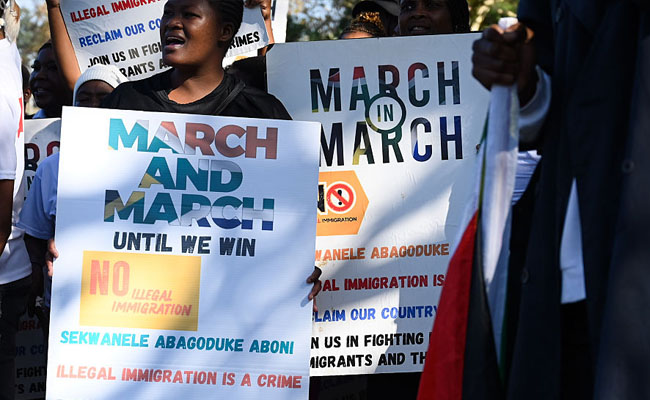
With the clock ticking to the June 30 deadline set by civic group March and March for “illegal immigrants” to leave the country, social media has been buzzing with people speaking about how their “lived experience” entitles them to foreigner-hating conspiracies.
“We just need some breathing space from illegals, so South Africans can enjoy their freedom,” said one person who calls herself “The Patriot”. Predictably, she had stories, like that of “an acquaintance’s neighbour” supposedly “wanted for murder” in his country and of kids apparently dying after eating expired food sold by Somalis.
“Is that too much to ask? I am speaking from a lived experience,” she said.
Another person dismissed the South African Human Rights Commission’s view that overcrowding in public hospitals isn’t due to foreigners, saying: “They can’t lie to us, this is our lived experience.”
An exercise in manipulation
There are several problems with this framing.
First, people are unreliable narrators of their own lives.
If someone isn’t employed, it’s far easier to claim that it’s because a Malawian “took their job” rather than their lack of skill. Equally, one guy I know claimed he’d been fired “because of affirmative action”, rather than the fact that he began skipping work because of his drug habit.
Second, the term itself is vacuous.
Simon Heffer, the former style editor of the Daily Telegraph, wrote in his book, Scarcely English: An A to Z of Assaults on Our Language, that “lived experience” is grammatically absurd.
“In this age of real and imagined victimhood, there is a constant appeal for testimony, and no testimony is more valuable than something called life experience. What is not explained is how anything can be experienced if it is not part of one’s life,” he wrote.
“Lived experience”, he said, is a tautology and shows “either a poor command of the language or an attempt at manipulation of the feelings of others”.
The third problem is that many who cite “lived experience” do so to infuse authority into their proposed “solutions”.
Those who claim foreigners stole their jobs/safety/sunshine argue that the “solution” is that migrants must all “leave the country”. To criticise this stance is to “invalidate” their “lived experience”. But, as political commentator Justice Malala said on a radio show last week when he was accused of this, your “lived experience” might be valid, but your proposed solution certainly isn’t.
As it is, March and March claims to only have a problem with “undocumented foreigners”, but it is the presence of all foreigners – those legally and illegally in South Africa – that it seems to reject.
A few weeks ago, a Cameroonian shop owner in Durban was attacked. Ten men “whipped me and my three colleagues who are not South African with golf sticks and sjamboks”, he told Human Rights Watch. It is apparently of no consequence that he is married to a South African and has lived here for 20 years.
Inconvenient facts
Of course, this doesn’t mean that there aren’t major problems with immigration in South Africa.
The authorities would probably have better success carrying coffee in a straw hat than securing our borders. Our public hospitals are strained to the point of collapse, but this is due more to misgovernance and corruption than to an influx of Zimbabwean patients.
Unemployment, now at 32.7%, is a crisis – but it is one wrought by bad policy, a poor education system and a decade of 0.7% GDP growth, not one created by Malawian immigrants.
The numbers bear this out. This is a country of 63-million people, of which, at most, about 4-million are foreigners. Yet more than 12-million people are either unemployed or classed as “discouraged job seekers”.
Still, it suits lazy politicians to scapegoat foreigners rather than admit to their own failings. The ANC, for one, is sending mixed messages about this issue.
Last week, President Cyril Ramaphosa vowed “a concerted crackdown on violations of existing immigration, labour and other laws”, while at the same time warning anti-foreigner groups against lying to “exploit the concerns of our people”.
Ramaphosa’s plan – fast-tracking immigration courts, heavily fining companies that hire undocumented foreigners and weeding out corrupt officials – isn’t new. And, more importantly, it doesn’t deal with the root causes: a frail economy and shoddy state services.
Gauteng premier Panyaza Lesufi wrote recently that protesters can’t simply be dismissed as xenophobic. “These are ordinary citizens who watch their own children wait in long lines at clinics while undocumented migrants are treated ahead of them,” he said.
But Lesufi also admitted that the failure to fix the economy has “fostered a scarcity mindset, making migration an easy scapegoat for deeper problems in the system”.
This suggests an unease within the ANC. Seeing voters peel off to opposition parties less squeamish about putting the steel toe into foreigners seems to have scared the more populist factions in the party, which evidently want to keep both sides sweet.
The facts, of course, are inconvenient. A 2018 World Bank study found that far from “stealing jobs”, “one immigrant worker generates two jobs for locals”, since they are often self-employed. As it is, immigrants contribute 9% of South Africa’s GDP, even though they make up less than 6% of all workers in the country.
As for foreigners committing crimes, an Institute for Security Studies paper in 2022 found that just 2.3% of prison inmates were immigrants.
Those who dismiss this evidence in favour of the squishy subjective clay of “lived experience” argue that, once the poor take to the streets, those who “intellectualise” this issue will be sorry. But those protests, if anything, will be fuelled by exactly these calorie-free arguments that elevate specious anecdotes above objective fact in defence of xenophobia.
To prevent the country burning based on lies, “lived experience” should be seen for the fraud it is – beyond the brutality it does to language.
This story first appeared in the Financial Mail. Currency and the Financial Mail are part of the Financial Mail Group.
ALSO READ:
- Real Politics: these Zulu regiments come with a warning
- PODCAST: ‘Sharp Sharp’ – ChatGPT, who’s Chad Du Plessis?
- The X-men stirring hatred in South Africa
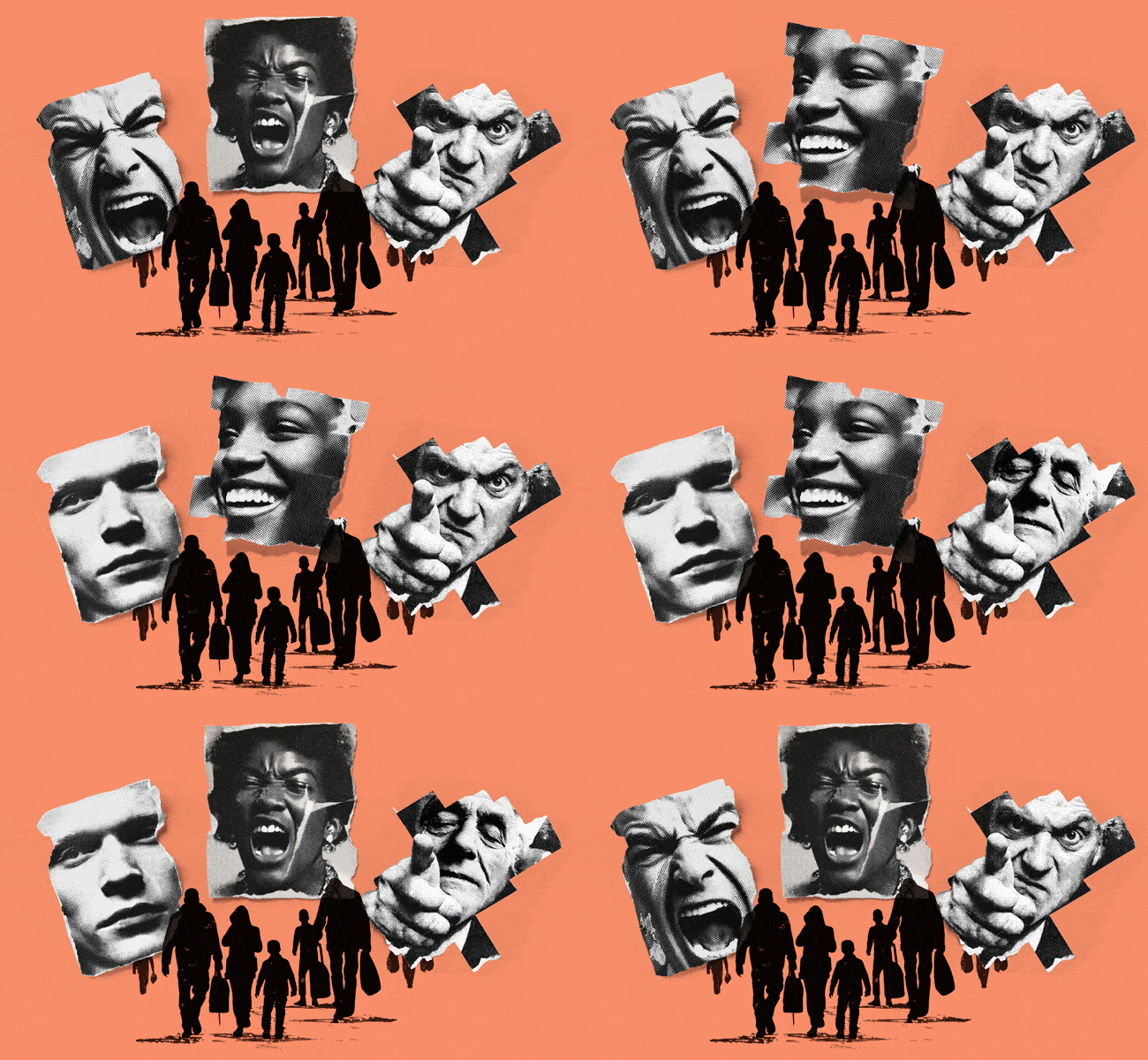
Top image collage: Rawpixel; Currency.
Sign up to Currency’s weekly newsletters to receive your own bulletin of weekday news and weekend treats. Register here.