
Geordin Hill-Lewis may have inherited the most important job in South African opposition politics.
The Cape Town mayor’s election as federal leader of the DA comes at a decisive moment for the party and the country. At 39, Hill-Lewis could lead the DA through the next two election cycles, including the November 4 local government elections and the 2029 national election.
His challenge is easy to describe but hard to solve: how does the DA turn anger with the ANC into votes for itself?
For more than a decade, South Africa’s largest opposition party has been stuck in a narrow band. It won 22.2% of the national vote in 2014, 20.8% in 2019 and 21.8% in 2024. Over the same period, the ANC fell sharply, from 57.5% in 2019 to just over 40% in 2024.
On paper, this should have been the DA’s moment. In practice, it was not.
The ANC’s losses have flowed elsewhere. The EFF built a national base. The MK Party surged in KwaZulu-Natal (KZN). The Patriotic Alliance (PA) has grown in coloured communities. Herman Mashaba’s ActionSA appealed to urban voters who wanted change but were not ready to vote for the DA.
In other words, South Africans who are unhappy with the ANC do not automatically choose the DA. This is the puzzle Hill-Lewis must solve.
A perception problem
For years, the DA believed good governance would eventually overcome voter scepticism. It built its brand around clean administration, infrastructure, financial discipline and fighting corruption – an approach that has produced durable electoral success in Cape Town and the Western Cape.
But competence has not become broad national appeal. Many voters respect DA-run governments while remaining reluctant to vote for the party, which suggests the main obstacle is not policy but identity, trust and belonging – the DA still faces a perception problem among many black South Africans who do not see it as a party that naturally represents their interests or experiences. Whether fair or not, that remains one of its biggest barriers to growth, and Hill-Lewis enters the role aware of it.
His challenge is sharper because he embodies many of the qualities critics associate with the DA: white, English-speaking, from Cape Town and widely seen as a technocratic leader – qualities that have helped him as mayor but that national politics demands more than.
South Africa has repeatedly rewarded leaders who make voters feel seen. Nelson Mandela did it with grace and moral authority. Jacob Zuma did it through cultural fluency and accessibility. Mashaba has built support through direct engagement and business credibility. Gayton McKenzie has turned personality into political capital.
Hill-Lewis is respected for discipline, intelligence and administrative ability. To break the DA’s long-standing ceiling, he needs to become a different kind of political figure: as comfortable in Soweto, Umlazi and Mdantsane as he is in Cape Town’s suburbs and boardrooms. That is not about image management – it is about trust. Voters want proof that leaders understand their daily lives: how policy affects jobs, transport, safety, housing and opportunity. Clean audits matter, but they do not inspire people on their own.
Voters want more than a courtesy call
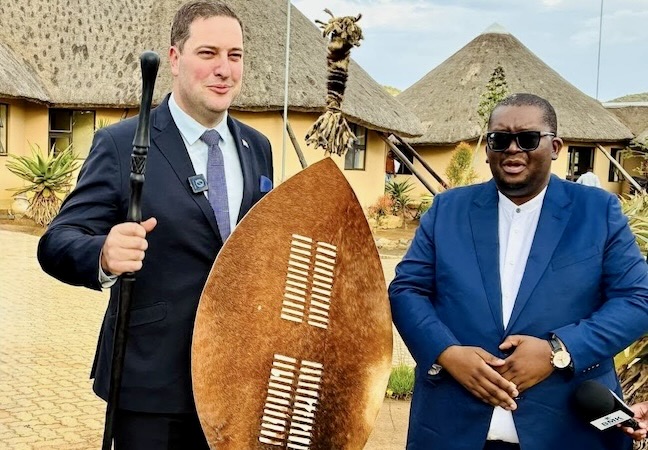
Hill-Lewis’s recent visit to King Misuzulu kaZwelithini was more than a courtesy call – it signalled an understanding that culture, identity and traditional leadership remain powerful forces in South African politics. KZN is likely to be the fiercest electoral battleground after Gauteng in the 2026 local government elections, and the DA cannot hope to grow there without building relationships with communities that look to traditional leaders for guidance and representation. Its alliance with the IFP and co-operation with the ANC will be crucial if it hopes to limit the power of the MK Party – nowhere will that fight be harder than in eThekwini, where loyalties are deeply contested.
The broader test is whether Hill-Lewis can repeat this approach elsewhere. Limpopo, Mpumalanga, the Eastern Cape and the Free State remain deeply shaped by traditional leadership structures, where amakhosi still play an important role in governance, land and community life. The same applies to powerful religious institutions – the Zion Christian Church, the Methodist Church of Southern Africa and the Nazareth Baptist Church command enormous influence in communities that political parties want to reach. Engagement with them should not be treated as theatre; it is a recognition of the social networks that shape public opinion.
Consistency will be the test. One visit to a king makes headlines. Building lasting relationships with traditional leaders, churches and rural voters could help persuade sceptics that the DA is serious about becoming a truly national party.
Navigating the world of coalition politics
The second test is coalition politics. Since the 2021 local government elections, the DA’s coalition record has been mixed – Joburg, Tshwane and Ekurhuleni became warnings rather than showcases as mayors came and went, alliances collapsed, and service delivery and public trust suffered. For investors and business, these failures matter: political fragmentation creates uncertainty even when voters demand change.
South Africa is unlikely to return to one-party dominance. Coalitions will increasingly become normal – the question is whether political leaders can make them stable. Hill-Lewis may need a different coalition philosophy from some of his predecessors. The age of smaller parties simply falling in line behind a dominant partner is ending; successful coalitions will require negotiation, patience and long-term relationship-building.
The government of national unity has reinforced this lesson. It is imperfect, but it has shown that voters and markets respond positively when political rivals co-operate to provide stability.
The final challenge lies closer to home. For years, the DA treated the Western Cape as secure territory, an assumption now harder to sustain as the PA expands among coloured voters, a constituency that formed part of the DA’s electoral backbone. Its growth may not immediately threaten DA control of Cape Town, but it has introduced a new competitive dynamic. Political dominance often erodes slowly before it collapses suddenly, and Hill-Lewis cannot only chase new voters – he must defend existing support.
A broader offering
Ultimately, Hill-Lewis’s success will not be measured by whether he protects the DA’s traditional 20% base, but by whether he expands it. The path to 25% or 30% national support is unlikely to come from converting loyal ANC voters. It will come from younger voters, urban professionals, first-time voters and politically homeless South Africans dissatisfied with every major party.
That requires a broader offering. The DA has spent years explaining why the ANC is failing. Hill-Lewis must now explain why the DA understands the aspirations of a changing South Africa.
For business leaders and investors, the stakes go beyond party politics. A stronger opposition that can expand its appeal, build durable coalitions and strengthen governance would improve policy certainty and institutional stability.
Hill-Lewis has time, a Cape Town record and a long political runway. What remains uncertain is whether he can persuade dissatisfied voters that the DA is not just an alternative government, but a political home – and that question will shape his legacy and South Africa’s political future.
Catch more of Zukile Majova’s viewpoints at Scrolla.Africa, a mobile-first news site covering breaking stories fast from communities across South Africa, where he is political editor, in English and isiZulu.
ALSO READ:
- Zille, and Joburg’s battle for belief
- Do young people care about voting?
- Real Politics: Vaal result shows voters are harder to keep
Top image: DA leader Geordin Hill‑Lewis with Reverend Thulasizwe Buthelezi, the traditional prime minister to the Zulu royal household. Picture: DA/Scrolla.Africa.
Sign up to Currency’s weekly newsletters to receive your own bulletin of weekday news and weekend treats. Register here.