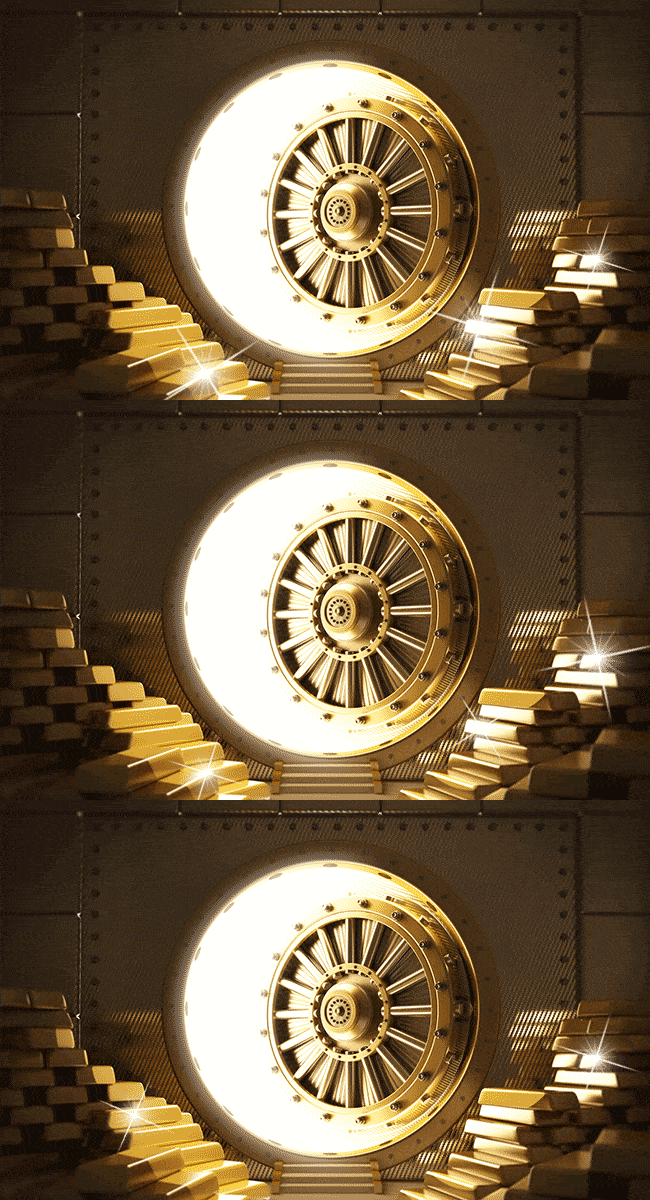

It was all going so well. Too well, really. Having ended 2025 at $4,339 an ounce, gold went on a tear in January, surging from $5,000 to an intraday record of $5,500 in just three days. Then, by end-February, the US had attacked Iran, the oil price had spiked and so too did fears of an inflationary tsunami.
The US Federal Reserve now has an interest rate hawk in new governor Kevin Warsh, speculative investors have had some amazing gains elsewhere in chipmakers, SpaceX’s IPO sucked in billions, and gold is now back below $4,000 an ounce. What are the prospects for the next few months? Currency spoke to Juan Carlos Artigas, Americas CEO and global head of research at the World Gold Council, for his view.
Is this price actually where it should be after the mad start to the year?
Well, I think the gold price in January was reflecting the expectations of the market. You need to remember at the time that not only had geopolitical risk increased significantly – there was the US incursion into Venezuela – but [there was] also consistent rhetoric from the US administration towards the Federal Reserve [the “debasement trade”] and that was creating a lot of noise. And you needed a lot of fundamentals to sustain that level. So where are we today? The gold price is very much aligned with macro-consensus expectations.
You’ve said that moderate growth, cooling but still high inflation, and expectations of further – but limited – central bank tightening would keep the gold price range-bound within about 5% of where it is now, “but the stage is set for a possible breakout”. What would be a catalyst?
It’s very rare for the economy to perform as participants expect, so we always see changes, and especially over the past year and a half we’ve seen that conditions can change very quickly.
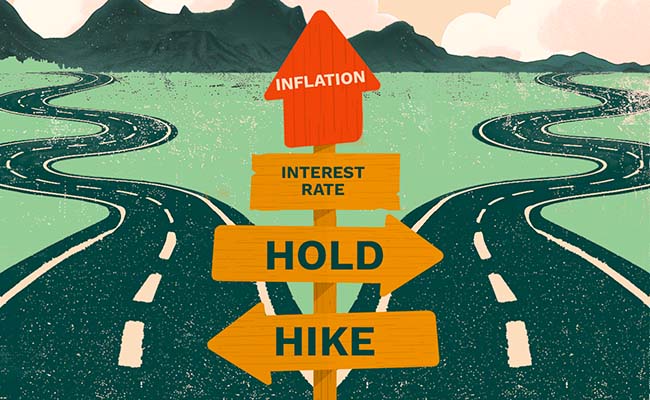
A few things can push gold prices higher: the first is that economic conditions start to deteriorate; also, geopolitical risk. We do not necessarily know what may come next, but that level of uncertainty keeps investors looking for hedges and gold can be one of those assets. And finally, there is expectation for interest rates to increase, but if that changes and interest rates come down, then gold prices will react positively to that change.
You also say that, at a high level, risk and uncertainty are among the four main drivers for the gold price, but has that traditional aspect not broken down? Gold almost behaved like the anti-hedge during the Iran conflict.
I don’t think we should single out gold; I think many markets behaved in a way that was not necessarily expected by investors. From our perspective, when speaking to US investors, [they] were treating the US-Iran conflict more as a transient shock and they were focusing far more on the potential growth of AI etc, so there was more of a “risk-on” appetite. Other Asian investors may not have seen it in the same way, which is why gold has actually held up, all things considered. It’s also true that the conflict affected a region that is an important centre for trade for gold – like Dubai, in terms of purchases and trading. But we still believe that gold is a very useful and consistent risk hedge.
Who are the major gold buyers and sellers at the moment?
Asian investors have been an important source of demand – and not just in 2026; it has been happening for some time but it’s very evident in 2026 because of the divergence in the trend at the beginning of the year. We’ve seen long-term gold investors coming into the market to take advantage of the pullback. The gold market has come down a couple of times close to $4,000 and often times it rebounds from that point, signalling that there is organic demand.
Do you have any data on how much of the jump to $5,500 was caused by speculators?
Our models indicate that momentum explained about 24% of the variability in the gold price in the first half of the year. A lot of that, I think, has been flushed out from the market and you now see gold volatility significantly lower, which tells you that the market is more [about] your natural buyers.
I assume that’s jewellery-makers and central banks …
Over the past couple of months we’ve seen consistent reports that central banks have resumed buying. It’s not just one type of investor. And as the price cools down that tends to be an opportunity for consumers – whether it’s jewellery manufacturers or chip manufacturers.
Bloomberg Intelligence reckons that a “modest” drawdown in US stocks could push gold to $3,400 an ounce – do you agree with that?
Generally speaking, there’s a very low correlation between stocks and gold; if you look at the stock market, that is not necessarily telling you anything directly about the gold market – it’s only when things move much more, that’s when you see a connection. But that is very interesting because gold has a negative correlation to the stock market when it pulls significantly, but it has a positive correlation when the stock market moves really high. So again I would think we need to understand the underlying drivers rather than the effect. What I can also tell you is that, historically speaking, pullbacks in the price of gold on average have been 30%-35% and we’re already 25% below the record high.
This story was produced in partnership with Stanlib.
ALSO READ:
- South Africans rue gold’s plunge — and it could get a heap worse
- The big split: why gold is acting like a reserve asset and bitcoin isn’t
- ‘Don’t fret about a gold and stocks bubble yet’
Top image collage: iStock/Getty Images Plus; Currency.
Sign up to Currency’s weekly newsletters to receive your own bulletin of weekday news and weekend treats. Register here.