I may have retrenched more people than any other business leader you may know! How do I live with that reality?
If you spend enough time reading leadership content on LinkedIn, you’ll notice a comfortable trend. We love to share our frameworks, our strategic wins and our high-minded opinions. We package our insights neatly, retrofitting every difficult choice into a heroic strategy slideshow.
But if we only talk about our certainties, we are lying by omission.
South Africa has enough loud certainty. We have enough people who speak as if their view is the only view that matters, hiding the mistakes, the uncertainty and the structural wreckage that follows a “correct” corporate decision.
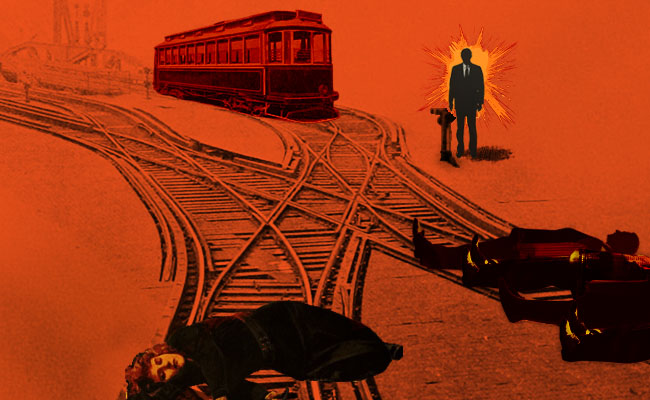
There is a reason the trolley problem has survived for so long in moral philosophy. In 1967, philosopher Philippa Foot introduced the famous ethical thought experiment that asks whether it is moral to sacrifice one person’s life to save five more.
Utilitarianism as an ethical framework dictates that the most ethical action is the one that produces the least overall harm, without dwelling on whether an action is inherently right or wrong. It is often defined as a pragmatic and practical way to approach tough decisions. On one hand, it prioritises the good of the majority; on the other, it forces us to confront the darkest parts of our hearts and minds, and asks that we remain coldly practical.
On paper, this becomes a debate between ethical frameworks. The deontological school of thought pushes back and asks whether some actions are still fundamentally wrong, even when they produce a better outcome. One approach starts with consequences. The other starts with duty, principle and moral constraint.
In real life, especially in leadership, that textbook neatness disappears very quickly.
A job is not just a job
I have spent much of my career in mining, an industry where decisions are seldom clean and almost never theoretical. A mine is not only an asset. It is an employer, a community anchor, a supplier network, a tax contributor, a source of identity and often one of the few economic engines in a region where alternatives are scarce.
So, when people speak casually about restructuring, retrenchments, closures or “right-sizing”, I sometimes wonder whether they understand the full human weight of those words.
In South Africa, a job is not just a job. One salary may carry school fees, groceries, transport, elderly parents, siblings, debt, hope and dignity. Because of our deep dependency ratios, a single mining salary frequently keeps an entire extended family afloat. When that salary disappears, the impact does not stop at one employee. It moves ruthlessly through a household and an entire community.
My own life was dramatically impacted in 1977 when my dad was laid off from his job as an artisan on the Rustenburg platinum mines. The family moved to Pretoria, and I had to stay with our kind neighbours to finish my final school year in 1978. One can only wonder how one’s life would have played out if certain events hadn’t happened.
That is why I have never been comfortable with leaders who speak about hard decisions as if they are evidence of toughness. There is nothing impressive about being emotionally untouched by the consequences of power.
Moral injury
At the same time, I’ve also never believed that avoiding a hard decision is automatically the moral choice. Sometimes refusing to act is simply another way of choosing, except with less honesty.
Early in my career, during the restructuring of Harmony Gold in the late 1990s and mid-2000s, and later at Village Main Reef, I found myself holding the lever referred to in the trolley problem. Faced with collapsing commodity prices and bleeding operations, the math was brutal: restructure and downsize, or watch the entire company collapse, taking every single job down with it. If delay would destroy even more livelihoods later on, then not pulling the lever may feel more humane in the moment, while creating a catastrophic outcome in the end.
That is the cruel part. Sometimes the best available decision is still a decision that harms people.
Psychologists have a term for what happens to the human psyche when a person is forced to make decisions that violate their deeply held moral values to achieve a broader survival goal: moral injury. Originally identified in military veterans, it is now used by organisational researchers to describe the profound anxiety, systemic guilt and deep isolation experienced by executives who must execute mass layoffs.
A spreadsheet can show you that you saved the collective whole, but it cannot protect your conscience from the human collateral.
I don’t regret the hard decisions I made in my career when I believed, with the information available at the time, that they were the best possible decisions for the survival of the company and the greatest number of people connected to it. Regret would suggest that I now believe there was a better option and chose not to take it, and that was not the case. That is not how I remember those moments.
Regret vs guilt
But absence of regret is not absence of guilt.
I have carried guilt of the tough decisions that I had to make. I have carried the knowledge that even a necessary decision can leave people deeply wounded. I have also had to accept that leadership does not come with the comfort of moral cleanliness. If you want a job where everyone approves of you, do not become responsible for decisions that affect livelihoods. One of my favourite sayings is that life is not a popularity contest.
This is not written as a defence. I am not asking anyone to feel sorry for my past, or anyone else in a leadership role. Quite frankly, leaders are usually the last people who should be asking for sympathy.
But I do think that we need more honest conversations about what responsible leadership actually requires. The real version, the version where you can believe a decision was necessary and still be disturbed by what it cost. The version where you can act in the interests of the majority and still refuse to treat the minority as acceptable collateral damage. The version where you do not hide behind “shareholder value”, “market conditions”, or “operational efficiency” when what you really mean is that people are going to suffer because the available options have narrowed.
A critical conversation
We need fewer people operating with absolute certainty, and more people willing to say: “This is what I believed at the time, this is why I acted, this is what I may have missed, and this is what still troubles me.”
That, to me, is where the critical conversation begins.
The trolley problem is easy when the people on the tracks are hypothetical. Leadership is different. In leadership, the people have names. They have families. They have histories. They have legitimate anger.
They also have the right to expect that those making decisions about their futures do not reduce them to numbers on a spreadsheet. A spreadsheet may tell you what is viable, but it cannot tell you what it will cost someone to survive your decision.
That part must remain with the leader. That is the part that remains with me.
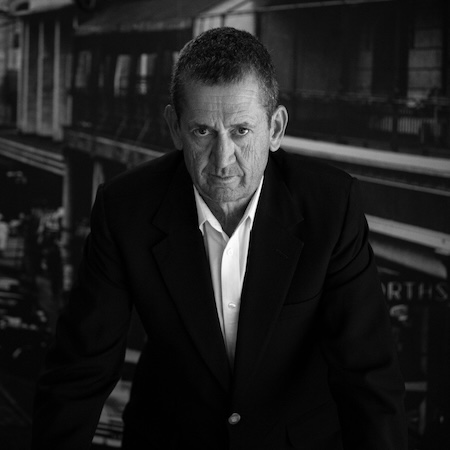
Bernard Swanepoel is an experienced mining executive and chair of the Joburg Indaba and Junior Indaba. This story first appeared in his newsletter, Zero Bull Sht.
ALSO READ:
- What survival really reveals about us
- ‘Overlanding Through the Boardroom’: the mindset factor
- VODCAST: ‘JDV on Air’ – from near paralysis to Dakar finish
Top image collage: The Fatal Ring/Racconish/Public Domain; Wikimedia Commons; Rawpixel; Currency.
Sign up to Currency’s weekly newsletters to receive your own bulletin of weekday news and weekend treats. Register here.