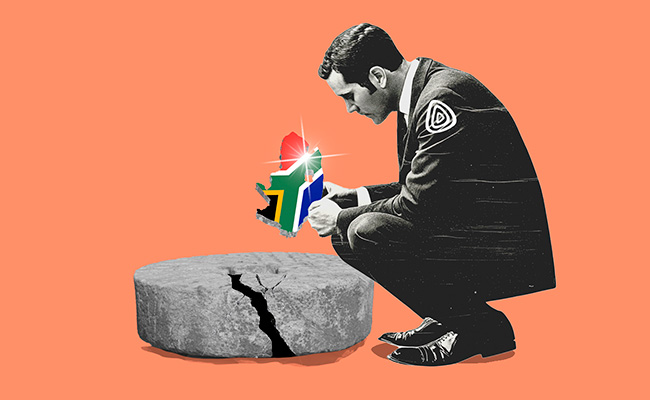

De Beers is preparing to shutter South Africa’s largest diamond mine for two years, threatening thousands of jobs and removing roughly two-fifths of the country’s diamond production as the industry’s most famous company battles one of the worst downturns in its history.
The move is intended to cut costs, while production will be increased elsewhere, enough to leave its overall output guidance unchanged.
It’s an especially striking decision because Venetia, in Limpopo, is not an ageing operation being allowed to gracefully expire. And De Beers has already spent about $2.2bn converting the former open-pit mine into an underground operation intended to continue producing into the 2040s. Production at Venetia, in fact, rose 53% to 740,000 carats in the first quarter of 2026 as greater volumes of underground ore were processed.
However, “if you want to cut back supply, you close Venetia”, says James Allan, a mining consultant and former top-rated diamond analyst, who argues that it’s more than a simple ranking of which De Beers mines were most expensive.
The company’s average production cost in South Africa – where Venetia is its only operating mine – was $110 a carat in 2025, compared with $38 in Botswana, $51 in Canada and $244 in Namibia, according to figures supplied by De Beers.
In other words, while Venetia is a relatively high-cost operation, it’s not the group’s most expensive source of diamonds.
The political angle
Allan believes the ownership structure of De Beers’ operations was likely to have played an important part in the move. That’s because the Botswana mines are operated by Debswana, a 50-50 partnership between De Beers and the Botswana government, while its major Namibian operations are also run through equal partnerships with the state. Venetia is operated by De Beers Consolidated Mines, in which De Beers has a controlling interest alongside empowerment shareholder Ponahalo.
De Beers had already curtailed production in Botswana, Allan says, but any further reductions there would require negotiation with one of the company’s most important shareholders and commercial partners.
“With Venetia, they don’t have to sit down and talk to anybody other than labour. There was more pressure to keep those other mines open.”
The observation points to the political economy behind De Beers’ production decisions. Botswana owns 15% of De Beers itself as well as half of Debswana, and diamond revenues remain central to the country’s finances. Namibia is similarly invested in maintaining production through its joint ventures.
South Africa, by contrast, is likely to carry a disproportionate share of the group’s next supply reduction.
Venetia produced 2.2-million carats in 2025, representing about 10% of current De Beers’ production and about 40% of South Africa’s annual diamond output. De Beers’ own website says the mine employs about 4,400 employees and contractors, though some reports put its direct workforce closer to 3,500.
South Africa produced about 5.8-million carats in 2024. Venetia’s suspension follows the placement of Petra Diamonds’ Finsch mine into business rescue, leaving Cullinan as the country’s principal remaining large-scale kimberlite operation. The result is a sharp contraction of an industry on which South Africa’s modern mining economy was founded.
Not closing for good, just for now
For now, De Beers says it can’t yet quantify the number of jobs that would be lost because this would depend on the outcome of consultations. However, it acknowledged that “a significant number of roles” were expected to be affected.
Says Allan: “It is not like a deep-level gold mine where you are spending a fortune on pumping, hoisting and ventilation. They will have to spend some money to mothball it. They’re not shuttering it for good. They’re just saying they’re not going to be mining.”
In the meantime, De Beers said it would continue investing in “critical infrastructure” intended to increase the future capacity and efficiency of the underground operation. It also promised to maintain community programmes and its social and labour plan obligations.
However, the longer-term significance of the decision will depend on what happens to rough diamond prices and to De Beers itself during the next two years.
The global natural diamond industry has been under pressure since the end of the post-pandemic luxury boom. Weak Chinese consumer demand, excess inventories, economic uncertainty and the rapid expansion of much cheaper lab-grown diamonds have pushed rough prices down sharply.
In the first quarter of 2026, De Beers’ average realised price fell 19% to $101 a carat, while its rough diamond price index declined 17%. The group nevertheless maintained annual production guidance of between 21-million and 26-million carats.
An advertising own goal
De Beers insists there are early signs of recovery, particularly in the US market and among higher-value natural diamonds. It’s removed more than $100m in annual overhead costs since 2024, disposed of non-core assets and increased spending on marketing campaigns intended to restore the appeal of natural stones.
Allan, however, argues that De Beers and Anglo American allowed the industry’s central marketing proposition to weaken during the period in which lab-grown diamonds became a mass-market jewellery product.
“You used to see De Beers advertising for diamonds all over the place,” he tells Currency. “In the last decade, there has been nothing.”
He believes De Beers should have responded to synthetic diamonds by investing much more heavily in the emotional distinction between natural stones formed over billions of years and factory-produced alternatives.
Instead, De Beers tried to launch its own “Lightbox” lab-grown jewellery range to lend legitimacy to a category that subsequently undercut natural diamond prices. It has since changed course, closing Lightbox and repositioning its synthetic-diamond subsidiary, Element Six, towards industrial uses, including semiconductors and high-performance computing.
The Venetia decision also comes at an awkward point for Anglo American CEO Duncan Wanblad, who is attempting to sell or separate the miner’s 85% stake in De Beers as part of a restructuring that will leave the mining group focused on copper, iron ore and fertiliser.
“Of course it affects the price. You are buying a company that is producing fewer diamonds,” Allan says.
“The longer Anglo holds on to it, the less they are going to get for it. That would appear to be what is playing out.”
De Beers’ official position is that Venetia retains a long future and will be restarted when market conditions improve. The investment continuing during the pause provides some support for that assertion.
Still, for Venetia to restart on schedule will depend not simply on engineering work underground, but on whether a new owner of De Beers can restore demand, rebuild the natural-diamond story and persuade consumers that rarity is worth paying for.
ALSO READ:
- Anglo’s diamond migraine
- De Beers sale gets cheaper, though not easier
- Inside the strange and brilliant sale of De Beers
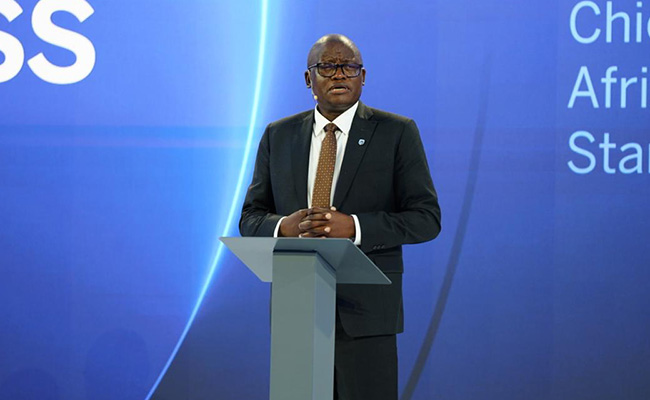
Top image: Anglo American CEO Duncan Wanblad. Picture collage: supplied; Rawpixel; Currency.
Sign up to Currency’s weekly newsletters to receive your own bulletin of weekday news and weekend treats. Register here.