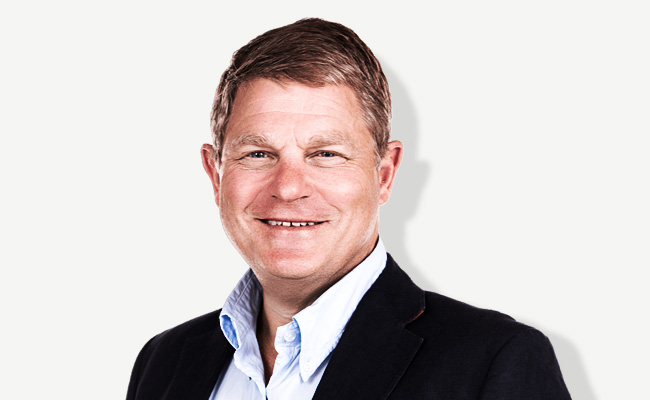

Gareth Penny, the former CEO of De Beers and chair of investment firm Ninety One, has emerged as the frontrunner to buy the one-time diamond juggernaut.
This is a critical issue not just for countries like the diamond-rich Botswana, whose economy hinges on De Beers’ fortunes, but also Anglo American, which owns 85% of the company that it has been trying to offload for more than a year.
The hitch Anglo has faced is this: attracting a buyer to De Beers is no easy task, considering diamond prices have nearly halved over the past decade as the ubiquity of their lab-grown equivalents has grown.
Enter Gareth Penny, a man who many experts believe is the right guy for the job. Penny, 63, was De Beers CEO for five years and at the company for 22 years in total until 2010, so he is deeply familiar with the ins and outs of the business.
A number of analysts who spoke to Currency this week say this is because any new owner has to have strong marketing experience, be well attuned to the business, have good relationships with Botswana and Namibia, and have access to capital.
“If I look at the potential candidates who are looking to buy De Beers, Gareth Penny ticks all of those boxes,” says James Campbell, MD of Botswana Diamonds.
To mining veteran Peter Major, it should have been a done deal a while ago.
“I’m kind of wondering why it’s taking so long,” Major says. “Has [Penny] made them a very fine offer and they’re hoping they get something better? Otherwise, if it was a halfway decent offer, I think they would have been only too happy to announce it, and [Anglo American’s] share would have gone up.”
But while there is little debate that Penny is the right person for it, questions remain as to whether it is something he can do alone. Indeed, there are still others in the race, according to Anglo American CEO Duncan Wanblad.
Coulda been a contender
If Penny is the frontrunner, analysts aren’t quite sure what to make of the other contenders.
First, there is the Diacore consortium, led by Israeli diamond trader Nir Livnat.
Campbell acknowledges Livnat’s consortium includes “very strong marketing people”, but he doubts they have an appetite for the amount of capital that will be needed to keep the mines going.
Second, there is a bid by the various African nations in which De Beers operates, including Botswana, Namibia and Angola. Botswana already owns 15% of De Beers, and the country is responsible for three-quarters of its diamond production.
Moreover, President Duma Boko has spoken of increasing its stake in the diamond producer, and told Bloomberg that he had spoken to the Omanis and United Arab Emirates about “any opportunity that comes, whether in the diamond space or other”.
Equally, a report in The Namibian newspaper two weeks ago said the Namibian government was considering a R3bn bid for De Beers, though economist Omu Kakujaha-Matundu warned that “you don’t buy a dead horse”.
While the bid by Botswana and others initially seemed to be most likely, it is unclear if this is still seen as the best option.
Analysts, for one, don’t believe this sort of “business nationalisation” works.
Says Campbell: “My perspective on that is that if Africa invests more in exploration, they’ll end up owning more of the mines rather than some form of resource nationalisation.”
He says it wouldn’t necessarily be wise for Botswana to increase its stake in De Beers.
“The Botswana government is very clear on its diversification strategy; keep diamonds, obviously, because they’re absolutely core to the country, but grow other commodities, grow other industries. So, I’m not quite sure it’s such a great idea for a sovereign government to actually increase their stake.”
The Angolan bid puzzles experts, given that De Beers currently does not have any active operations in the country. Campbell says such a deal could be part of a potential Opec-style deal, with various African countries forming a consortium that would allow it to exercise greater control over the diamond price.
Major, however, is less convinced that the other bids on offer are that serious.
“The only purpose they serve is trying to speed Penny up in the course of the deal,” he says. “I think [Penny] has got Anglo in a pretty good position. He doesn’t think Anglo has two other buyers.”
Instead, Major’s guess is that Penny is taking his time on the deal, trying to get it as cheaply as possible. “I think Anglo is battling to sell it,” he says. “They’re probably not going to get anywhere close to what they paid for it.”
The hardest sell
It is certainly true that Anglo is sitting on a declining asset. It has repeatedly slashed De Beers’ value in the past few years.
Back in 2012, the company was valued at nearly $13bn; today, it is just $2.3bn. This stems from a wide array of issues, including problems within De Beers as well as external forces like the downturn in the diamond market.
Lab-grown diamonds have sliced through the price of the stone in recent years, contributing to the 40% fall in its value in recent years. But an overproduction of natural diamonds, and De Beers’ own fatal marketing flaws contributed to the decline.
“It’s not so much about fixing De Beers, they’ve got to fix the market,” says Major.
If this were any other mining company losing money, there would be levers to pull: cut costs, modernise, close down low-grade sections and seek out higher-grade deposits.
But De Beers’ problem is deeper: diamonds just don’t matter like they used to.
Lab-grown diamonds have an advantage over natural diamonds in two ways: they are cheaper for the consumer, and for the retailer. And it did not help the market when De Beers itself tried to hop onto the lab-grown wave, making the fatal decision to introduce them into the engagement ring sector, which had been the company’s lifeline.
“I remember my old chairman saying: ‘Over my dead body would that ever happen, because you’re basically letting the cat out the bag,’” Campbell says.
This leaves Penny with the challenge of trying to resurrect the whole diamond market, not just one business.
“That’s always been the biggest problem that De Beers had – that they created the market. They had to sustain it, and they didn’t have much help doing it,” Major explains.
“And it’s okay when they had 80% of the market, but when they went down to 40%, and they’re still having to show [that] diamonds are irreplaceable, diamonds are great, they’re doing all the hard work. The other companies are just sponging off of it.”
De Beers has itself to blame on this score too; it’s marketing budget is believed to have dropped by nearly $200m in the past 20 years, a fatal error for a market that was created, and sustained, more by marketing than anything else.
“You can’t do that,” Campbell says. “In today’s world where you’re competing for share of wallet, you’ve got to spend money on marketing. There’s no choice around that.”
This is why De Beers has been described in the past as a marketing company with mines, rather than a mining company with a market. Penny will need to completely reimagine diamond marketing if he wants to save De Beers.
Luckily for De Beers, Campbell sees a world where natural diamonds recover. Lab-grown diamonds are dropping in price, and they’ll eventually become costume jewellery, he says.
However, this does nothing for the fact that a large part of De Beers’ production is really just low-grade diamonds you’d sell for $10 a carat to be used in sandpaper or cutting tools. For the price of natural diamonds to recover, the product needs to become rare again.
“De Beers want to reduce supply, and they want to increase demand,” Major says. “Essentially that is the whole formula. But easier said than done.”
A clean break
The structure of the deal intrigues the experts. What seems clear though is that Anglo American will not want to hold onto any of its stake.
“I pretty much think they want to give it all away. They want the deal to be final,” says Major.
Even if it were to retain a share and the diamond price rose again, its success would not necessarily reflect well on the Anglo balance sheet.
“Say they sold De Beers at $2bn, and they kept 10%. That would be $200m. The share price won’t reflect $200m; it’ll probably reflect $100m. De Beers always traded at a discount,” Major says.
In his view, the deal might look something like the Amplats deal that Anglo American made with Sibanye-Stillwater back in 2016. In that case, Anglo sold its platinum mines for a steal, but with a “nifty kicker” on the side: if the price of platinum rose, the cost of the deal would rise, meaning Sibanye would owe it more money.
Lo and behold, the price of platinum soared. “I think they got at least double or triple what they thought they sold them for,” says Major.
Penny’s deal looks good from both sides: he can take a cheap deal back to his investors, and Anglo can sleep more peacefully with the knowledge it may not lose as much in the sale. “I think there’s no reason for them to keep a percent unless they think they’re giving it away too cheap,” says Major.
The smart money says that Anglo will sell De Beers for close to its market value – $2.3bn – but maybe with a nifty kicker worked in.
De Beers CEO Al Cook has said the deal should be sealed in a matter of weeks now, and almost certainly as a consortium of a public-private partnership. No matter how the cake is sliced, Penny seems certain to get a piece.
“He’s very dynamic, he really understands the business well, and he’s very strong on marketing, which is the key issue. And being chair of Ninety One, he must have access to money somewhere,” says Campbell. “If anyone can fix it, I think he can.”
With the right tender loving care, it might not ever again be the giant it once was, the analysts agree, but it could still see many profitable years ahead.
ALSO READ:
- De Beers sale gets cheaper, though not easier
- Diamonds to dust: the myth of forever
- Inside the strange and brilliant sale of De Beers
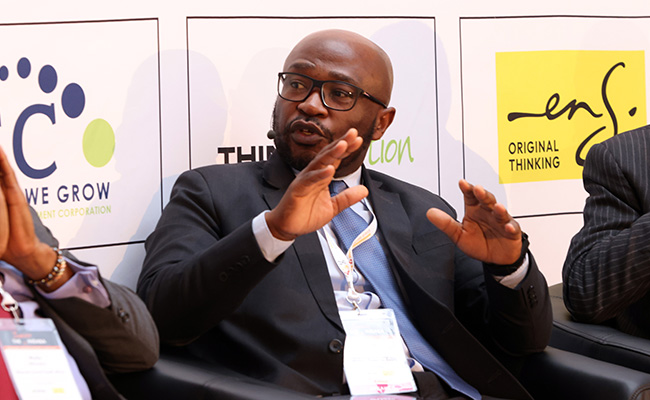
Top image: Gareth Penny. Picture: ninetyone.com.
Sign up to Currency’s weekly newsletters to receive your own bulletin of weekday news and weekend treats. Register here.