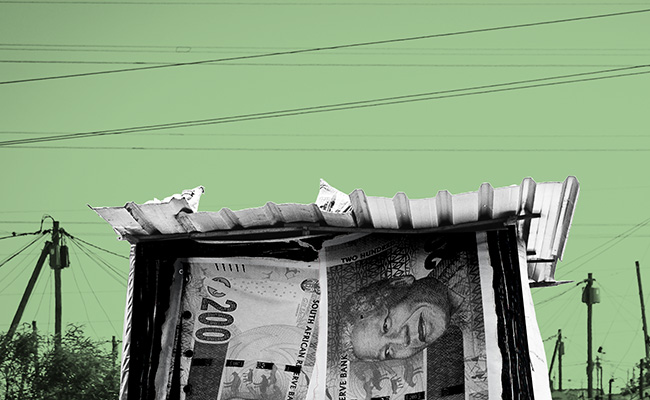


Were South Africa’s cabinet – dominated by the ANC – to form a soccer team, an appropriate name might be “The Own Goals”. This impression was reinforced by the appointment of Seiso Mohai, the deputy minister in the presidency, as the new chair of the state-run Public Investment Corporation (PIC) on Thursday, along with a new board.
A new band of eight non-executive members was necessary after a political bust-up between finance minister Enoch Godongwana and his deputy, David Masondo, led to the previous board being dissolved. Masondo – now in his eighth year as a deputy – was until last week the chair of the board that suspended CEO Patrick Dlamini over a 26-page whistleblower report. Godongwana, in contrast to his deputy, believed Dlamini should never have been put on ice.
For critics, this drama eloquently highlights the risk of ignoring a key recommendation by judge Lex Mpati, who presided over a commission of inquiry into what went wrong at the PIC between 2015 and 2018: that the board be chaired by an independent non-executive director who is not a politician.
“If the recommendations of judge Mpati and the commissioners had been implemented, we wouldn’t have seen this circus,” Jannie Lubbe, the evidence leader at that commission, said this week.
But if the goal was to put distance between the politicians and the board of the PIC, and echo the period of stability after the Mpati report, when businessman Reuel Khoza chaired the board, this new board fails that test. Of course, the government didn’t have much option – not after blundering badly by passing legislation in 2021 that stipulates a deputy minister in the economic cluster must chair the board.
So, when President Cyril Ramaphosa’s cabinet explained that, along with the new appointments, Godongwana would “continue to drive the reforms of the PIC as recommended by judge Mpati”, this raised hopes that the government would begin to dismantle the PIC amendment, barely five years after it was passed.
The Public Servants Association (PSA), which represents the civil servants whose money has been invested, says the legislation remains an obstacle to getting the best result.
“Of course we would want the PIC to be chaired by an independent director and not a politician, but the law now prescribes that the chair must be a deputy minister in the economic cluster,” the PSA’s Reuben Maleka tells Currency. “The first priority is to stabilise the PIC, but after that, we believe that legislation must be changed.”
Labour nominees to be made next week
Maleka says the PSA and the trade unions will send “additional names of potential directors to Godongwana next week” to be added to the PIC’s board later to represent labour.
“At this point in time, it seems like there’s a positiveness around the new people that have been appointed by the minister,” says Frikkie de Bruin, general secretary of the Public Service Co-ordinating Bargaining Council (PSCBC), where the government and major trade unions negotiate and agree on terms for civil servants. The PSCBC, which includes 16 unions – the largest of which is the South African Democratic Teachers Union – and the PSA, will probably submit their names at the latest on Monday, he adds.
The minister “explained that he’s under pressure and wants to bring stability to the PIC and doesn’t want to leave it unmanaged for too long”, De Bruin explains, so labour sympathised with the government’s position. The three labour seats, as “required by law”, had to wait, with the names due on August 5 at the very latest.
Geordin Hill-Lewis, the leader of the DA, describes Mohai’s appointment as a “missed opportunity to restore public confidence in one of South Africa’s most important financial institutions”.
Hill-Lewis says the DA’s Ashor Sarupen, who is one of the two deputy finance ministers, would have been a better pick to chair the board, while efforts are being made to change the law and prevent politicians from chairing the organisation.
“This crisis was not brought on simply by bad luck. It was brought on because of the ANC’s policy of placing party loyalty above the country’s interests. And this is something that matters deeply to the teachers, nurses, police officers and other public servants whose retirement savings the PIC is entrusted to protect,” he says.
Steps to stop political appointees
Nonetheless, Hill-Lewis says the commitment to implement Mpati’s recommendations on this front is to be commended.
Already, pressure is being placed on the government to do this. Two weeks ago, DA MP Mark Burke submitted a new piece of legislation – the Pension Protection Bill – to parliament’s legal services arm with a view to tabling it quickly.
“Under this short and decisive bill, an independent panel, not a politician, will appoint the directors of the PIC,” he said. “The chairperson will no longer be a deputy minister. In fact, no person holding a political office or having held a political office in the three years preceding their appointment will be permitted to serve as a director.”
This, Burke said, will help prevent a repeat of this current crisis, at the heart of which lies a “refusal to appoint non-political directors”.
Mohai is, by all accounts, a solid enough pair of hands. He had extended stints in the ANC Youth League, including on its executive committee from 1998 to 2001, and at one point, he chaired the ANC caucus in parliament. His academic background focused on technology and management, and he has kept a relatively low profile.
Earlier this year, Mohai decried the “false narrative” that BEE has only benefited a small group of politically connected people, arguing that for the policy to be successful, “it must be integrated with industrial access”. Access doesn’t come any bigger than a seat at the table of the country’s biggest public sector pension fund manager.
Business and anti-corruption expertise
Other than Mohai, the depth of business expertise looks impressive.
Lebo Mokgabudi knows the PIC well, since she was a trustee at its biggest client, the Government Employees Pension Fund, and has extensive fintech experience, including launching her own e-commerce business. Vivien McMenamin has a breadth of corporate experience, including at paper group Mondi, and previously served on president Nelson Mandela’s task force on local economic development, and she was on president Thabo Mbeki’s economic advisory panel.
Moipone Ramoipone is an auditor and chief director of the National Treasury, while Itani Mafune is an accountant who worked at Absa and founded consulting firm Shuma Accounting. Bajabulile Swazi Tshabalala, who held senior roles at Standard Bank, Old Mutual and Transnet, is a former CEO of the Industrial Development Corporation, another state-run company with a financial and development mandate.
Patience “Pinkie” Nqeto is an experienced development finance executive and corporate governance specialist who knew Dlamini from his time as CEO of the Development Bank of Southern Africa between September 2012 and March 2023. She joined the board of as an independent non-executive director in August 2017 and became its deputy chair in September 2019.
And if you’re looking for a person with a keen instinct for rooting out corruption, Ouma Rasethaba is the former head of the Asset Forfeiture Unit, who helped recover billions for the state, including about R1.1bn from McKinsey in relation to R2bn in Transnet and Eskom contracts that were later found to be tainted during the state capture era.
But with the claws of the politicians still dug into the PIC, even the best board will be up against it.
ALSO READ:
- How to build a PIC dream board
- High drama as suspended PIC boss goes to court
- PODCAST: ‘Sharp Sharp’ – PIC cleared for crash-landing
Top image collage: Public Investment Corporation (Patrick Dlamini); lanseria.co.za; Rawpixel; Currency.
Sign up to Currency’s weekly newsletters to receive your own bulletin of weekday news and weekend treats. Register here.