
When a car is not serviced regularly enough, the driver starts feeling a rattle. When a mobile phone falls behind on software updates, the user gets apps that hang. And when the fiscus does not update thresholds? Then taxpayers soon experience wealth-sapping by stealth in the form of fiscal drag or bracket creep.
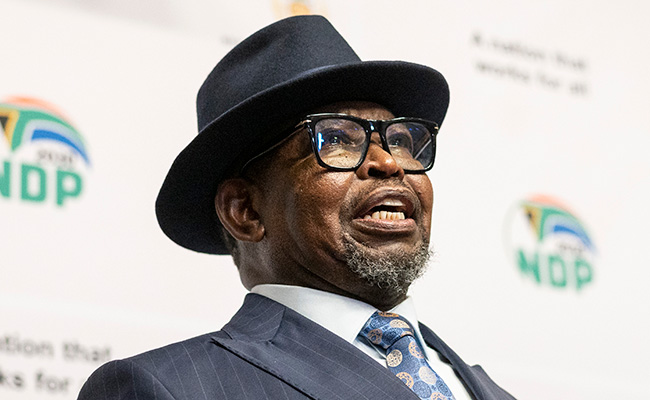
And what a drag it has been for the past two years. No inflation-related adjustments due to “fiscal constraints”. This time around, though, finance minister Enoch Godongwana announced some relief.
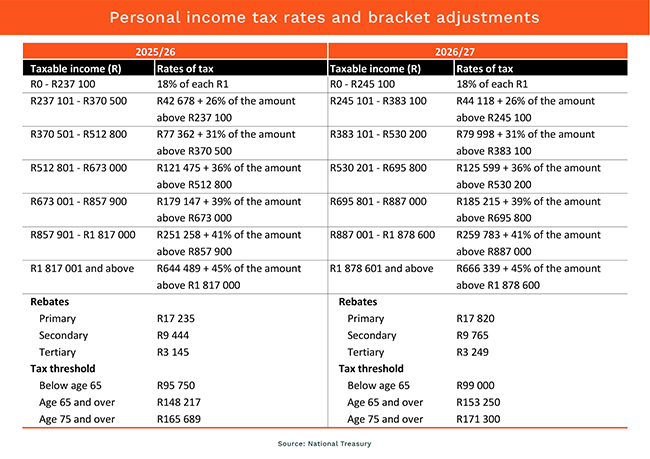
“We are … proposing additional tax measures to ease the financial burden on households and businesses, by adjusting personal income tax brackets and rebates fully in line with inflation,” he said in his budget speech. This also goes for the medical tax credits that had not seen an inflation-related adjustment in years.
Not the most generous move, as Treasury expects inflation to be only about 3.4% this year, but relief nonetheless. (Best to look at the detailed numbers on the table supplied by Treasury.) More importantly, plans to rake in billions more have now been shelved thanks to better company results – and tax receipts – fuelled by the commodities boom enjoyed especially by gold, platinum and copper miners.
“As a result, government has decided to withdraw the R20bn in tax increases provisionally included in the May 2025 budget,” said Godongwana.
At least there is some acknowledgement that individuals can only be milked so far. Treasury also noted that personal income tax increased as a percentage of total tax revenue, continuing a trend that began in 2007. Reading through the Budget Review you are reminded of the chilling fact that nearly half of personal income tax is paid by the 7.7% of individuals with taxable income above R1m a year. Solving the narrowness of our tax base is a big problem that will obviously take years.
More than 20 thresholds increased
Government, so claims Treasury, remains on track to achieve its fiscal targets over the medium term, though “without burdening taxpayers with further increases or harming the nascent economic recovery”.
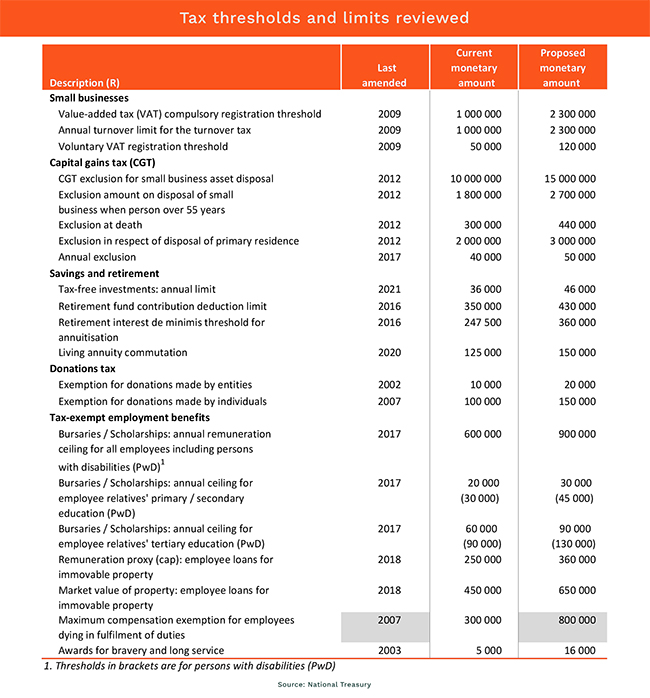
Hidden in the long grass of the budget there is a lot more unburdening. Adjustments are being made not only to the tax bracket, but to everything from the VAT threshold to tax-exempt employment benefits. (Who knew that you could not be taxed on the first R5,000 you receive as an award for bravery and long service? That has now been increased to R16,000!)
More than 20 thresholds are being increased. Some of these, like the bravery award, have not been touched since 2003. A more notable update is the VAT registration threshold to R2.3m from R1m, where it had been stuck since 2009. Likewise the annual turnover limit to qualify for the much less onerous turnover tax, has been upped from R1m to R2.3m, also for the first time since 2009.
Needless to say, South Africa – and its small business environment – has changed much since the year the Black Eyed Peas had a hit with Boom Boom Pow. Not so much boom, boom or pow for small businesses; more like ow. As a result of inflation, many a sole proprietor and micro-enterprise has since had to go through the pain of VAT registration, or traded themselves out of the benefits of the turnover tax regime.
KPMG lead economist Frank Blackmore reckons that some housekeeping was long overdue and says these adjustments should actually happen annually or biannually.
“This is removing red tape for small and medium-sized businesses,” he says. And it should help entrepreneurs focus on the running of their companies instead of burying them in compliance.
Momentum chief economist Sanisha Packirisamy agrees that it will ease the cost of doing business and be a step in the right direction in dismantling the various barriers to entrepreneurship in the country.
And not only the businesses and their employees will benefit, says Citadel chief economist Maarten Ackerman. Even the South African Revenue Service will be freed from pursuing compliance on so many minnows, and be able to focus on bigger fish.
A long list of adjustments
On the personal front, those who have a few million here or there, and have been diversifying their portfolios internationally, will be glad to hear that the single discretionary allowance limit for private individuals has also been increased from R1m to R2m per calendar year. This is to take inflation and currency fluctuations into account. Treasury has also now said the limit will be reviewed regularly.
There is a separate story about the increase in the annual contribution to tax-free savings accounts (which you can read here). On the same theme, the maximum retirement contribution has been increased to R430,000 per year, from R350,000 – this despite speculation that the ceiling could actually be lowered.
Higher allowances will also take effect when benefiting from the disposal of assets. The annual capital gains tax exclusion will increase to R50,000 from R40,000, while the exclusion for small business asset disposal will now be R15m, compared with R10m for the past 14 years.
Have a look at the long list of adjustments supplied by Treasury.
Generally, on the consumer front it was a relatively favourable budget, according to Packirisamy. Many of the increases that usually hit the wallet, such as the fuel levy or excise duties, were in line with inflation or even below it, she adds.
If only national budgets were more like phones. Treasury’s thresholds could definitely do with automatic updates.
ALSO READ:
- South Africa’s debt finally peaks, and growth is the target
- 10 things to know about the budget
- Budget by the numbers: Tax relief and a break for diamond miners
Top image: Rawpixel/Currency collage.
Sign up to Currency’s weekly newsletters to receive your own bulletin of weekday news and weekend treats. Register here.