

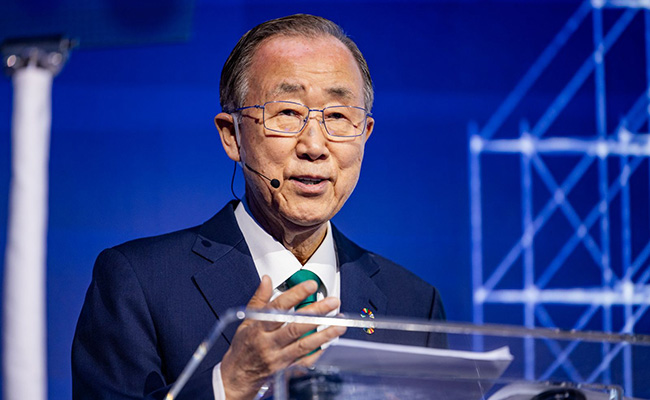

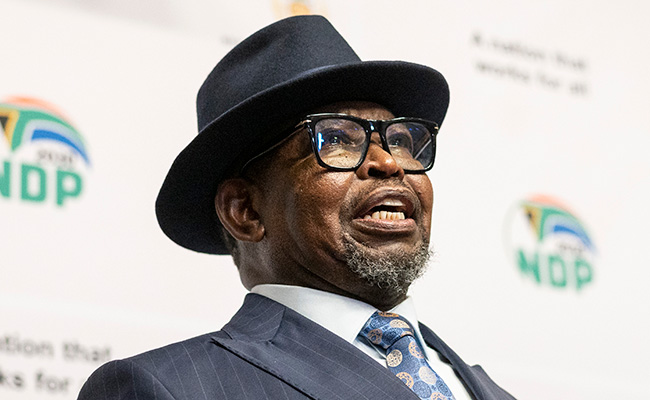
In Cape Town this week, Ban Ki-moon, the 81-year-old former secretary-general of the UN, regaled Standard Bank CEO Sim Tshabalala with tales of how South Korea clawed its way to prosperity.
Growing up at a time when the country was a colony of Japan, his mother couldn’t read, and his father had the bare bones of schooling. “Korea was very poor, as you [in Africa are today]. I didn’t have any classrooms, we had to sit in the dirt and study. When it rained, there was no class,” he said, adding: “We really liked when there was no class.”
This was more than a Dickensian tale of woe, however. Ban’s story at the African Markets Conference was meant to shed light on why it is that in the 1950s, when he was a child, South Korea had a similar GDP per capita to most African countries (and less than Ghana), yet today, its GDP per capita is $36,000 – more than 23 times Sub-Saharan Africa’s $1,532.
“Korea, born from the poorest of countries, has become the one country in the world that has … turned into a donor country from being a recipient country,” he said.
Okay, but how has it done this, asked Tshabalala. What caused this divergence of wealth, and how could South Africa emulate the success of this Asian Tiger, now better known as the birthplace of mega-corporations like Samsung and Hyundai?
“The most important thing [is] education, quality education,” Ban said. “When you’re well-educated, you have a good sense of democracy, a good sense of leadership and a good sense of how one can contribute to your own community.”
The second prerequisite, he said, is good leadership at the political level. Here, Sub-Saharan Africa has fallen woefully short; just look at Tanzania’s laughable 98% vote for President Samia Suluhu Hassan in last year’s election, Paul Kagame’s 99% of the vote in Rwanda in 2024, Cameroonian President Paul Biya’s 44th year in power, and Zimbabwe’s brutally intolerant Zanu-PF.
Even in South Africa, a tolerance for non-performing and corrupt political parties – with the ANC more often than not in the firing line – has enabled a collapse in municipal services to the extent that of the country’s 257 municipalities, 151 are bankrupt and 43 are deemed to be “in crisis”.
This is especially troubling because, as Ban argued, African countries have a far greater natural endowment than South Korea ever had. “Korea never had any natural resources, while you have abundance of national resources – even diamonds or lithium, cobalt, manganese or whatever,” he said.
These African countries need to think bigger than simply mining, he said, and focus on beneficiation and refining these metals. But, he said, that “needs the good sense of political leadership of political and economic leaders”.
Fetish for growth
It sounds like a deceptively simple recipe – perhaps too simple.
“It is naive to imagine that if we just get education right in South Africa, everything will be fine,” says Adrian Saville, founder of Boundless World and a professor at the Gordon Institute of Business Science. “There is, of course, merit in making these comparisons to show how countries can actually shift their economies, but South Korea’s repositioning was far more intentional than just focusing on education.”
First – and unlike South Africa – the Asian country made economic growth its one northern star. South Korea almost fetishised GDP growth above all else; every policy and government arm was recalibrated in service of getting the economy flowing.
“There was absolutely clarity on the country’s markers for success. Its education system had to deliver specific skills and capabilities to feed that growth. South Africa, by contrast, doesn’t have building a ready workforce as its guiding principle for education,” he says.
Second, South Korea prioritised savings and investment to fuel a policy of export-led growth. In the early years, its savings rate was about 12% of GDP, but this has nearly trebled to 35%. South Africa, again, doesn’t look fabulous by comparison, with its savings rate equal to about 16% of GDP last year.
“South Korea provided tax incentives for exports to actually win market share globally. This is what led to the foundation of Samsung, Hyundai and steel company Posco. Again, this investment was specifically focused: the country realised there was no point having very well-educated people with nothing to do,” Saville says.
This was a policy underpinned by technocratic excellence, not political alliance, he adds.
Saville concedes that South Africa doesn’t have the geographical advantage of being near to a country like China, which began its ascendancy at a similar time, but says the real vacuum is the clarity around improving our economy.
“More often than not, government talks at cross purposes, and even puts up new barriers to growth,” he says.
Michael Power, a veteran economist who now runs Kaskazi Consulting, says that Ban is “broadly right” – but the world has also changed massively since the 1960s, which diminishes the utility of that comparison.
In particular, automation and AI have changed the game.
“Obviously, money has to be spent on education, and good governance is essential. And it’s true that without these two elements, you’re not going to compete – but these two elements by themselves won’t get you there,” says Power. “You need to be far more intentional with what industrial activities you choose, and the trajectory of any modern economy has become immensely complicated by the rise of automation.”
Back in the 1960s, he says, South Korea and China vaulted up the global ladder by focusing on low-cost, low-quality textiles. Both adapted to more sophisticated products, with China’s transition to low-cost and high-quality products the most notable.
“China has grown from a low-cost labour country to a no-cost automation country. This is a huge change, and it is destined to win the AI war by deploying open weight tools like Deep Seek, which cost virtually nothing. America, by contrast, will lose because it is charging monthly fees for tools like ChatGPT and Grok,” he says.
It is a controversial sentiment – but one that is supported, perhaps surprisingly, by no less a person than Elon Musk.
Speaking on an American podcast recently, Musk said China would “utterly dominate” areas such as AI, electric vehicles and robotics unless there is some major intervention in the US. China, he said during an interview with BlackRock CEO Larry Fink at Davos, has become a “next-level manufacturing powerhouse”.
‘Not a money problem’
So where does this leave South Africa then?
According to Power, the country must again look to three core industries: mining, agriculture and tourism. “There is a fourth – it could get serious energy intensivity, building huge great sun traps in the Northern Cape to capture power from the sun and translate it into aluminium, for instance,” he says.
While South Africa might seem miles behind other countries when it comes to AI, Power says this doesn’t mean it’ll be left behind. “If they use the Chinese AI architecture, they can catch up overnight – Cuba, for instance, has done this, at a low cost.”
For Saville, a sharper focus on removing the “invisible infrastructure” blocking growth – like South Africa’s hazy and business-unfriendly mining policy – would go a long way to make it clear that GDP growth is the country’s main priority.
“If you were to ask 35 South Africans what success for the country would look like, and what its competitive advantage is, you’d get 35 different answers. So, it’s very hard to achieve success in the absence of clear-mindedness, and a determined and focused national agenda,” he says.
As for the education fix, Saville again says the focus should be on building a “skills-ready workforce that can work to improve the society”.
As Power points out, South Africa does actually spend a huge amount on education, more than the global norm; the problem is the money is mismanaged.
Stats SA underscored this point this week, revealing that South Africa spends 6.7% of GDP on education, equal to 21% of government spending. “South Africa’s education spending compares well with international benchmarks. Unesco recommends that countries spend 4%-6% of GDP or 15%-20% of total government expenditure on education,” it says.
In other words, it spends more, yet the outcome is abysmal. This week, findings from a study by the 2030 Reading Panel showed that only 31% of pupils in grades 1 to 3 can read at their grade level in their home language. Of grade 3s, 15% scored zero on reading assessments.
“The money is being spent; there is just no proper management of our education system, and that’s why South Africa is falling behind. We’re not getting enough bang for our buck,” says Power.
This cuts to the nub of the country’s vulnerability: an accountability vacuum for when things go wrong. As much as Ban is manifestly correct, hurling money into a void, in the absence of a clear purpose, won’t transform South Africa into South Korea.
ALSO READ:
- The price of state dysfunction
- The missing ingredient to economic growth: Confidence
- Why halting SA’s debt binge is a huge win for the GNU
Top image: Ban Ki-moon. Picture: supplied.
Sign up to Currency’s weekly newsletters to receive your own bulletin of weekday news and weekend treats. Register here.




On top of improved outcomes for governance and education , developing countries need access to cheap energy to climb up the Economic development ladder. The incumbent administration’s focus at the moment is on a Net Zero Power system which will make energy less abundant and more expensive. Even the attempt to build Kusile and Medupi had massive overruns which made coal power way more expensive than it should have been. Tthe general malaise of no maintenance has thrown the energy availability in ZA totally out of synch with the demand for the energy. Building Fission reactors means we’d probably get into bed with Rosatom ( Russian Energy Parastatal). That could be Politically devastating. Fusion reactors still have a long way to go.
The 6+ gigawatts of embedded Solar/battery backups on the roofs of residential suburbs and surrounding shopping malls only scratches the surface and is quite expensive if not setup properly. It only gets cost effective iff Eishkom keeps piling on the increases at more than double the inflation rate. Unfortunately so far so good for the last 10 years of increases.
So cost of energy in ZA prevents us from powering up an industrial growth path or even a tertiary industry growth path like Data centres abd the like.