If South Africa wants to build long-term wealth, we need to start with ownership. Too few South Africans own investments that build long-term wealth – and policy is not keeping up.
One of the most practical tools already available to us is the tax-free savings account (TFSA), yet we are not using it nearly ambitiously enough.
When TFSAs were introduced, they represented a meaningful step towards financial inclusion. They simplified investing and gave ordinary South Africans access to tax-free growth for the first time. But the limits, currently R36,000 per year and R500,000 over a lifetime, reflect a cautious policy era. Today, those ceilings are simply too low for a country trying to build a genuine savings culture.
Incremental increases will not change behaviour. South Africa should be debating structural reform: materially higher annual limits, an expanded lifetime cap and automatic inflation indexation so incentives retain their real value over time. Encouraging long-term equity participation within TFSAs would further strengthen their role as engines of compounding rather than short-term savings vehicles.
Long-term thinking
This is not about tax concessions for a small group of investors. It is about national capital formation. Households that own assets build resilience, reduce long-term dependence on the state and participate directly in economic growth. Ownership changes outcomes, but it also changes mindset. Investors begin to think in decades rather than months.
Much of our economic debate focuses on redistribution, fiscal consolidation or growth forecasts, yet we rarely confront the structural challenge beneath all three: too few South Africans own productive assets.
Without ownership there is no compounding. Without compounding there is no long-term wealth creation. And without long-term wealth, inequality becomes persistent rather than temporary.
If we are serious about building an inclusive growth economy, we must move beyond income debates and focus on ownership reform. Expanding TFSAs is the first lever. The second is even more transformative: investing at birth.
Capital ownership from day one
Imagine every child born in South Africa automatically receiving an investment account seeded with a modest initial contribution. Not as welfare or consumption support, but as capital ownership from the beginning of life. Even a small amount invested at birth and left untouched for 18-25 years can meaningfully alter financial outcomes. More importantly, it reshapes expectations. A child grows up understanding they are not only part of the economy but an owner within it.
International evidence supports this approach. Research into children’s savings accounts shows that early asset ownership improves educational participation, strengthens long-term saving behaviour and encourages families to engage more actively with financial planning.
Compounding works because time puts in most of the effort – and time is the one advantage policy can distribute equally.
For an invest at birth framework to succeed, participation must extend beyond government alone. Families, benefactors and businesses should all be able to contribute easily. A dedicated “TFSA Kids” structure could protect long-term compounding while allowing funds to be used later for education, entrepreneurship, housing or retirement savings. Contribution incentives and limited matching mechanisms would encourage inclusion across income groups, while simple digital systems would enable grandparents, employers and corporates to invest alongside parents.
The most powerful reform would be automatic account creation linked to birth registration. Behavioural economics teaches us that defaults shape outcomes. When investing requires active effort, participation remains limited. When ownership becomes automatic, saving becomes cultural rather than exceptional.
Why saving is imperative
The predictable objection is fiscal cost. Yet the greater risk lies in failing to build a savings culture at all. A nation with widespread asset ownership places less pressure on social systems, deepens capital markets and builds financial resilience at household level. Tax-free growth should be viewed not as lost revenue, but as an investment in national stability.
South Africa’s economic challenges are often framed year by year, but wealth creation operates on generational timelines. Twenty years from now, success should be measured by how many households own meaningful assets, how many young adults begin adulthood with capital rather than debt and how many families can withstand economic shocks without falling back into vulnerability.
Inclusive growth ultimately depends on inclusive ownership. A country that does not save struggles to grow. A country that owns compounds. And a country that compounds, transforms its future.
The real question is not whether South Africa can afford reforms like these. It is whether we can afford to keep delaying them.
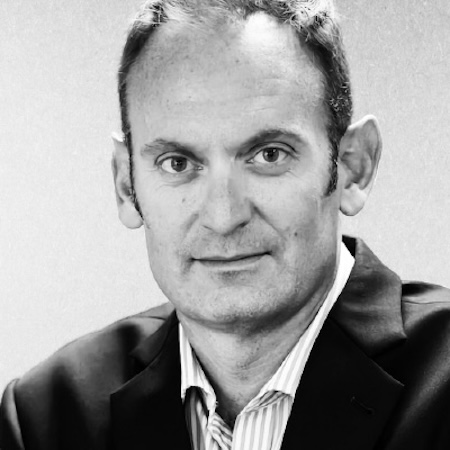
Charles Savage is the CEO of Purple Group, owner of investment platform EasyEquities.
ALSO READ:
- R1,000 for every South African baby? Sarupen thinks it could work
- Want tax-free savings for your kid? Here’s what to do – and not
- The value of a tax-free savings account
Top image: Rawpixel/Currency collage.
Sign up to Currency’s weekly newsletters to receive your own bulletin of weekday news and weekend treats. Register here.