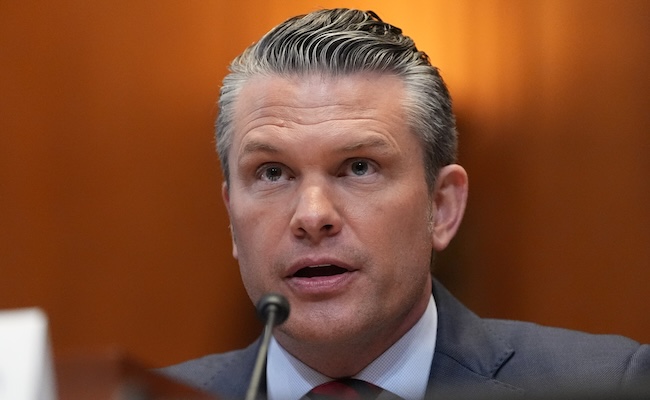

US defence secretary Pete Hegseth faced tough questions Tuesday from Republican and Democratic lawmakers about the Trump administration’s end game for the Iran war, the conflict’s rising $29bn cost and its impact on diminishing US weapons stockpiles.
While the Pentagon chief softened his tone from hearings before Congress nearly two weeks ago, notably avoiding the same pointed criticism of lawmakers, he got far more pushback from members of his own Republican Party about the levels of US munitions used in the Iran war and President Donald Trump’s intense criticism of traditional allies for not taking part in the conflict.
“I take issue with the characterisation that munitions are depleted in a public forum,” Hegseth said. “That’s not true.”
Even as he insisted that the US military has plenty of missile defence systems and other munitions for the Iran war or future conflicts, Hegseth told House and Senate lawmakers overseeing defence spending that the Trump administration is working to ramp up production of weapons.
Pentagon officials also told lawmakers that the cost of the Iran war has risen to about $29bn, the vast bulk of which – roughly $24bn – is related to replacing munitions and repairing equipment, but also includes operational costs to keep forces deployed. That is up from the overall total of $25bn that Pentagon comptroller Jay Hurst revealed nearly two weeks ago. He said the updated estimate does not include the cost to repair or rebuild US military sites damaged in the region.
Republicans tout the importance of American allies
Hegseth faced notable pushback from Republicans on the Trump administration’s straining of relations with longtime allies, with Kentucky senator Mitch McConnell telling Hegseth: “Nato is the most important military alliance in world history.”
“It seems to me that a lot of the European countries think that we’re reducing our influence there, they’re sort of on their own,” said McConnell, the GOP chair of the senate appropriations subcommittee on defence.
Trump has assailed Nato allies and others for not helping reopen the Strait of Hormuz, a vital global shipping corridor, or otherwise offering more support, saying he plans to pull thousands of troops out of Germany in the coming months.
Tom Cole, the Republican chair of the House appropriations committee, voiced his concerns in a separate hearing, saying: “America First has never meant American alone.”
“American power is most effective when it’s exercised in concert with like-minded nations who share our interests and our values,” Cole said.
Bipartisan pushback on munition stockpiles
The hearings before the powerful House and Senate appropriations defence subcommittees spanned four hours as they reviewed the Trump administration’s 2027 military budget proposal, which calls for a historic allocation of $1.5-trillion.
The discussions quickly veered into the handling of a war that appears locked in a stalemate as higher fuel prices pose political problems for Republicans in the midterm congressional elections.
Representative Ken Calvert, the House subcommittee’s chair, asked about the impact of the Iran war on military funding as well as weapons stockpiles drawn down from the conflict.
“Questions persist about whether we are building the depth and reliance required for a high-end conflict,” Calvert said.
Betty McCollum, the defence subcommittee’s ranking Democrat, pressed Hegseth on whether the military has a plan to draw down troops in the Middle East if Congress passes so-far-unsuccessful efforts to end the Iran war.
“We have a plan to escalate if necessary,” Hegseth said. “We have a plan to retrograde if necessary. We have a plan to shift assets.”
He said he would not reveal any next steps publicly. Noting repeated questions from lawmakers over weapons stockpiles, Hegseth said the concerns have been “unhelpfully overstated” and “we have plenty of what we need”.
He said the defence industry has been told to “build more and build faster”, blaming the military industrial base’s inadequate capacity on previous administrations and US aid to Ukraine in its war with Russia.
The Center for Strategic and International Studies has painted an alarming picture of US stockpiles of munitions, including interceptors that can defend against incoming enemy missiles on land and sea.
The think tank said in an April analysis that American forces “expended more than half of the prewar inventory” on four key weapons systems and that rebuilding to adequate levels for a possible war with China “will take additional time”.
The economic impact of the Iran war
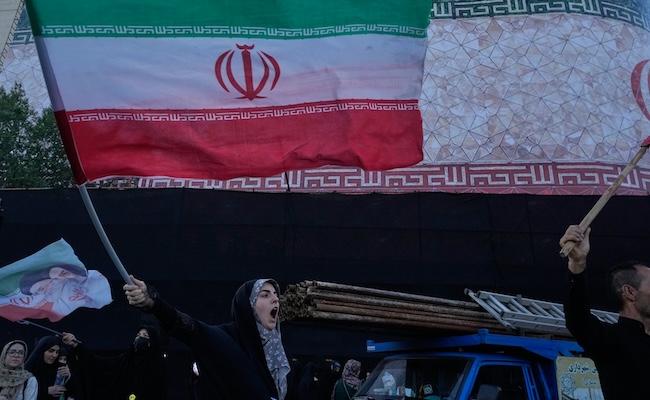
Trump is facing increasing pressure from the economic shocks of Iran effectively closing the Strait of Hormuz, where 20% of the world’s oil normally flows. The US military in turn has blockaded Iranian ports and the two sides have traded fire, with American forces thwarting attacks on their warships and disabling Tehran-linked oil tankers.
Susan Collins, chair of the Senate appropriations committee, questioned whether the Trump administration anticipated Iran’s closure of the strait, which has seen gasoline prices surge.
General Dan Caine, chair of the joint chiefs of staff, said the president is briefed with carefully considered military options.
“It seems to me that there’s been a different plan almost daily of, with dealing with this problem, which is why I ask,” said Collins, who joined Democrats last month in a failed vote to halt the conflict and is facing a tough re-election fight.
Democrats in both hearings repeatedly questioned what the cost of the war would be, from repairing damaged military installations in the Middle East to the rising fuel prices.
“You’re spending families’ hard-earned tax dollars on a war that many strongly oppose, and you’re forcing people to pay more at the pump,” said senator Patty Murray, a Democrat from Washington state. “And yet you’re not even providing a real breakdown for the cost of this war.”
Hegseth responded rhetorically: “What is the cost of Iran obtaining a nuclear weapon? And the fact that this president has been willing to make a historic and courageous choice to confront that it comes with cost – and we recognise that.”
Senator Chris Coons, the ranking Democrat on the Senate’s subcommittee, repeatedly asked how the Trump administration will reopen the strait to commercial shipping.
“If we control it, how do we reopen it?” Coons pressed Hegseth in a tense exchange.
Hegseth responded defensively, saying the senator was being disingenuous and ignoring the “incredible battlefield successes”.
Coons shot back that he was worried that “you’ve achieved a series of tactical successes but are on the verge of a strategic loss”.
Reporting by Ben Finley, Konstantin Toropin, Bill Barrow and Stephen Groves.
ALSO READ:
- US calls on China to help open the Strait of Hormuz
- Hegseth grilled over Iran war
- Truce under pressure as US fires on Iranian forces
Top image: Defence secretary Pete Hegseth testifies at a Senate appropriations subcommittee on defence hearing on May 12 in Washington. Picture: AP Photo/Alex Brandon.
Sign up to Currency’s weekly newsletters to receive your own bulletin of weekday news and weekend treats. Register here.