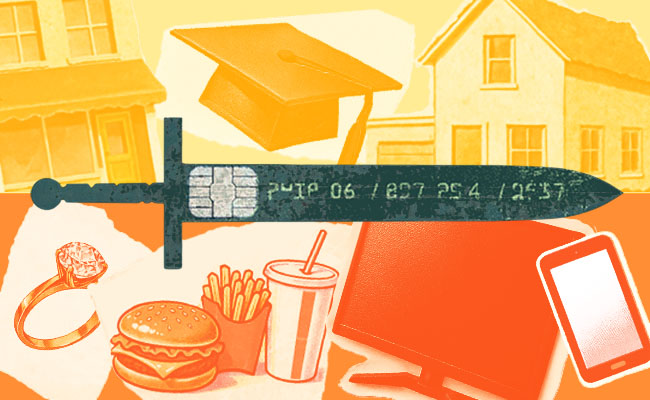

Mention credit in a room full of people and you’ll get a polarising response. For some, it represents opportunity – the mortgage that became a home, the business loan that became an empire, the student debt that became a career. For others, it is a suffocating burden, a monthly reminder of decisions made in desperation or ignorance.
The truth is more nuanced than either camp admits. Credit, much like capitalism itself, is neither inherently good nor evil. It is a tool – and like any tool, its value lies entirely in the hands of the person wielding it.
As old as civilisation itself
To understand credit, you have to appreciate just how old it is. Long before paper money or coins, human beings were extending credit to one another. Archaeological evidence from Sumer, Mesopotamia, dating back to about 3500 BCE, reveals clay tablets recording grain loans to farmers – commercial transactions with interest, repayment timelines and consequences for default.
The Code of Hammurabi, from Babylon in about 1754 BCE, contained some of the world’s earliest consumer protection laws, including caps on lending rates.
Credit financed the trade routes connecting Asia to Europe. It funded the voyages of exploration that drew the world’s maps. The Medici family financed the Renaissance; the Rothschilds built one of the most powerful dynasties in history not through conquest but through the innovative use of credit instruments. The British Empire expanded in no small part because of the sophistication of its credit markets. To condemn credit wholesale is to misread history.
When the tool becomes a trap
And yet, the critics are not wrong. Credit, misused, is one of the most effective poverty traps ever devised.
The mechanism is straightforward. You borrow to consume – that television, outfit or car you’ve always wanted – and suddenly you are paying tomorrow’s income for yesterday’s purchases. The interest compounds. The minimum payment barely touches the principal. You borrow again to cover the shortfall. Before long, you are not living your life; you are servicing your past.
This is not merely a failure of individual willpower. Predatory lending, inadequate financial literacy, stagnant wages and social pressure conspire to push people towards consumption-linked debt – the most dangerous kind. When debt generates no income, creates no asset and builds no future, it is simply deferred poverty with interest attached.
The lever that builds wealth
Consider the other side. A young entrepreneur borrows to buy equipment that generates revenue. The returns exceed the cost of the loan. The debt, in this case, is a genuine accelerant of wealth creation.
The same logic applies to a home loan on a property that appreciates in value, a student loan that unlocks a higher earning trajectory, or a business overdraft that allows a company to fulfil a contract it couldn’t otherwise finance. In each case, debt is doing productive work – pulling forward future value and deploying it in the present to create more still.
This is the distinction that separates financially sophisticated households from those that struggle: not whether they use debt, but how. Revenue-linked debt – debt that pays for itself and then some – is fundamentally different from consumption debt, which simply transfers wealth from borrower to lender over time.
South Africa’s uncomfortable mirror
South Africa offers a sobering case study in what happens when a society leans too heavily on the wrong kind of credit. We carry one of the highest household debt burdens in the emerging-market world. According to the latest Credit Stress Report by Eighty20/XDS, there are 26-million credit-active people in South Africa with 55-million loans and a total loan balance of R2.7-trillion.
Home loans make up almost 50% (R1.32-trillion) of that total, with vehicle asset financing a further 22% (R593bn). Consumption-linked credit – store cards, credit cards and personal loans – accounts for 26%.
The composition is troubling. Unsecured loans form a disproportionate share of what South African households owe: debt that creates no assets and generates no income, spent on depreciating goods and daily expenses at interest rates that can exceed 20% a year. Compare this with the UK, where home loans account for more than 88% of total household debt and vehicle financing just 3%.
South Africans spend roughly 29% of after-tax income on debt repayments – just under the 30% threshold most financial advisers regard as the danger zone. The more telling number: overdue debt jumped 6% quarter on quarter to R224bn, now representing 8.4% of the total loan balance. One in three loans is in arrears; 39.9% of credit-active individuals have at least one loan more than three months overdue.
At a national level, the picture is no more comforting. South Africa spends more on debt servicing than on health or basic education. Interest payments consume a growing share of the national budget, crowding out the very expenditure that might stimulate growth. The debt trap that ensnares individual households has, at scale, begun to ensnare the state.
This is not a counsel of despair. It is a warning about trajectory – and trajectories can be changed.
Two rules to live by
Whether managing a household budget or a national one, two rules of thumb separate credit as liberation from credit as trap.
First: never let your total debt servicing exceed 30% of after-tax income. Once repayments consume more than a third of what you earn, financial life begins to contract – you lose the ability to save, absorb unexpected expenses or invest in your future. At 30% and below, debt remains a managed instrument. Beyond it, debt begins to manage you.
Second: aim to keep at least 80% of your debt burden linked to revenue-generating or asset-building activity, with no more than 20% in consumption-linked debt. Put plainly: borrow to build, not to spend.
Your home loan, your business financing, your investment in skills or equipment – these are debts working on your behalf. Your retail account, your personal loan for a holiday, your credit card balance carried month to month – these are working against you. Ideally, consumption-linked debt should be zero. But when it begins to dominate your obligations, the mathematics of wealth creation work against you just as relentlessly as interest does.
The tool in your hands
Credit will neither save you nor destroy you. It will simply amplify whatever decisions you are already making. Used with intention and discipline, it is one of the most powerful tools available for building a stable, prosperous life. Used carelessly or out of desperation, it becomes a mechanism for transferring your future income to someone else’s pocket.
The question is not whether to use credit. The question is whether you are using it – or whether it is using you.
Thomas Brennan is a co-founder of Franc, a South African fintech that helps people invest easily and affordably.
ALSO READ:
- Cracking the credit score code
- South Africans are taking home 47% less than a decade ago – the ugly truth
- Money, trust and hidden debt: Lessons from TV
Top image: Rawpixel/Currency collage.
Sign up to Currency’s weekly newsletters to receive your own bulletin of weekday news and weekend treats. Register here.