


Not to flog a (dead) horse metaphor, but from mid-February, the lunar calendar moves into the year of the Fire Horse – ostensibly a time for optimism, growth and energy. Not so much for the ANC, it would seem, as the party looks set to continue its electoral slide.
Cyril Ramaphosa’s party stumbled badly in the 2024 national election, winning just 40.2% of the vote against 2019’s 57.5%.
Enter the government of national unity (GNU), a broad coalition wrought around a tie-up between the ANC and the erstwhile opposition DA. It saved the country from a potential “doomsday coalition” with the EFF and MK. However, it’s not been plain sailing; the GNU has seemingly lurched from one crisis to another – budget, National Health Insurance (NHI), expropriation without compensation – with perennial questions arising around the stability of the GNU and what that means for the economy.
The good news for 2026 is that the coalition looks likely to hold.
That’s not to say things will be easy; friction points abound – NHI is just one example. But as political analyst Susan Booysen puts it, “we do crisis”. And the GNU is no different. “Crisis gets the parties into specific negotiations, more consensual deliberation … on statements to be issued, and what can be done and what cannot be done,” she tells Currency.
Local government elections
One potential point of friction – one that political commentators will be watching closely – is the local government election. The poll is set to take place anywhere between November and next February, with November looking likely.
Parties are jockeying for position, with the ANC’s electoral woes seeing increasing fragmentation in the political space.
The DA has been quick out of the gate, targeting South Africa’s economic hub by running Helen Zille as its candidate for mayor of Joburg. The “Zille effect” doesn’t guarantee that the DA will be the biggest party in the metro after the election, but it is likely to add a few percentage points, says The South Africa Brief co-founder Jonathan Moakes, as the party achieves differential turnout among its supporters in a low-participation poll.
It’s also likely to position the poll in Joburg as a binary between the DA and ANC, he adds, in a city where voters are keen to put years of service delivery failure behind them.
The DA is likely to consolidate its gains of recent years and looks set to perform well in the Gauteng metros. Nelson Mandela Bay is more up in the air; the Patriotic Alliance (PA) has been making inroads in the Eastern Cape metro, as well as in western parts of the province and the rural Western Cape, he says.
MK will continue to be a force in KwaZulu-Natal – even if the most recent Social Research Foundation poll has shown its support slipping – while the EFF remains in a state of stasis. Nonetheless, both could play kingmaker roles in the poll, says Booysen.
Action SA, meanwhile, has seen a resurgence in by-elections after a tough 2024 campaign. Herman Mashaba’s party has performed well in Soweto, Merafong and Kwa-Thema in Ekurhuleni, says Moakes. So, if it sticks to a strategy of targeting township and peri-urban voters, it could do well.
ANC losing ground
The decline of the ANC, meanwhile, has become rapid, says political analyst Ralph Mathekga, with “renewal” in the party failing to pay dividends, and corruption rife.
The party has lost support in strongholds like Soweto and Kwa-Thema in by-elections. While its primary electoral slide occurred in 2024, where it lost votes primarily to MK and as a result of its supporters staying away from the ballot box, it will continue to lose votes at the margins: to MK in KwaZulu-Natal, the PA in the Eastern Cape and middle-class/professional votes to the DA in the metros, says Moakes.
In fact, The South Africa Brief believes “that in some metros it may struggle to actually pick up enough proportional representation seats to give it coalition heft. It may have to rely on ward seats”, he says.
It’s a continuation of the ANC’s trajectory towards becoming a party of the peri-urban and rural areas.
What does this fragmentation mean for the unity government? Not too much, say analysts. While Mathekga believes regional leaders will see the GNU as a threat to local-level politics, Booysen argues that regional government is a different beast from national; relationships differ, and parties aren’t beholden to the same patterns of alliances as at the national level.
Moakes, meanwhile, believes tensions between parties in the local polls have already been priced in. What’s important, though, is what happens after the elections: the coalitions that form, the hung councils, the minority governments, and the instability this may engender.
He believes the election will leave South Africa firmly in the territory of coalition country. “It’s probably the coalition formation that has a sizeable chance of upsetting stability in the GNU,” he says. Though he does point to the government of provincial unity in Gauteng, which seems to indicate “that the GNU can hold despite various coalitions”.
DA electoral conference
Another election to be watched closely – also with potential GNU friction – will be the DA’s internal leadership poll in April.
Citibank economist Gina Schoeman says consensus is that incumbent John Steenhuisen is likely to continue as party leader – though it’s yet to be seen whether he will face a challenger; Cape Town mayor Geordin Hill Lewis is the most obvious candidate.
Moakes is less sure; he says Hill Lewis has intimated he won’t stand against Steenhuisen, but it’s possible that Steenhuisen decides not to put himself forward for re-election (he’s been under fire in the wake of the Dion George sacking and revelations around the use of party credit cards).
If so, this could be a destabilising moment for the GNU, he says. Hill Lewis would come to the position of party leader from the vantage point of being Cape Town mayor, in an echo of Zille’s tenure as DA leader. “It may lead to a situation where the DA doesn’t feel as bound to stay in the GNU as they currently do, being led by someone who’s an incumbent minister”. On balance, though, he sees Hill Lewis and his team supporting the DA’s participation in the coalition.
In the same vein, some in the DA have pushed back against the GNU. Mathekga points out that the DA will need to ask itself to what extent it is influencing the government’s agenda, and to what end. And whether its changing relationship with the ANC has seen it become more contained in the GNU. “Such issues might come out in the elective conference, and infighting along these lines ensues,” he says.
Budget
If 2025’s budget was a tortuous process, 2026’s is looking to have an easier passage – not least because of the general acceptance of the medium-term budget policy statement last year, says Moakes.
Schoeman believes “South Africa’s got a really constructive structural story underpinning it at the moment that I haven’t seen in about two decades”. Sure, there’s been “political euphoria” around events like Zuma’s ousting, Ramaphosa’s election and the establishment of the GNU. But that was “underpinned by relief and political relief, whereas [now] we have a structural underpin to the South African story”, she says – something best seen in currency and bond yields.
She expects a “good” budget, with National Treasury having drawn a hard line on fiscal discipline and debt stabilisation, and the fact that it hadn’t budgeted for additional corporate income tax revenue from the commodity boom the country has benefited from.
“It’s not to say the budget’s not a problem; of course it is,” Schoeman adds. “You know, they [Treasury] need to stabilise debt; they need to prove that they’re stabilising debt.” Though this will only become properly clear by 2027, when sufficient data points exist to show a downward trend, “we will watch each budget’s debt to GDP”, she says, for indications of how much the government can potentially reduce issuance further.
The global stage
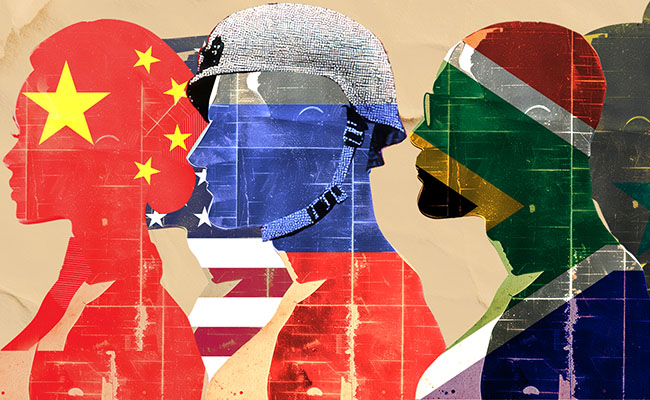
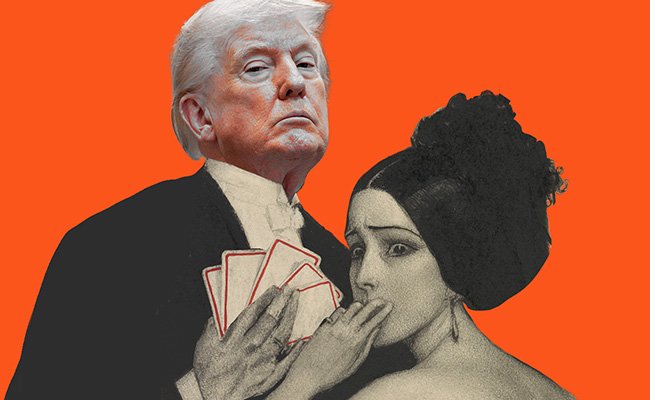
If South Africa is perhaps looking more settled than may be expected, the global stage is something else entirely. Witness Donald Trump’s decision not to invite South Africa to G20 events under the presidency of the US – let alone the uncertainty engendered by his strike on Venezuela early in the new year.
Mathekga points out that there are international headwinds for South Africa in the year ahead – including the possibility of an escalation in tensions with the US, which will impact trade and the economy. (The exact state of tariff negotiations with the US remains unclear at this point, though Schoeman expects an update early in the year.)
“At this point, I think trade relations diplomacy with the US is frozen,” Mathekga says. “And South Africa’s place within the G20 is also a factor whose escalation will increase tensions with the US.”
While the country may gain solidarity from China and possibly EU countries, this will not be sufficient to offset the fallout from continued tensions with the US – not least because other countries will be looking to secure their own bilateral relations with the superpower, and thus not be overly preoccupied with a minnow such as South Africa.
Importantly, Mathekga argues, how South Africa is perceived by the global community is affected by state capacity and the ability to control corruption and crime. On that count, the country is doing badly, with growing unemployment fuelling social tensions, including high crime. “The level of crime in South Africa is an indictment on state capacity; this undermines economic impetus,” he says.
As Booysen adds, the commissions of inquiry, revelations, findings, and reports further reflect on the operation of the state: weak, erratic, and dysfunctional.
Still, if the country can build on the green shoots of economic growth, contain tensions in the government, weather global storms, adjust to coalition politics at the all-important level of local government and build state capacity, 2026 may yet be a year of growth.
Giddy-up!
ALSO READ:
- In it to win it: Is Zille Joburg’s last chance?
- Now the party is over, who washes the G20 dishes?
- Birth pains of the GNU: Fears of Ramaphosa’s resignation
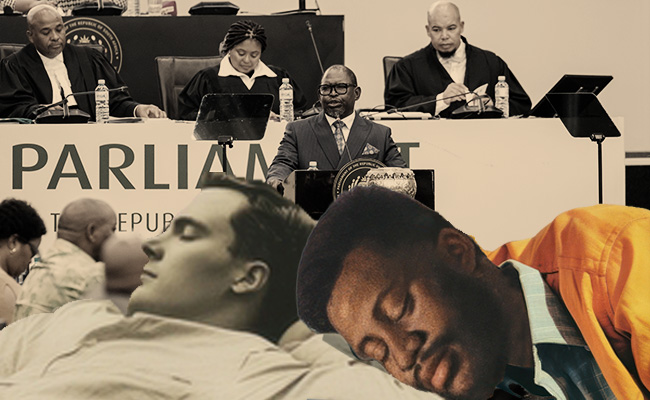
Top image: Rawpixel/Currency collage.
Sign up to Currency’s weekly newsletters to receive your own bulletin of weekday news and weekend treats. Register here.



Not so sure about the GNU, though. It’s clearly pulling in all directions, which cannot be a good thing. The origins of this problem is of course how Ramaphosa hoodwinked the DA and their coalition partners by hijacking the Cabinet. They may hardly have 40% of the vote nationally, but whatever decisions the Cabinet or Ramaphosa makes, they’re secure in the fact that they control 60% of that vote. Thats why CR/Dirco can voice off about Venezuela, and the SA Navy can exercise with Russia, Iran and China. Meanwhile the DSAC cancels our presence at the Venice Biennale because it’s pro-Gaza. A bit of shitshow, innit?