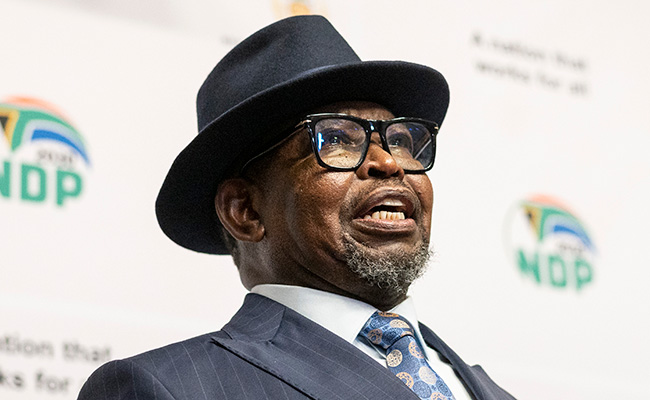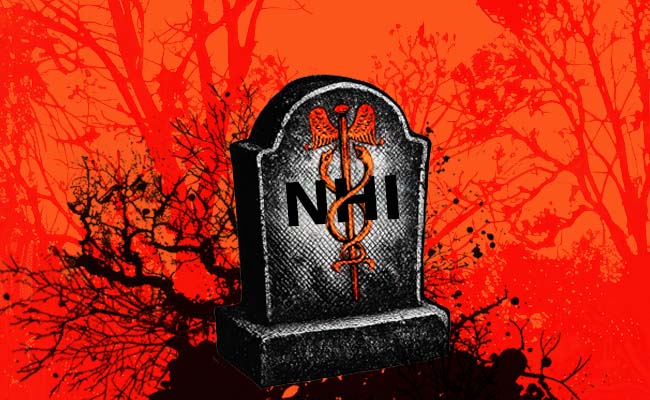


Rather like a ringmaster unaware that his circus had packed up and left town, health minister Aaron Motsoaledi spent this week pledging that National Health Insurance (NHI) is still a go.
NHI, sold by ANC politicians to the public as a cure-all for a flailing public health system, would force all doctors and providers to contract with a single state-run fund, from which all health services would be distributed.
But the policy has become a symbol of pernicious government lawmaking: there is no plan, other than new taxes, for how to fund a scheme that could cost anywhere from R450bn to well over R800bn a year, while one survey found that 38% of doctors would emigrate if this were implemented.
Already, there are 14 court challenges to NHI, legislation signed by President Cyril Ramaphosa in May 2024 shortly before a national election in which the ANC’s support plunged to 40% from 57%.
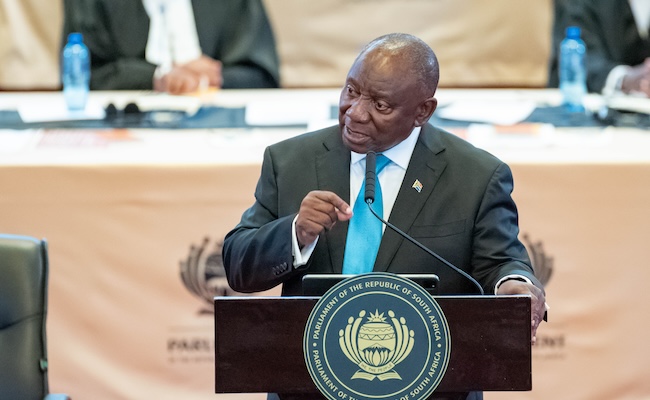
Two weeks ago, Ramaphosa said he would “delay the proclamation of any sections of the NHI Act” until after the Constitutional Court handed down its ruling in one case in May. Yet Motsoaledi, speaking in parliament this week, seemed entirely unfazed by the fact that Ramaphosa has put the plan on ice. “In terms of preparation, we are going full force,” he said. “We did not say we are going to pause the preparation for NHI.”
The health minister said his department will be instituting price controls for private healthcare services, introducing a national electronic patient record system, and overhauling hospital infrastructure.
But Piet le Roux, CEO of Sakeliga, which brought the Constitutional Court challenge, tells Currency the organisation won’t stand by if Motsoaledi violates the court order.
“He has said he wants to continue with ‘preparing’ for NHI, but the court was very clear that all elements of NHI must be halted. So if we see that what he does crosses into implementing it, we’ll see him in court for contempt.”
While Le Roux believes NHI was never really possible, the bigger risk to South Africa would be that, in attempting to roll out the programme, the country’s healthcare infrastructure would be damaged.
“You only needed the government to implement 30% of its plans around NHI, and you would have had doctors leaving the country, medical schemes closing down or raising their tariffs sharply, and investment in private hospitals stopping,” he says.
Motsoaledi acknowledged this week that the legal challenges are causing major delays. “We might be in court for the next 15 to 20 years,” he told MPs.
Zero budget support
Equally alarming is that Motsoaledi appears ready to implement NHI even though there is no way to avoid steep tax increases if it goes ahead. The Solidarity Research Institute has calculated that the government would have to hike income taxes by 40% or raise VAT from 15% to 21.5% to finance the scheme.
“That would be completely unfeasible,” says Le Roux. “Even National Treasury seems to realise that a tax hike of this order just can’t be done.”
There is already widespread public scepticism about state-run funds, given the corruption bubbling over in similar institutions, such as the Road Accident Fund. On this score, it doesn’t help Motsoaledi that this week his health department director-general, Sandile Buthelezi, was arrested on charges of fraud and theft involving more than R1m.
This “shows that the NHI scheme will not work in South Africa – it would become the biggest pot of corruption feeding in decades”, said Michéle Clarke, the DA’s spokesperson on health, in the wake of Buthelezi’s arrest.
It’s not just Ramaphosa’s statement that should have given Motsoaledi pause. In his recent budget presentation, finance minister Enoch Godongwana set aside no extra money for NHI, other than for smaller projects already in the works.
Alex van den Heever, a professor at Wits University’s School of Governance, says this is a clear indication that the more sensible elements of government know that NHI is a non-starter. “Practically, this act is finished, it’s dead in the water,” he tells Currency. “There is nothing allocated for them to purchase anything.”
The budget shows NHI grants to the provinces of R467m this year, and “indirect grants” of R3.3bn – a fraction of what would be needed to make the policy a reality.
Van den Heever points out that much of this is to cover healthcare initiatives which would have had to happen anyway. Overall, the amounts set aside “bear no resemblance to what the policy actually requires: that the national government purchases all healthcare in South Africa”.
This is probably not surprising, since Godongwana is no great fan of NHI. Last October, he described the scrapping of medical aid tax credits to finance NHI as an “attack on the middle class”.
One of the major problems with NHI’s architecture, which the government doesn’t seem willing to concede, is that private medical aid members already contribute about 75% of the public system’s funding through their taxes.
Effectively, they would pay twice, since they then also have to buy private medical insurance. Asking this overtaxed group to pay more for NHI while reducing quality is a recipe for revolt.
Discovery, the country’s largest medical aid administrator, estimates that people who pay for private healthcare would have to pay 31% more tax for NHI, while getting 71% less medical cover.
“It is also often overlooked that there is already substantial cross-subsidisation within the current system,” Van den Heever adds.
One reason why the NHI cannot go ahead, he says, is that the ANC no longer has the political support to make it happen. Massive constitutional changes would be needed, including removing health funding from provinces, while new taxes would have to be approved by parliament through a “money bill”.
“So much of what the NHI requires depends on parliament, and the ANC is at 40% – they would need the consent of coalition partners who are unlikely to give it,” says Van den Heever.
Unpalatable U-turn
But if NHI is unimplementable and dead in the water, why not just pull the plug on it? Why keep the façade alive? The answer, experts say, is that it would be politically unpalatable for the ANC, which has pinned so much of its populist appeal on delivering the legislation, to reverse course.
Before the May 2024 election, Gauteng premier Panyaza Lesufi told an ANC rally that, on the day after the election, “you can go to any hospital of your choice, whether it’s a private hospital or a public hospital … and the government will pay that bill”.
A U-turn on such bold promises would further hurt the party.
Motsoaledi’s sabre-rattling this week, insisting on pushing ahead with “preparations” for NHI, seems to be entirely in keeping with this political imperative.
This suggests that the more likely outcome, according to Van den Heever, is that NHI will die a slow death through a combination of court cases and election results. This suggests, he says, that there will be no NHI and no compromise solution until a new government is in place.
Van den Heever says the court cases will delay any substantive work and, in the meantime, there will be no money to implement the act. The most the department can do is pass some meaningless regulations.
What must happen, he says, is a serious effort to reform the system, but there must first be enough political will to confront the reality of where the country is, rather than pretending the zombie legislation can still happen.
ALSO READ:
- The contradictions driving the ANC’s NHI lie
- The NHI is dead (say economists); long live the NHI (says the ANC)
- Legal hurdles pile up as ANC pushes NHI pipedream
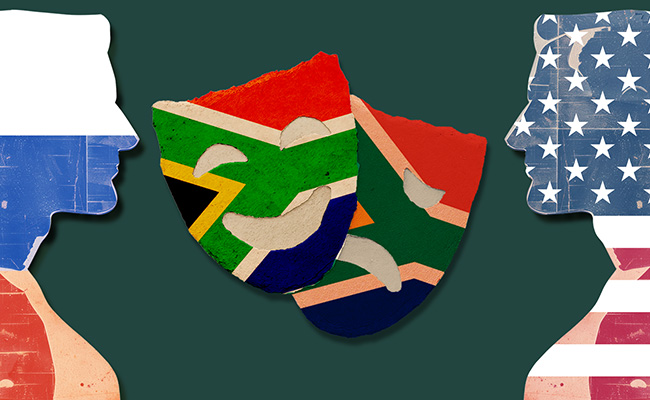
Top image: Rawpixel/Currency collage.
Sign up to Currency’s weekly newsletters to receive your own bulletin of weekday news and weekend treats. Register here.