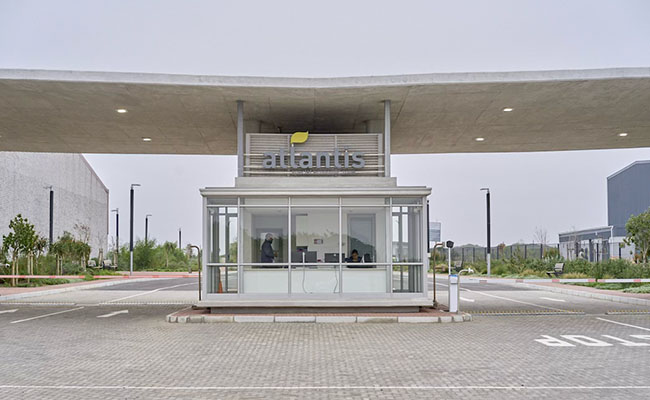

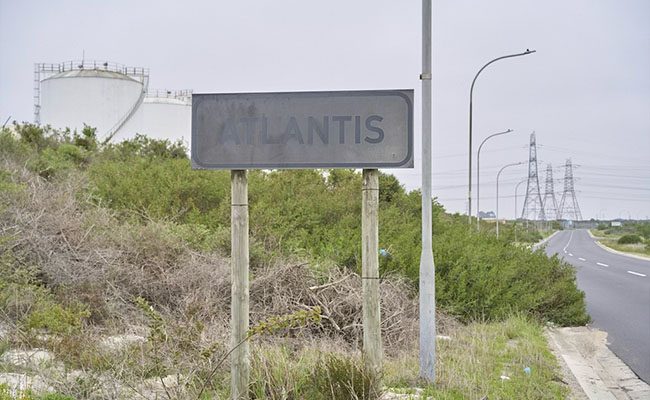
The Atlantis special economic zone (ASEZ) in the Western Cape was established in 2020 to attract green economy investment and support local manufacturing.
Oxpeckers visited the site in May 2026 to determine whether those ambitions are translating into jobs, skills development and opportunities for local businesses and workers participating in renewable energy value chains.
According to the ASEZ, the project has attracted more than R3bn in investment and facilitated the creation of more than 800 jobs since its establishment.
Spanning three development zones, the ASEZ “is positioning Atlantis as a leading hub for green manufacturing, advanced manufacturing, renewable energy, industrial technology, construction materials, and other growth sectors”, ASEZ CEO Matthew Cullinan tells Oxpeckers.
It is also focused on localisation, ensuring that surrounding communities, businesses and workers benefit directly from investment and infrastructure development.
It currently hosts a range of manufacturers spanning renewable energy, advanced manufacturing, construction materials, textiles and industrial technology.
According to Anthony Jila, a sustainable infrastructure and zone operations technician at ASEZ, community participation is built into the model.
“There is a community group called the Community Stakeholders Network. That’s a group of individuals who are elected by the community that covers all spheres of the community,” he explains.
The network represents youth, women, small businesses and people living with disabilities, and provides a mechanism for local engagement and oversight.
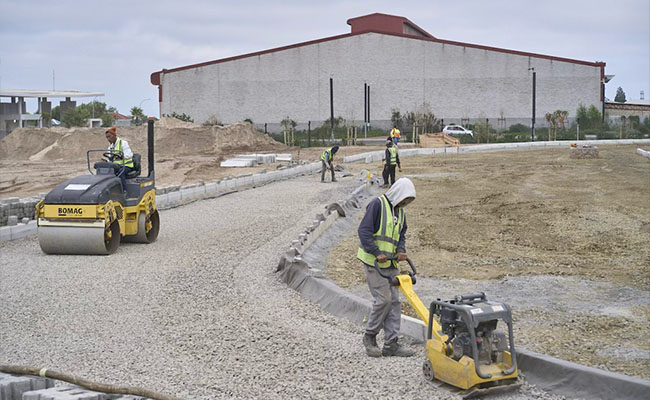
The zone also requires that 30% of infrastructure project value be directed towards local businesses.
The recently completed Zone 1 infrastructure project directed 32.02% of project expenditure to local SMMEs.
Yet challenges remain.
Local participation
Many small businesses struggle to access finance, secure credit facilities or raise capital needed to fulfil contracts.
“Even if local businesses have a contract, they do not have the finances to mobilise and start work. They do not have credit history and cannot access a line of credit,” says Jila.
Despite these obstacles, he believes local economic participation is essential.
“Ethically, I think it is only right that if we are bringing business into an area that the community benefits from it,” he says.
Atlantis offers one example of how localisation can be built into renewable energy development. Yet, while local procurement and community participation are being prioritised in some projects, much of the equipment powering South Africa’s renewable energy transition is still imported.
A 2026 report by the Institute for Economic Justice (IEJ) found that localisation remains fragile. This is due to inconsistent enforcement, global supply chain pressures and fiscal constraints.
The IEJ’s research looked at independent power producers contracted under the renewable energy independent power producer procurement programme (REIPPPP), which includes specific requirements for local ownership and socioeconomic development. It also conducted an accountability audit of REIPPPP’s localisation promises between 2011 (bid window 1) and 2024 (bid window 7).
Citing several examples, the audit demonstrated how localisation requirements have changed over time.
Hopefield Wind Farm, which fell under bid window 1, is one of REIPPPP’s earliest success stories, with a strong sense of community involvement and development. The wind farm supports at least six local communities, conducting a needs analysis on each one to address local skills gaps, build capacity and promote economic independence.
Meanwhile, Gouda Wind Facility (bid window 2) was the first wind farm in South Africa to have concrete towers instead of steel ones – these could be produced locally, unlike steel towers, which needed to be imported at the time.
Several other examples with a focus on localisation exist under the REIPPPP (find them on the #PowerTracker mapping tool here).
International imports
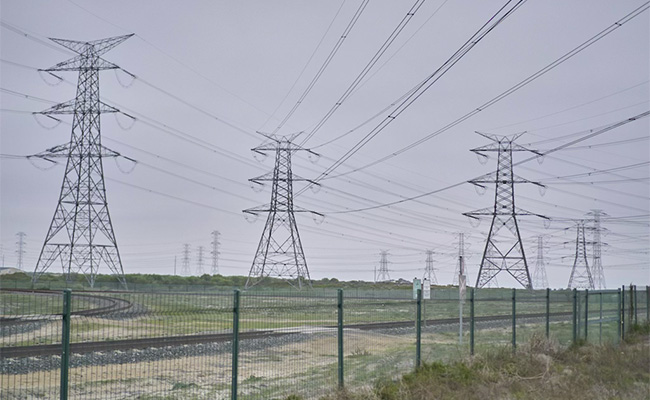
The renewable energy sector has grown rapidly, but much of the equipment powering the transition is still imported.
The South African Renewable Energy Masterplan, approved in 2025, reported that between 2010 and 2022, the country imported approximately R31bn worth of solar panels, R53bn in inverters, R22bn in lithium-ion batteries and R30bn in wind turbines.
In 2023 alone, more than R17.5bn was spent on solar and battery imports, according to Gaylor Montmasson-Clair, senior economist at Trade and Industrial Policy Strategies.
Yet local manufacturers argue that South Africa already possesses much of the industrial capability needed to participate more meaningfully in the renewable energy value chain.
According to ARTsolar, a Durban-based solar panel manufacturer, South Africa has the skills and infrastructure needed for local renewable energy manufacturing, but the sector remains underdeveloped. (#PowerTracker was the first to report on the landmark case in 2025.)
An ARTsolar spokesperson tells Oxpeckers that local manufacturers face an uneven playing field. The company says domestic producers must absorb labour, electricity, compliance and financing costs, while many imported products enter the market duty free at prices local firms cannot sustainably compete against.
“South Africa has the capability to manufacture, assemble and support a significant portion of the renewable energy value chain locally,” says the spokesperson. “However, policy uncertainty, inconsistent procurement enforcement and heavy reliance on imported products continue to undermine the long-term sustainability of local industry.”
ARTsolar argues that one of the biggest challenges facing local manufacturers is the gap between government localisation commitments and actual procurement outcomes.
The company says local manufacturers need a steady pipeline of projects, stronger localisation requirements and long-term certainty to grow production and create jobs.
Long-term process
While ARTsolar highlights the challenges facing local industry, other manufacturers view localisation as a long-term process rather than an immediate outcome.
Richard Bunderson, chief commercial officer at solar installation company Ener-G-Africa, says South Africa’s renewable energy manufacturing industry is still in its early stages.
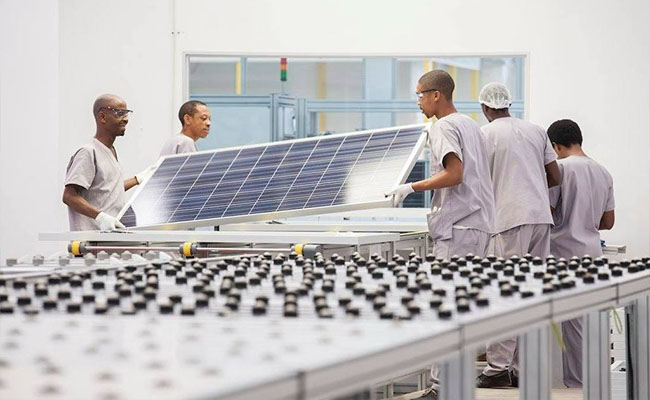
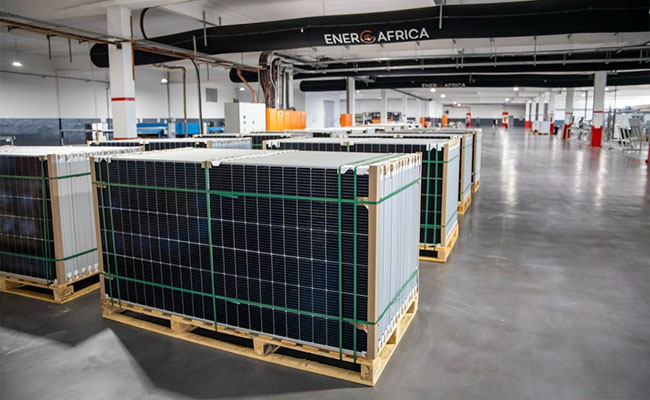
The company’s solar module assembly facility in Paarl, Western Cape, opened in February 2026. It is one of a small number of operational solar manufacturing facilities in the country.
Bunderson says many of the components used in solar modules – including photovoltaic cells, solar glass, aluminium frames, encapsulants and backsheets – still come from overseas, because South Africa currently lacks manufacturing capacity for these specialised products.
However, he argues that local assembly plants create the demand necessary for suppliers to eventually establish local production facilities.
For Ener-G-Africa, localisation is not simply about manufacturing components. It is also about creating jobs, developing technical skills and retaining more economic value within South Africa.
“The broader benefits flow from there: direct job creation, technical skills development, supplier growth, and ultimately an industry that retains more economic value within South Africa rather than sending it offshore,” Bunderson says.
The company’s Paarl facility currently employs approximately 30 workers, all of whom are women, while also supporting local engineering, logistics and technical services.
Building a green industrial economy
The recently approved renewables masterplan aims to help accelerate the local manufacturing process.
The plan is set to create more than 250,000 jobs by 2030 through the local manufacturing of solar panels, batteries, wind turbine towers, cables, inverters and related technologies.
In 2024, South Africa introduced a 10% import duty on solar panels. The International Trade Administration Commission of South Africa has also proposed tariff reforms that include a 15% duty on imported lithium-ion batteries as part of broader efforts to strengthen domestic renewable energy supply chains.
But for ARTsolar, the issue is less about whether policies exist and more about whether they are consistently implemented.
The company argues that localisation frameworks can only support industrial growth if procurement requirements are clear, compliance mechanisms are consistently applied and localisation commitments are properly monitored and enforced.
ARTSolar warns that without these measures, South Africa could lose its existing manufacturing capacity, even as investment in renewable energy continues to grow rapidly.
Women left behind
Local opportunity remains at the forefront of a just energy transition, according to Wendy Pekeur, founder of Ubuntu Rural Women and Youth Movement.
“If we say we want to eradicate poverty and we want to create jobs, open up opportunities for local people to produce their own energy and where the entire community can share in the profits of that production,” she says.
However, she says women remain excluded from transition planning despite being the primary custodians of “community resilience”.
Research published in Frontiers in Sustainable Energy Policy projects up to 43,000 solar photovoltaic jobs and 28,900 wind energy jobs by 2030, while noting that women remain largely excluded from upskilling opportunities.
“Companies need to train people, including women and young people. The Sector Education and Training Authorities also need to play a role because women who worked in the coal sector, for instance, need opportunities to be reskilled. Money must be set aside for training, mentoring and ongoing support,” says Pekeur.
“Renewable energy projects bring with them the hope that communities will participate meaningfully and benefit economically.”
Dataviz by Roxanne Joseph.
This article was originally published by Oxpeckers Investigative Environmental Journalism. It was produced by the Oxpeckers #PowerTracker project, supported by the New Economy Hub and Ford Foundation.
ALSO READ:
- Win for energy transparency in murky solar battle
- Court case tackles not-so-proudly-South African solar power
- The people who own the sun
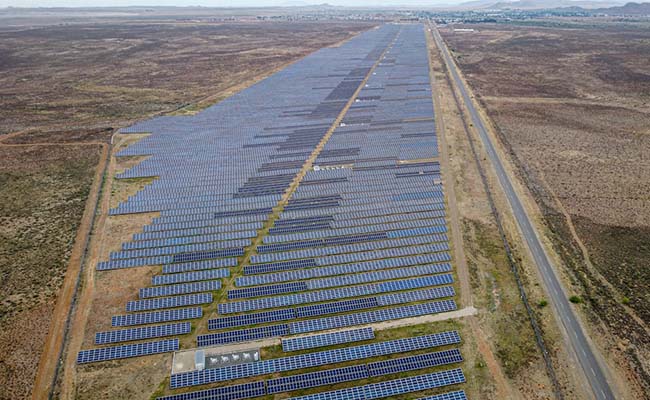
Top image: The Atlantis special economic zone requires that 30% of infrastructure project value be directed to local businesses. Picture: Barry Christianson.
Sign up to Currency’s weekly newsletters to receive your own bulletin of weekday news and weekend treats. Register here.