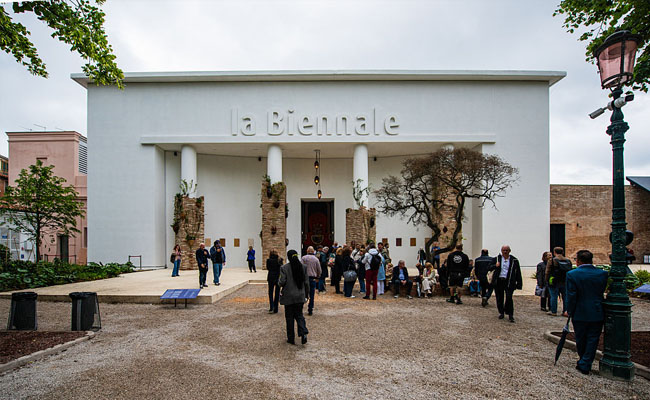

The “art industrial complex” has developed a tarnishing reputation for the environmental impact of its global tour of biennial exhibitions, often-inaccessible verbiage and pretensions, and its complicated relationship with money and political power. This is in evidence nowhere more than Venice, where the original Biennale opens this week, officially the 61st International Exhibition of Art.
Venice was the first city to put tourism at the centre of its economic model with the 18th-century European Grand Tour. Then, from the end of the 19th century as the ne-plus-ultra of the Belle Époque, the Biennale symbolised the modern turn of an ancient city. The event now stands at the centre of Venice’s current malaise as the first city of over-tourism and the impact of climate change on the rising waters of the lagoon.
All the drama
This year Venice finds itself in the eye of a cultural storm over censorship and political influence. South Africa plays a walk-on part, since Gabrielle Goliath’s installation, Elegy, was ejected from the national pavilion by minister of sports, arts and culture Gayton McKenzie because of its focus on the Israeli genocide in Gaza (more on this great work shortly).
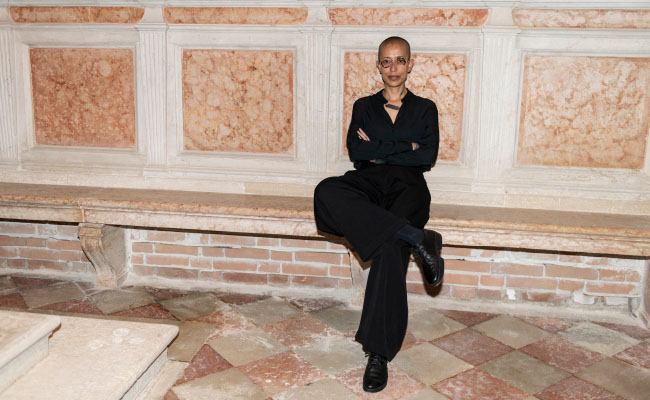
In Italy, the greater controversy has been the decision by the mercurial head of the Biennale, Pietrangelo Buttafuoco, to readmit Russia, despite the current EU sanctions following the invasion of Ukraine. The far-right Italian government, among whom there are more than a few pro-Putin voices who would like to tweak the noses of the liberal art crowd, has been put in a delicate position, publicly protesting the move. Unimpressed, the EU pulled €2m of funding to the Biennale. As a side issue, Israel continues to be allowed to exhibit in its pavilion, against widespread Italian protests about its actions in Gaza.
Coincidentally, Venice’s opera house, La Fenice, has been bounced into firing its incoming music director, Beatrice Venezi, against whom its orchestra and chorus have been protesting since the appointment was made. Venezi lacks the CV you would expect for this senior post at one of Italy’s foremost theatres, but just happens to be friends with Italian Prime Minister Giorgia Meloni. Cronyism that will shock South Africans, no doubt. Seemingly sick of the wrangling, Venezi last week lambasted the orchestra for being a nepotistic clan in which posts are handed down from father to son. The theatre’s boss was left with no choice but to terminate her appointment for insulting its musicians.
About the art
So, what about the art on display this year in Venice, which is open until the end of November?
Touring what’s known as the “collateral” exhibitions this week in a rain-swept lagoon before the main site opened, I was able to see a tight circuit of shows in the centre of Venice without the need to schlep across the whole city or fight with the hordes in the gardens where the national pavilions are found.
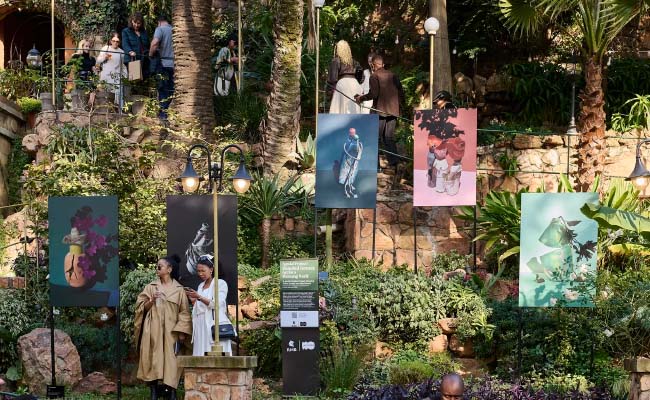
To packed audiences, demonstrating the energy and profile of the African art scene, the most eye-catching and inspiring discussion was a group of artists featuring in the current exhibition at the Smithsonian National Museum of African Art in Washington, DC, Here: Pride and Belonging in African Art, which includes South African artists from Alexis Preller to Steven Cohen and Athi-Patra Ruga. The panel included Joburg artist Buhlebezwe Siwani.
In the face of the Trump administration’s war on liberal institutions and perceived wokeness, the museum and such exhibitions stand as a riposte to authoritarian and populist attempts to silence progressive voices.
The continent’s art scene, generally, is well represented, with the fantastic team at South African auction house Strauss & Co sponsoring the African Art in Venice Forum.
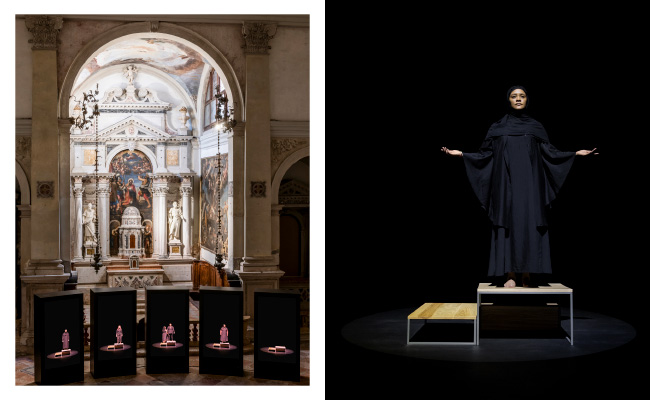
Despite McKenzie’s best efforts, it would be impossible to miss Goliath’s Elegy, which has been staged independently of the South African pavilion in a baroque church in the centre of town. Composed of three groups of eight screens which singers circle around and ascend a platform to intone a single note for a whole breath, the current edition adds a suite in memory of the suffering and murder of women and children in Gaza, in addition to murders of women in South Africa and Namibia. It is a profound and unforgettable experience, and a shame on the South African government.
But there’s more …
All within a five-minute vaporetto ride or pleasant stroll I would also recommend:
Turandot: To the Daughters of the East at Palazzo Franchetti. It features 11 women artists from countries in Central Asia, including several from Iran. The cork and rubber totems of a big name like Pakistani Huma Bhabha are found alongside lyrical and playful works like Rabbit in Wonderland by Iranian Farideh Lashai. Most arresting, in the current geopolitical context, is a map at the entrance showing the links between the artists’ home countries and the ancient Silk Road; the travels of Marco Polo place the contested Hormuz squarely at its centre.
SMAC (San Marco Contemporary Art) – Here, Korean living legend Lee Ufan’s elemental works are shown alongside those of the late Alighiero Boetti, an Italian whose large-scale tapestry maps from the 1960s to the 1980s were woven by women in Afghanistan. It’s in a new gallery space with stunning views over St Mark’s Square.
Punta della Dogana – An epic show of African-American Lorna Simpson, at the centre of which sits Vibrating Cycles, composed of black obsidian singing bowls with which visitors can make sound, creating a miraculous drone which fills the whole gallery.
(The useful See-Saw app has a Venice feature that enables you to curate your own tour of exhibitions through a city map.)
Elsewhere everyone was talking about the Vatican Pavilion, spread over two sites, drawing on the theme of the music and teaching of 12th-century female mystic St Hildegard of Bingen. This includes an opportunity to see a normally closed garden of a Carmelite monastery in the north of Venice. Described as an “invitation to slowness and contemplation”, as well as Hildegard’s own music, it features compositions by Patti Smith, Brian Eno, Jim Jarmusch and Meredith Monk.
It makes for a restorative balm which, no doubt, we are all seeking in the current atmosphere of cultural and political conflict, not to mention a welcome escape from the mass tourism overrunning the city.
ALSO READ:
- Kirsty’s six picks from Art Basel Switzerland 2025
- Art of the continent: The market outlook
- Beyond the brushstroke: Understanding the art scene
Top image: Visitors explore the Central Pavilion at Giardini at the 61st International Art Exhibition – La Biennale di Venezia during the press preview on May 5 in Venice, Italy. Picture: Simone Padovani/Getty Images.
Sign up to Currency’s weekly newsletters to receive your own bulletin of weekday news and weekend treats. Register here.