
Exactly two years ago, Northam Platinum CEO Paul Dunne, who is also president of the Minerals Council South Africa, warned that a severe squeeze on the platinum group metals (PGM) sector was resulting in the “worst crisis” he’d seen in three decades.
Two years later, a staggering rebound in platinum prices means that Northam is awash in cash: it made an operating profit of R5.8bn for the first half, which is a gain of 439% on revenue of R23.3bn (a 60% rise). And it has declared a record interim dividend of R7 a share from just 15c this time last year. Currency spoke to Dunne about the performance, and the change in sentiment.
Have you been surprised at the speed at which things have turned in PGM producers’ favour?
We’re not surprised that it’s turned – but we’re certainly surprised by the rate of turn. Because the market was pricing the metals as if the world didn’t need PGMs two years ago and that pricing was devastating for the miners. There’s been a change in the world in the sense of political change; in Europe they backed down from the 2035 internal combustion engine ban and in the US the legislation and the subsidies for battery electric vehicles (BEVs) have been removed.
The consequence of that is that sales of BEVs are not what was projected to be, and on that basis the world realised: “Oh dear, we do need PGMs.”
Now there’s a scramble to secure them and the market is very tight because, along the way, these difficult market conditions damaged the ability of the production base to produce. Capital was slashed because we had no choice other than to cut our cloth to suit market conditions – and that means you inhibit future production because the capital that should have been spent hasn’t been spent.
You are seeing that production has continued to fall but demand sentiment is much stronger, and therefore you create this tightness and the consequence of incorrect historical pricing of the metal.
When you’re in the midst of a crisis it feels like nothing will ever improve, but is everyone’s forecasting ability a little bit tarnished as a result?
We expected it to rebound but not how quickly and violently. In itself the nature of the rebound indicates clearly there was a mispricing historically.
So are you quite confident now in what demand or deficits are likely to be?
Indications are that this is not a flash in the pan; this is structural and fundamental.
The past decade has been really interesting because you had platinum and PGMS head into the doldrums in about 2016 and stay there, then slowly to start to rise before prices went ballistic in 2021 and 2022, after which they corrected viciously. Was there no time for the miners to approve capital expansion plans between these two rallies?
You’re right – it was too quick. It was a very short summer here and building a mine takes a long time. A good example is Booysendal in the Northam stable; it’s a relatively technically straightforward mine, but it took us 14 years to build. So there’s a mismatch in the market pricing signals that we have been receiving and the ability to apply capital to build mines. The nature of the build is high upfront capital commitments, so heavy lifting on balance sheets and a long execution time, and then eventually you might get some money back.
Is that what you mean when, in the results, you say it has been the right call to use debt and internal cashflows?
We’ve been quite precise: it was very deliberate by Northam to use the debt market as opposed to issuing equity. And the reason we do that is when you issue shares it’s a permanent dilution; when you use debt you pay the debt off and it’s done. It’s as simple as that.
Okay – because Miningmx’s David McKay talked about the “conservatism” of Northam and its “unpopular” decisions with shareholders in one of his stories about the results. Has it been tough to convince them – especially now that they’re not diluted and receiving a record dividend?
Spending money on capital is always unpopular in some quarters, but in the mining industry you must do it. It’s as simple and blunt as that. If you’re a mining shareholder you must invest through the cycle – it’s of paramount importance. Because it’s the sustainability question, actually. It’s easy to think about sustainability in terms of greening and water and power, but what about the sustainability of the business?
Your capital spend forecast is R6.6bn this year – where is that money going?
We’ve spent half of it already, and by the end of June we will have spent R6.6bn. R1bn on a new tailings dam at Booysendal; at Eland we still have a billion of capex to spend; then half a billion on Four Shaft at Zondereinde; probably a billion at Three Shaft; and then half a billion on the renewables programme. It’s across all assets – a combination of growth optionality and project execution and normal stay-in-business capex. And on top of that is the renewable programme and we are going to slash our electricity costs by R1bn per annum by 2027 (as a result).
Are you getting pushback from Eskom? We’ve seen how they dug in against Sibanye-Stillwater and got slammed in the courts as a result.
From a permitting point of view, in some respects, the fox is looking after the henhouse, and permitting is arduous and long. I think that’s the way I would phrase it.
That’s so diplomatic of you …
Of course, as time goes on and more companies and households opt out, it does impact Eskom’s ability to sell kilowatt hours and they are in the business of selling kilowatt hours. But sympathy runs a little thin after many years of double-digit increases.
Can you see any improvement in the attitude towards mining and the ease of doing business here?
If I can put my Minerals Council hat on to answer: it may well be that we are on the cusp of a commodity cycle here that is a longer, structural change and a good strong cycle. For the mining industry and for South Africa, we need to fully grasp that opportunity. But under current circumstances we will not be able to fully grasp it.
And there are a couple of inhibiting factors that need to be addressed this year with a level of urgency and determination, both from industry and from government. We need to resolve the MPRDA Amendment Bill, and we need to get the cadastre rolled out quickly and professionally across all provinces.
ALSO READ:
- White-hot platinum
- The exchange … with Paul Dunne
- The canary in the mine: Why South Africa’s exploration plunge matters
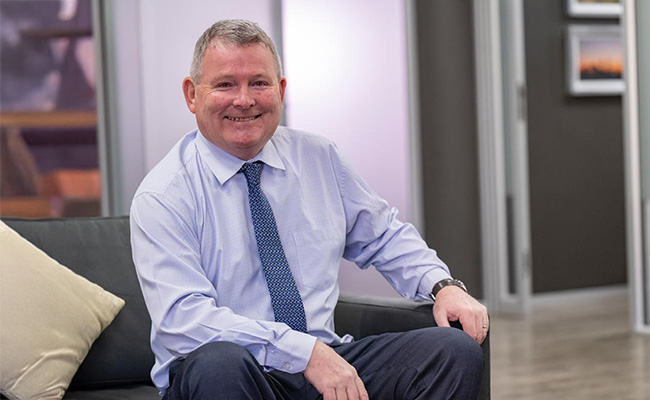
Top image: Northam CEO Paul Dunne. Picture: supplied.
Sign up to Currency’s weekly newsletters to receive your own bulletin of weekday news and weekend treats. Register here.