
Financial goals are fundamental to a personal financial plan. Though most people set their sights on building generational wealth, the financial goal South Africans should prioritise before almost anything else is to build an emergency fund.
It’s not glamorous. It will never trend on social media. Nobody boasts at a braai about their cash buffer. Yet building up an emergency savings fund might be the one habit that makes your financial life genuinely boast-worthy – think stress-free spending.
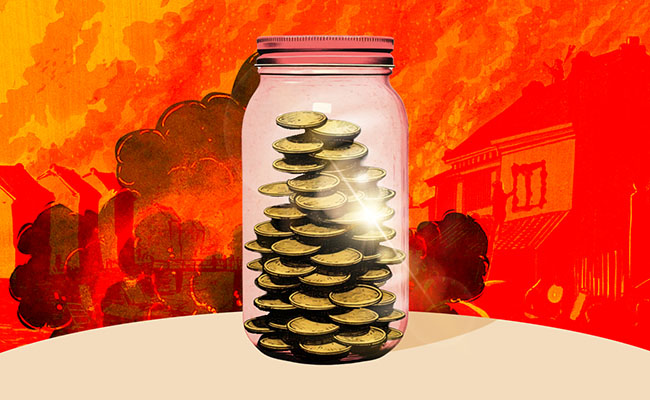
The benchmark is simple: aim to set aside three months of household income in a money market fund. Why a money market fund? Because it offers relatively high interest, easy access when life happens and keeps your savings separate from your daily transactional account, reducing the temptation to dip into it for takeaways, gadgets or other impulse spending.
And life does happen. Cars break down. Geysers burst. Children get sick. Jobs are lost. Families face funerals, relocations and unexpected bills. Without a cash buffer, an inconvenience becomes a crisis.
A cycle of fragility
The inaugural Franc wealth index shows just how exposed many households are. Emergency saving is the lowest-scoring financial behaviour in the entire survey, with a score of only 2.7 out of 10. A staggering 87% of respondents lack sufficient emergency savings. Even more concerning, 40.9% have no emergency savings at all.
This helps explain why so many South Africans are trapped in a cycle of financial fragility. When an emergency hits, those with retirement or tax-free savings raid those accounts. Others are forced into expensive debt, borrowing from credit cards, personal loans, family or mashonisas. That may solve today’s problem, but it creates a much bigger one tomorrow.
Using retirement money for short-term emergencies is especially damaging. Retirement capital needs time and compound growth. Once withdrawn, you lose not only the money, but also the future returns that money could have generated over decades. The same applies to tax-free savings, where annual and lifetime contribution limits cannot be replaced.
Emergency savings protect more than today’s bank balance; they protect your future wealth.
Franc’s research found that having emergency savings is a keystone behaviour – a habit that unlocks many others.
The ripple effect
Emergency savings had one of the highest ripple effects in the study, with an average uplift of 2.16 out of 10 across all other financial behaviours. When people have emergency savings in place, they tend to save more consistently, invest more effectively, manage debt better and plan further ahead.
Why? Because financial pressure changes how we think and act. When every surprise expense threatens disaster, it is hard to focus on long-term goals. People become reactive instead of proactive. They survive month to month instead of building wealth year on year.
That is why the emotional dimension tracked in the report is particularly significant.
The absence of an emergency fund is the single strongest predictor of financial stress. Those who are adequately prepared for emergencies score nearly twice as highly on the calm and confident scale. Your peace of mind is more closely linked to your emergency savings than to your income.
This challenges one of the most common myths in personal finance: “I’ll feel better when I earn more.”
Higher income can help, of course. But many high earners remain anxious because they have more debt, higher expenses and no cash reserves. Meanwhile, households on modest incomes with a disciplined buffer often feel more secure because they have breathing room.
Don’t go big from the get-go
So where should people start? Start small – your first milestone might be just one week of expenses. Progress matters more than perfection. Automate as much as you can: set up a monthly debit order into a separate money market fund just after payday and treat it like a bill you owe your future self.
An emergency fund is for emergencies, not holidays, fashion sales or Black Friday deals. If it is too easy to touch, it probably sits in the wrong place. South Africans do not need more guilt about money. They need practical steps that work. Building emergency savings is one of them.
Emergency savings may not make headlines. But if this gives you the quiet, unspoken confidence of having things under control, it is something far more valuable than a big purchase or risky investment.
In personal finance, boring often wins. And emergency savings may be the most powerful boring decision you ever make.
Thomas Brennan is a co-founder of Franc, a South African fintech that helps people invest easily and affordably.
ALSO READ:
- How to start saving on any salary
- How to beat financial distress
- Start investing before you’re ready
Top image: Rawpixel/Currency collage.
Sign up to Currency’s weekly newsletters to receive your own bulletin of weekday news and weekend treats. Register here.