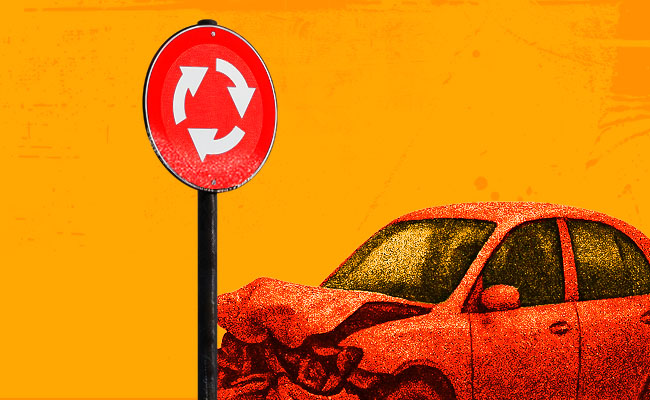

South Africa’s auto industry is in the middle of a very awkward traffic circle: one exit points to renewal, one to irrelevance, one to a future assembled in China, and one to the familiar national lay-by marked “nice, shame about the implementation”.
That, more or less, is the message of audit firm BDO South Africa’s new automotive sector report for 2024/25. It is a sober, useful document, and also a mildly alarming one. The report argues that the industry remains one of the country’s great assets: it contributes about 5.2% of GDP, supports more than 110,000 manufacturing jobs and accounts for 22.6% of manufacturing value added.
But it also says the South African Automotive Masterplan to 2035, known in that irresistible acronym-loving government style as Saam, is drifting behind schedule on the things that matter most: production volumes, localisation, transformation, regional expansion and EV readiness. That’s a lot of things to be in first gear about.
This is an industry that is having pretty serious transmission problems (sorry, the dad jokes are irresistible), and of course US President Donald Trump’s 25% auto tariffs and wider trade uncertainty do not help. Apropos jokes, a hybrid car drives into a therapist’s office and says: “I don’t know who I am. Am I electric? Am I petrol? Everyone acts like I’m the responsible choice, but nobody actually wants me.” The therapist nods and says: “Ah, yes. A millennial.”
The world is moving on
Anyway, to get back on the road. The global car business is changing gears at high speed, and South Africa’s traditional advantages – a decent supplier base, long-standing presence of original equipment manufacturers (OEMs), access to Europe, a reasonably sophisticated industrial ecosystem – are clearly no longer enough on their own. As in so many other areas of South Africa’s gradual deindustrialisation, the mechanics are creaking, and you can’t help wondering if the government is engaged enough to see what’s going to happen down the road.
BDO’s report says South Africa’s targeted annual production is close to 800,000 vehicles as a path to 1.2-million by 2035, but reality has lagged badly. Actual output reached only 599,755 units in 2024, while the first 11 months of 2025 recorded 554,613 units. The shortfall contributed to a 22.8% decline in automotive exports in 2024. Localisation targets are also under pressure. The 2024 figures indicate that current local content levels stand at about 40%, way below the 48.2% target for 2025.
Jobs have not grown as hoped, and the report notes that 12 component firms have closed in the past two years, costing more than 4,000 jobs. Exports are still overly reliant on Europe, while African expansion remains weaker than the masterplan envisaged.
This matters because the world is not standing politely still while Pretoria convenes another workshop. In Europe, carmakers are fighting Chinese competition even as EV sales continue to rise. Chinese brands have continued gaining ground in Europe despite tariffs of up to 35% on their EVs.
In emerging markets, Chinese manufacturers are not waiting for invitations embossed in gold. They are arriving. An incredible 21 Chinese brands are already in South Africa, with more expected. That is the good news, in a way: it means South Africa is still attractive enough to matter, but perhaps increasingly as a sales beachhead or assembly platform rather than as the deeply localised manufacturing hub it wants to be.
Which is why the BDO report’s obsession with the CKD-SKD divide is important. This sounds technical, but it is really about whether South Africa makes things or merely tightens the occasional bolt. CKD – completely knocked down – means deeper manufacturing, more local content, more supplier development, more jobs. SKD – semi-knocked down – is closer to industrial cosplay: the vehicle arrives mostly made, and the local economy gets a reflective vest and a handshake. BDO’s interviewees are blunt that South Africa must resist drifting toward the SKD shadows.
Meanwhile, the domestic market tells its own story. Naamsa’s latest monthly releases show local new-vehicle sales started 2026 fairly solidly, but exports weakened sharply in February, down 28.1% year on year for the month. That fits the report’s broader warning: South Africa is holding up better at home than abroad, but it cannot build a globally competitive auto industry on domestic demand alone.
Driving with the handbrake on
And here lies the strategic puzzle. South Africa is too small to thrive as a purely domestic auto market, too far behind to win a subsidy arms race with major economies, too infrastructure-constrained to coast, and too industrially capable to give up. It has to be selective, fast and unsentimental.
That means, first, stop treating logistics as an unfortunate side issue. In the BDO report, port, rail and road failures are not background irritants; they are the plot. Lead times for some exports have stretched as much as 40%, and nearly half of OEM production and component activity is concentrated in the Eastern Cape, where logistics and electricity failures hit especially hard.
Second, back localisation with something harder than speeches. South Africa cannot complain about cheap imports while making it easier to import than to manufacture. If localisation is the goal, it has to show up in procurement rules, supplier finance, tooling support and measurable milestones.
Third, be pragmatic about the energy transition. BDO is right that South Africa should not try to skip straight into a Scandinavian fantasy of universal battery-EV bliss powered by impeccable green electrons. A hybrid-first, technology-neutral approach makes sense for a country with an unreliable grid, a price-sensitive market and long driving distances.
Fourth, think regionally or shrink. The Saam’s African ambitions are sensible, but reality is lagging badly. If South Africa is serious about being the continent’s automotive hub, it needs to treat African market-building as industrial strategy, not conference décor.
The optimistic view is that South Africa still has time: seven OEMs, an established base, policy tools, a still-relevant export platform, and enough industrial capability to pivot into hybrids, EV components and regional manufacturing. The pessimistic view is that the industry, as it has in many other places in the world, could survive in form while hollowing out in substance; more badges, more dealerships, more financing, but much less making of actual cars. The industry may still have a full tank of potential. The question is whether the country can stop driving with the handbrake on.
This column first appeared in the Financial Mail. Currency and Financial Mail are part of the Financial Mail Group.
ALSO READ:
- South Africa can’t afford electric cars now. But it better make a plan…
- Manufacturing meltdown: South Africa’s jobs crisis deepens
- Trade shocks test auto industry survival plan
Top image: Rawpixel/Currency collage.
Sign up to Currency’s weekly newsletters to receive your own bulletin of weekday news and weekend treats. Register here.