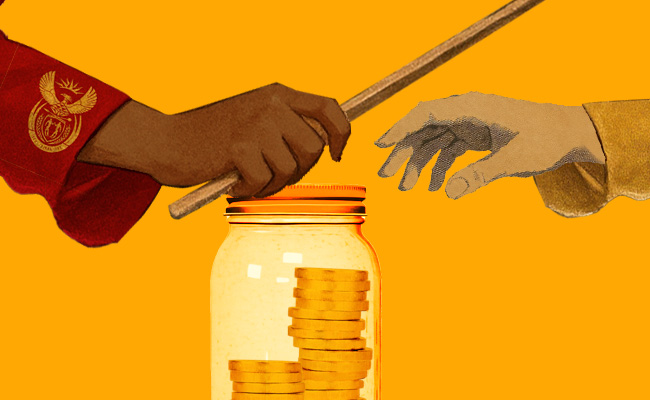
The Joburg Art Gallery (JAG) is probably the least of mayor Dada Morero’s present headaches, but his handling of the ongoing saga involving the city’s most valuable cultural collection has now resulted in a court challenge.
This time around, the Friends of JAG and the Joburg Heritage Foundation want the appointments of the JAG’s art gallery committee members – handpicked by Morero – declared unlawful and set aside.
Matthew Ilsley, acting for law firm Webber Wentzel, tells Currency that Morero’s decision to re-constitute the art gallery committee in November 2025 was unlawful “because he doesn’t have that power – under the deed, or in terms of legislation. And even if he had the authority, it still would have constituted an unlawful decision because the appointments themselves, in our view, are irrational and unreasonable”.
‘Silence, obfuscation and defiance’
The gallery’s collection of about 9,000 artworks is thought to be worth hundreds of millions of rands – and was established under a deed of trust for the benefit of the city’s residents in 1913, explicitly subject to the control of an independent art gallery committee.
This committee, which should consist of the mayor, a representative from national government, a city council representative and four independent members, is supposed to oversee the collection – be it curating, buying or restoring the art, or lending it out.
Yet since at least 2019, the Friends of JAG and the heritage foundation have been increasingly alarmed by the management of the gallery and its collection, of which they estimate only 1% has been displayed in recent years.
They’ve also spent the better part of two years trying to obtain a full catalogue from the art gallery committee, and move the collection from its decaying premises in Joburg’s seedy Joubert park. In August 2024, they accused the city and the committee of having “dismally failed to preserve the JAG art collection and create a conducive environment for the public of Joburg to enjoy the artworks”.
Plenty of wrangling has since transpired, but, as the latest court documents spell out, attempts to “avoid unnecessary litigation” have been met with “silence, obfuscation, and ultimately public defiance of the deed, the law and the constitution”.
According to the papers, “litigation has become the only remaining means by which the rule of law and the donors’ intentions can be vindicated and the JAG collection protected”.
A picture of decay
For one thing, Morero named chief curator Khwezi Gule to the committee, a decision that Webber Wentzel argues “offends the most fundamental principle of natural justice known to our law: that no person may sit in judgment of his own cause”.
Gule’s appointment is a “complete conflict of interest” because the art gallery committee has powers that oversee the functions of the curator, says Ilsley. By appointing him to the board, the mayor has essentially enabled Gule to oversee himself.
“It’s our view that the mayor thought he could appoint him in that position and everyone would let it be,” he tells Currency.
The problem is that Gule’s curatorship of almost nine years has also coincided with the gallery’s increasing dysfunction, not to mention the apparently illegal decision to loan out 145 pieces of the collection’s most valuable artworks to South Korea in 2022 – a decision that was not approved by the art gallery committee.
“The loan was never properly authorised,” the court documents state. “The deed required prior consultation with, and the advice and consent of the art gallery committee. No such consultation or consent was obtained.”
And, as graphically detailed in the latest court papers, Gule’s management did little to stem the tide of decay facing the gallery. Designed by architect Edwin Lutyens – a contemporary of Sir Herbert Baker – the JAG building is a leaky wreck, thanks to numerous half-baked attempts at restoration.
A site assessment conducted by the South African Heritage Resources Agency in December 2024, for example, found buckets being used as makeshift measures to collect leaks, “objects unsafely stacked, placed on unstable wood, stored beneath leaking pipes and exposed without basic protection”.
It also found “fire risks from combustible materials stored in walkways, and dust-filled workspaces unsafe for staff and collections alike”.
Bullied by the city
Then there’s the re-appointment of Joseph Gaylard, the former chair of the art gallery committee who has served on the board for the past 12 years.
Gaylard describes himself on LinkedIn as a “strategist and researcher in the arts … with more than two decades of experience in building and leading organisations, industry research and thoughtful advocacy”.
Yet, according to the court papers, Gaylard played a persistently obstructive role as chair. His last, substantive communication with the Friends of JAG and the Joburg Heritage Foundation was in November 2024, when the two parties presented the committee with a privately funded relocation plan to move the collection’s art to the secure Ditsong Museums site while the JAG building was refurbished.
When asked for more information by Webber Wentzel, he effectively acknowledged the role the committee should have played in managing the collection’s artworks. But he “never responded” to further correspondence from the law firm.
As Ilsley points out: “The art gallery committee has taken a very passive role to their functions where they’ve just let the city bully them. They completely ignored the fiduciary duties that they have as appointees in the past; you are putting people in a position where they’ve shown that they are unable to act in the gallery’s best interest.”
Asked about this, Gaylard says: “While the practice of litigating through the media appears to have now been normalised in the context of the current matter, I don’t believe it is helpful in resolving a constructive way forward for the institution. I look forward to this complex and difficult matter at some point receiving the nuanced and thoughtful treatment that it deserves.”
Next steps
So what now? With respondents including Cyril Ramaphosa, the City of Joburg, Joburg’s city manager, and minister of sports arts and culture Gayton McKenzie, Webber Wentzel wants the president and the city to each nominate and appoint a representative to the committee, as well as four new, independent appointments, within 30 days of the court’s order.
Each of the independent members are respondents in their capacity as trustees of the art gallery committee. If they want to appoint their own lawyers to defend themselves they could, says Ilsley.
“We’ve really done a lot to try and engage them,” he says. If only.
Currency has asked the mayor’s office for a response and will update this story if we receive one.
ALSO READ:
- The great Joburg art grift – part 1
- The great Joburg art grift: what goes on tour, stays on tour
- JAG catalogue: city says ‘no’
Top image: Currency.
Sign up to Currency’s weekly newsletters to receive your own bulletin of weekday news and weekend treats. Register here.