
There is a family from New York City sitting on the aisle. Their son has just graduated from Imperial College in London, and this is their celebration. A man has come from Parma, south-east of Milan, and the shorter journey is no less momentous for him. We spot an empty seat in the 2,000-odd available and wonder why. An illness? An emergency? Who doesn’t pitch for a night at La Scala?
Otherwise, the place is packed to the rafters – literally. Cast your eyes up the six tiers of boxes, and they are teeming with people. The wall of crimson velvet and gold leaf is broken by excited faces and camera flashes. Everyone’s attention keeps coming back to the 22-metre-long stage curtain. They’re waiting for the house lights to dim, and the orchestra to strike a note.
Just three hours earlier, we – a handful of overstimulated South Africans – stood on the stage and looked out at the gargantuan Bohemian crystal chandelier hanging over the waves of scarlet seats and boxes in the huge horseshoe-shaped opera house. It was, frankly, a shock. To find ourselves in the exact spots once occupied by Maria Callas and Renata Tebaldi, looking out over the empty house, dreamlike.
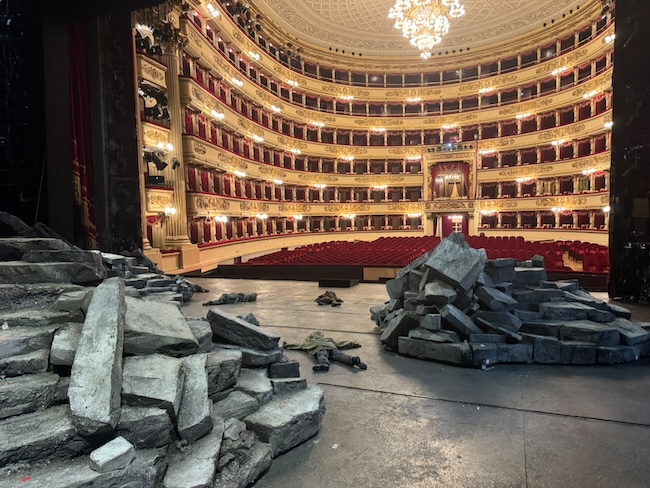
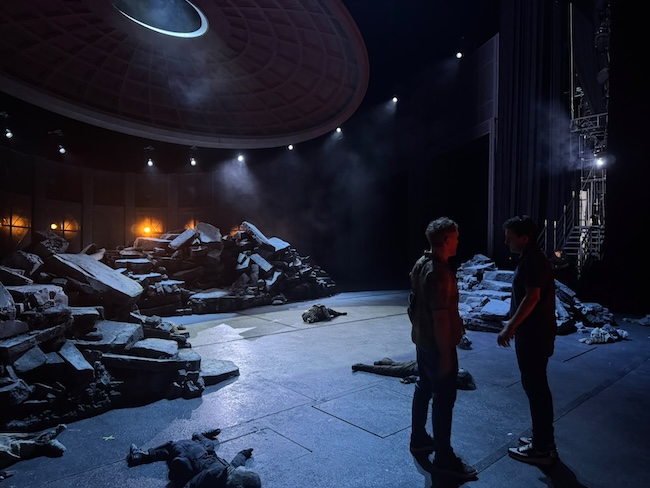
It’s a tiny moment in a series of surreal minutes, as the director of that evening’s final performance of Nabucco, Alessandro Talevi, walks us around backstage.
“Ciao Alessandro!” say stagehands, props masters and lighting guys as we walk between the wings, our exhausted eyes wide open at the sheer scale and magic of being backstage at the world’s most famous opera house. Technically, an opera director’s job is done once the show premieres, and you can tell that the team are surprised and happy to see the South African there as they prep for the evening.
The Joburg boy at La Scala
The South African bit is, of course, the material part of why we’re there. We’ve come to see our Alessandro – or Lexis, as he’s called by family and friends, including his sister, Currency’s Giulietta Talevi, who’s standing next to me – becoming the first South African to direct a production at the hallowed home of opera. There is, as it turns out, an older family echo in the building too: Giulia Tess, the Italian mezzo-soprano turned soprano and a cousin of Talevi’s grandmother, who sang at La Scala in the 1920s.
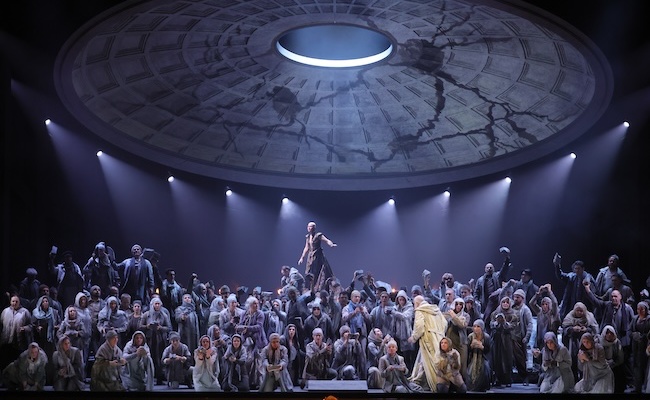
Being there is a big damn deal, and getting a seat is no simple task. I’d nabbed a cancelled ticket the week before, dropped everything to get to Milan, and say a silent word of thanks to the gods of art and music for their intervention as I look up at the dome Talevi is currently pointing out above us. It’s the set piece that represents the ruined Hebrew temple central to the show. As he indicates, from where we stand under it, the cupola is elliptical and 3D – designed by Gary McCann and inspired by the Parthenon – but from the audience later that evening it looks completely rounded, like the dome of a building with a beam of light piercing its centre.
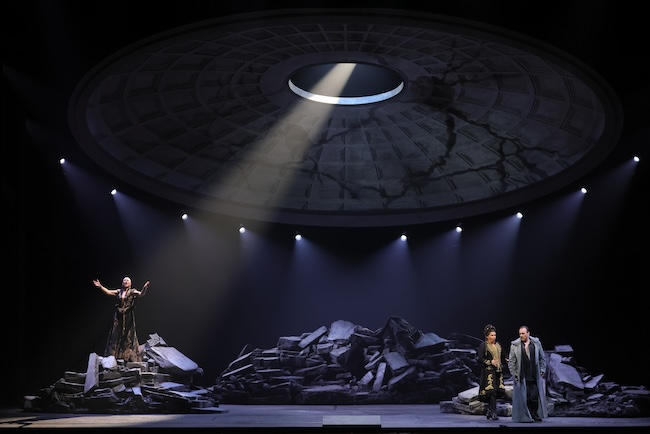
“It reminds me of the light shining into the Voortrekker Monument on December 16,” I say casually the next day, and Talevi practically levitates off his chair with excitement.
“That was exactly my inspiration,” he replies. “I’m so glad you got it.” For though Talevi and his husband, Andrew Holden, are now Turin locals who jet around the world and speak fluent Italian, Talevi is at heart a Joburg boy – and British Holden, with his lilts of “Ja” and the like, very much an honorary South African.
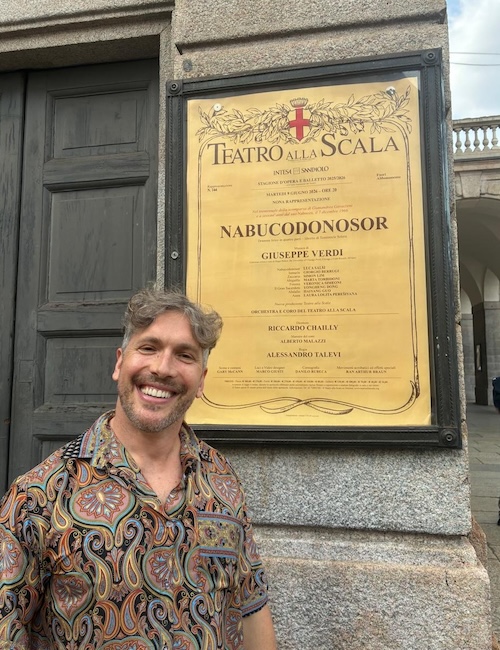
The St Stithians and Wits grad, who went on to study piano accompaniment at London’s Royal Academy of Music (where opera properly got its hooks into him) is now at the top of his game, but he still cites the City of Gold as a major inspiration. An excellent mimic, he peppers his conversations with hilarious interjections of “Divine, doll!” and “Howzit boet” (though in Turin the CrossFitters, of which he is one, say “bro” apparently) and I love that when we see relief sculptures on a set that reference the god Baal, they look like springboks. Or that in a particular scene chorus members have long dreads that wouldn’t look out of place in Smal Street Mall.
No doubt those Americans and Milanese in the audience saw no such reference, but they looked no less mesmerised.
No pressure, then
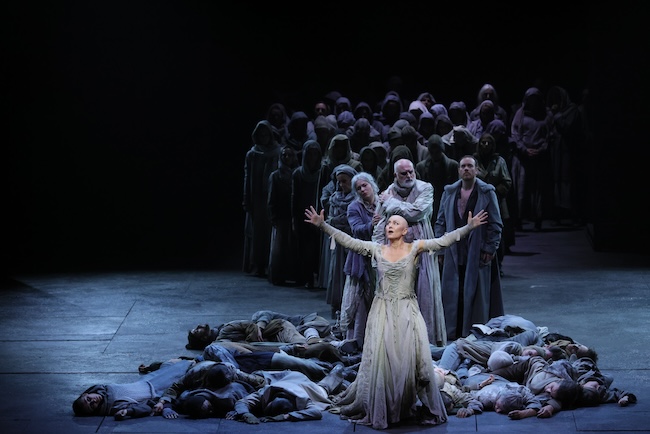
La Scala is, of course, not just any opera house. And Nabucco is not just any Giuseppe Verdi opera. This production, which ran under the opera’s original title, Nabucodonosor, was conducted by Riccardo Chailly, with the La Scala orchestra and chorus, a couple of hundred people working the machine each night.
For Verdi, Nabucco was the breakthrough. First performed (ever) at La Scala in 1842, it is the work that helped turn the young composer into the figure who would become almost inseparable from Italian opera itself. Its great chorus, “Va, pensiero”, sung by the Hebrew slaves longing for their homeland, became bound up with the Italian self-determination and unification.
So, no pressure then.
When I catch up with Talevi again, he is on his way to Santa Fe in the US, where he is directing Eugene Onegin. He is in the Heathrow airport lounge as he narrates the story of how the Italian gig came to be.
How does La Scala even approach you? I ask. Does someone simply ring up and say, “Would you like to do Nabucco?”
“To this day, it’s a mystery as to who suggested me in the first place,” he says. “I didn’t ask too many questions and perhaps that’s best.” What he did get was a call from his agent.
“He just said, ‘Look, this is what they’re offering, at La Scala.’ And of course the words struck terror into my heart because La Scala is one thing, but Nabucco, which is a difficult opera, and at La Scala, where it’s the title most associated with that house – I thought I was actually hearing things when I listened to his message.”
Oiling Verdi’s difficult machinery
Talevi is frank about the opera’s brilliance, but also about its clunkiness.
“It was early in Verdi’s career and he hadn’t quite worked out how to make things flow,” he says. “There are these dramatic moments where the dramaturgy either comes screeching to a halt or suddenly changes direction. There are loose ends, and certain characters who are very important in Act One and Act Two almost get written out in Act Three and Act Four. It’s not a perfectly woven fabric, and directors can very easily fall into the trap of letting it get the better of them.”
His job, as he saw it, was to oil the difficult machinery. “I think I did,” he says. “Because no one complained about being bored,” he adds with a laugh.
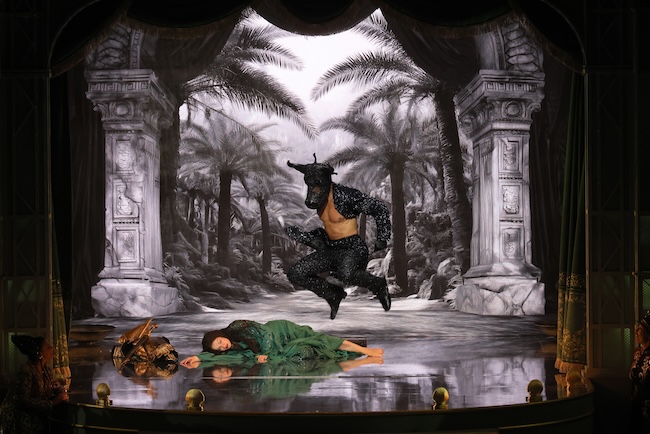
As an eyewitness, I can attest to that. It fizzed with action. There were chariots and theatrical effects, a great suspended temple, fire, a tower that appeared like a corkscrew out of the ground, and a high-wire act. The whole thing had an almost circus-like charge, which, it turns out, was not accidental.
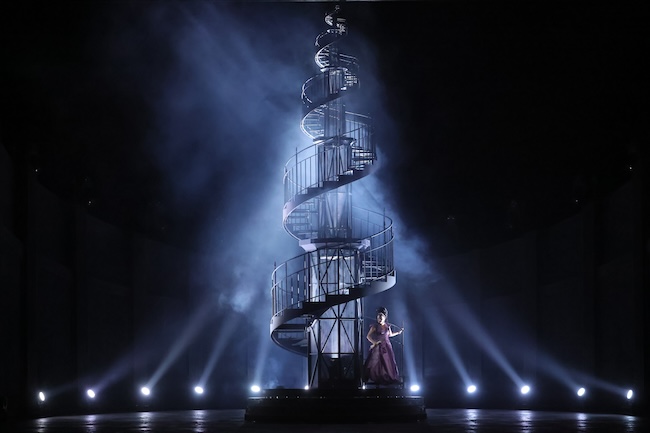
“I wanted to respond to the in-your-face quality of the piece,” Talevi says. “And not forget that Nabucco’s librettist, Temistocle Solera, actually came from a circus background.” A librettist is the person who writes the text of an opera – the words the composer sets to music. “He ran away with a circus troupe when he was a teenager. So that element of razzmatazz, of creating big effects, was in his nature. I was responding to that as well.”
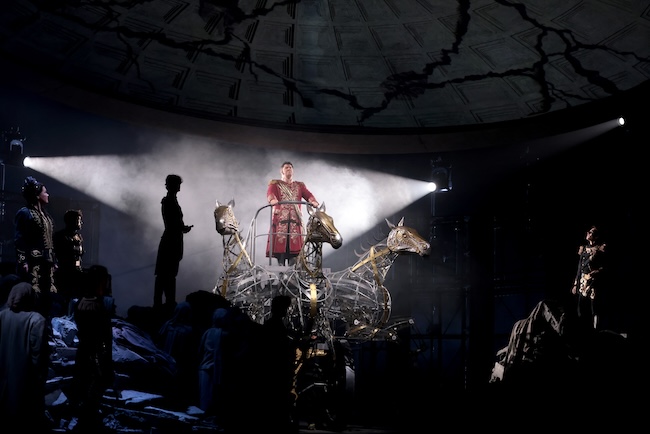
This makes perfect sense once I know it. The opera’s political and biblical thread is there, of course, but so is the old theatre thrill. As Talevi explained to me, Verdi, still young and not yet the architect of perfect operatic inevitability, threw everything at the wall.
“When he wrote it, he had nothing to lose,” he says. “There’s the story that he rejected the libretto and threw it into the corner, and the page fell open on the chorus of the Hebrew slaves. He read those words and it was like some sort of inspiration came to him. Slowly, slowly, the whole opera formed around that.”
“A whole legend has been created around it as the choral piece that symbolises the whole drive for Italian self-determination,” says Talevi. “It embodied the whole spirit of Italy at the time.”
These threads combined obviously created a couple of expectations. Everyone knows what Nabucco means, or thinks they do. And everyone in Milan, especially, has an opinion.
Still, Talevi says, perspective is useful. “At the end of the day, this is just theatre. I’m not a surgeon. I’m not about to perform the Whipple procedure. If it fails, okay, so be it.”
Only, praise be, it didn’t fail – and all reports indicate the production was a success. As an opera newbie, I loved it. It was long, three hours, but absolutely gripping. We went out for dinner afterwards at 11.30pm, and our group was buzzing from the show. The evening was electric.
“I feel like the fact that we emerged unscathed, let alone having a success, was overwhelming,” Talevi says with an exhale.
Poster family
There is something wonderfully South African about this too: the relief and the refusal to be too solemn about it. The Joburg boy at La Scala. The great Italian opera house and a touch of the Voortrekker Monument. And then that family echo again: Giulia Tess, invited by Toscanini to sing at La Scala in 1922. Talevi points her name out on the posters that line the backstage corridors. Not a shabby provenance, and perhaps a portent of why we’re standing there.
Will we see onse Alessandro’s name up on more of these opera house placards? I’d put money on it. And will I fight for another ticket when it happens? Absolutely, boet.
For more of our opera content and Tim Cohen’s chat with Talevi, go here and here.
Top image collage: supplied
Sign up to Currency’s weekly newsletters to receive your own bulletin of weekday news and weekend treats. Register here.