
During one of Strauss & Co’s recent evening sales, I lay on the couch and watched the auction live. Talk about gripping! Never mind a football match or the new Netflix thriller, the proceeding had hundreds of virtual viewers, plus a room of people at their Joburg offices, in thrall. We, the non-shoppers, watched with jaws on the floor as a bidding battle took place over a single glass.
You could tell me most things about glassware and I’d believe you, but not that a mid-century glass goblet (admittedly, this one has Rococo-engraved maritime scenes and VOC motifs) would eventually sell for just over R462,000. Its original estimate was between R30,000 and R40,000.
The war to claim this bell-shaped prize unfolded like the finest rally on Wimbledon centre court. The auctioneer looked astounded, the friend I was messaging about the sale was flabbergasted, and yet the volleying continued. It was not the only such fight for an item over the long night.
This week coming, we’re no doubt in for similar viewing. Such is the absolutely addictive world of auctions. You bookmark a favourite painting or piece of furniture and you follow it. Has anyone bid? Should you? Can you afford it? When do you bow out? Who is the crazy human who really wants that Tanzanite ring so badly? The questions, the compulsion and the magnetic allure of beautiful things make the realm of art, furniture, jewellery and luxury goods auctions an adrenaline- and serotonin-spiker of note.
The auction house’s next compulsive shopping opportunities come over five sales, four of which are timed online, and as a result, temptingly easy to get involved in. They span art by heavy hitters like Stern and Sekoto, fancy wine, contemporary furniture from big names including Tonic Design, classic classy silverware and so much Ardmore.
Here are the lots that I think you need to pay attention to.
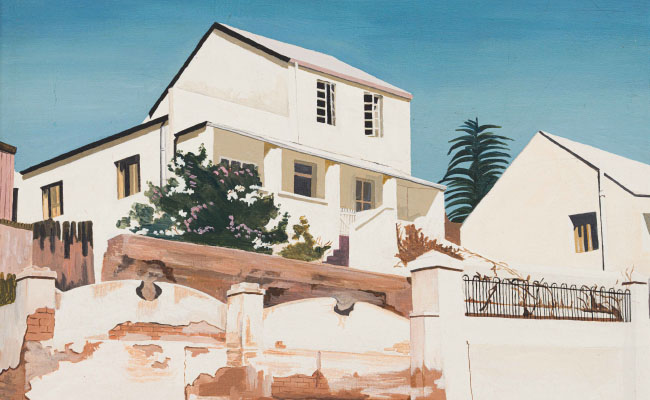
House on Richmond Hill, Betsy Fordyce, 1975
Eastern Cape Echoes: Storms River to Port St Johns, timed auction ending 25 June
Lot 625, Estimate: R3,000–R5,000
This article could have been dedicated to the auction house’s Eastern Cape sale alone. It is a showcase of how exceptional and eclectic the region’s artist output is. As its curator Ian Hunter says, “It really highlights the incredible creative wealth of the Eastern Cape,” adding, “because of the area’s relative isolation from the major centres, there’s a treasure trove of artists with deep wells of life experience, creative expression and skill to be unearthed in the sale. If they’d been based elsewhere, it would have been a different story entirely.”
Have a squiz at the lots and you’ll agree. There are the works by artists we know like Brian Bradshaw, Fred Page and Andile Dyalvane, but also those that are likely unfamiliar to most people beyond the communities of Gqeberha (Port Elizabeth) and KuGompo City (East London).
Take Betsy Fordyce, for example. Her paintings of Graaff-Reinet (now Robert Sobukwe Town) and Lake Malawi are immediately appealing. The same goes for Colour Composition, Port Elizabeth – a high-contrast, advert-like image of the city’s docks.
But I’d pick her House on Richmond Hill. The filmic, flat depiction of the white-walled 1975 Port Elizabeth house, contrasted with the sky and shoddy front wall, caught my eye (and reminded me of Fred Page’s work too). Her style makes sense when you consider that the Scottish-born and trained painter also worked as a graphic artist. Fordyce travelled the globe extensively and settled in the Eastern Cape, where she also taught. As Hunter adds, “The works on the sale illustrate how Fordyce was totally multilingual in style and surface treatments.”
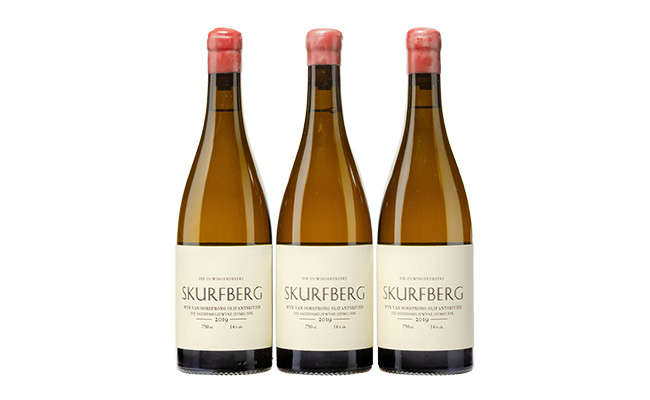
The Sadie Family Skurfberg 2019
Cape Heritage, Sweet Wines, Ports, Brandy & Spirits, timed online sale ends 22 June
Lot 66, Estimate: R4,000–R7,000
The Cape Heritage session of Strauss’s wine sale features goodies including serious Pinotage, a six-vintage run of Alheit’s landmark Cartology, single-vineyard David & Nadia beauties, and properly historic Rustenberg reds from the 1980s and 1990s.
But the bottles that stop me in my tracks are of The Sadie Family Skurfberg 2019 variety.
Sourced from a single mountain vineyard of 80-year-old vines, this vino reminds you why South African Chenin has become one of the great stories of the Cape. It received a perfect 100/100 from Tim Atkin in his 2020 SA Special Report, a score he described as impossible to argue with.
That is obviously a big deal, but beyond the top marks, Skurfberg is monumental without being poncy and a find that makes a strong case for buying wine at auction with the future in mind.
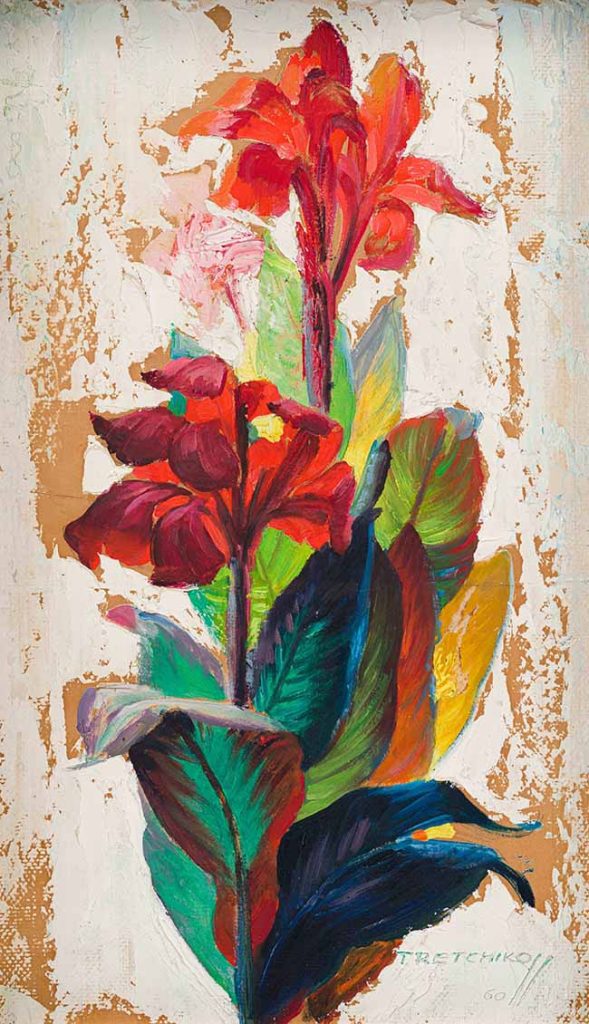
Cannas, Vladimir Tretchikoff, 1960
Modern and Contemporary Art sale, live sale 23 June
Lot 305, Estimate: R200,000–R300,000
In some circles, the canna is an unpopular and unfashionable flower. The same can be said for Tretchikoff’s work, of course. In my book, they’re wrong on both counts.
That the two come together in this classic Tretchi “flower in vase” work is deeply pleasing. The searing, high-contrast colours of the plant’s leaves are especially sexy. As Andrew Lamprecht, curator of Historical Paintings and Sculpture at Iziko Museums of South Africa, put it, “Dating from his ‘middle period’ we see the artist at the height of his confidence with the brush, moving away from the realism of his earlier works, and the painting almost has an expressionist feel to it with swathes of colour applied with deftness and self-assurance that is refreshing and extremely attractive.”
He goes to add, “The painting combines much that is typical of the artist in a refreshing and innovative way. It is undoubtedly one of the most significant of the still lifes painted by Tretchikoff in the early 1960s.”
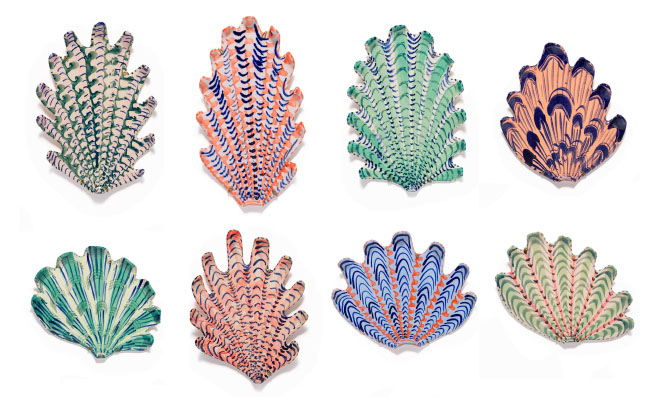
Twelve glazed ceramic shells, Lucie de Moyencourt
South African Design: Past & Present, timed online sale ends 24 June
Lot 454, Estimate: R25,000–R30,000
When Cape Town artist and ceramist Lucie de Moyencourt holds an online sale of her much-admired ceramic shells, they create a mania on Instagram. People watch out for the sale announcements and countdown to them going live. There are collectors who plot entire rooms around these lovely decorative pieces, and if you pay attention, you’ll spot them popping up on the pages of the best interior magazines across the globe.
News that a set of 12 of De Moyencourt’s babies are up for grabs must have spread already, but that doesn’t mean you shouldn’t consider getting in on the action too. Each one is hand-painted and unique, so the collecting potential is vast.
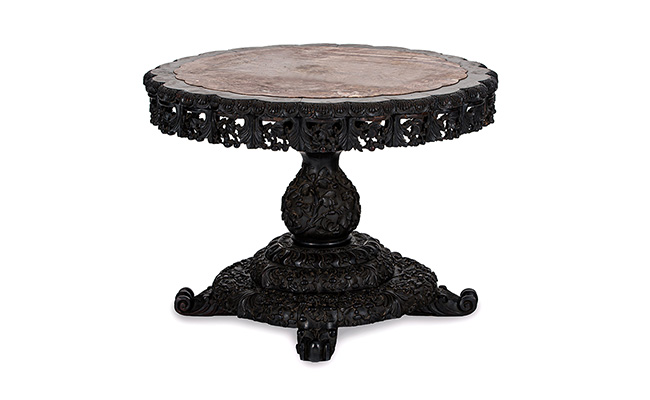
Chinese marble-inset hongmu export table, 19th century
June Interiors: furniture, silver, ceramics & glass, timed online sale ends 22 June
Lot 68, Estimate: R20,000–R30,000
I love this table because it is dramatic, decorative and just the right amount of more is more.
With its scalloped deep pink marble top, carved vines, gourds, blossoms and scrolling feet, it is obviously not a shy piece. But that is also why it would work so brilliantly in all sorts of spaces: against contemporary art, in a modern setting and among other antiques, of course.
Eastern export furniture was made for Western interiors hungry for chinoiserie, combining Chinese craftsmanship with forms that suited European rooms. This table has all of that history. It should make you want to abandon restraint entirely and give your own house a full chinoiserie update. The mark of a very good auction lot, no?
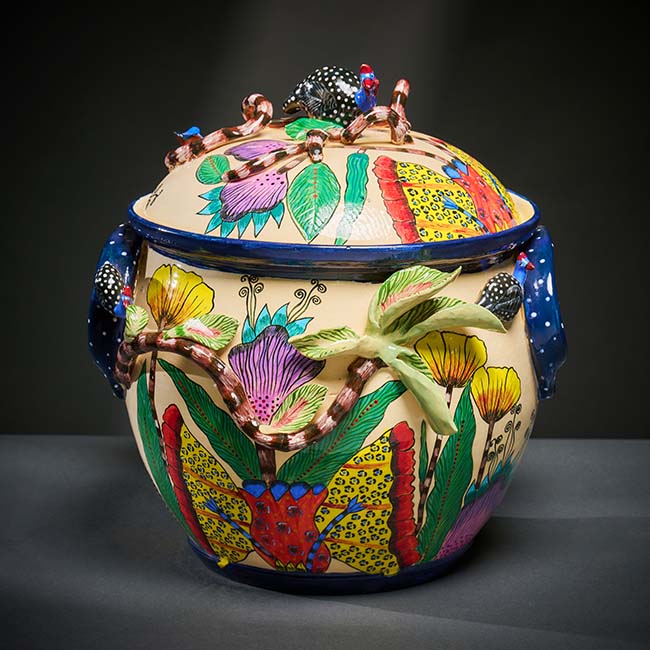
Flower and guineafowl lidded vessel, Ardmore studio, 2000
An Ardmore Anthology, timed online sale ends 25 June
Lot 136, Estimate: R10,000–R12,000
Strauss & Co’s Ardmore sale is, frankly, wild. More than 200 lots, all from the same private collection, make up an extraordinary gathering of early 2000s Ardmore. I spent an hour going through the whole thing, slightly slack-jawed. Whoever had the budget, space and commitment for all this, I salute you.
The estimates are excellent too, so the sale is a proper opportunity for a bit of shopping.
My pick is this joyous, riotously colourful flower- and guineafowl-lidded vessel from 2000. Made by Elias and painted by Angel, it has everything one wants from Ardmore: wit, colour, abundance and that distinctive mix of fantasy and craft, stippled with a little naivety.
The collection is also a poignant reminder that a number of early Ardmore artists were lost to the HIV/Aids crisis that devastated communities in the Natal Midlands in the late 1990s and early 2000s. Seen together, these works are exuberant and important: a vivid, generous archive of one of South Africa’s great ceramic traditions.
For more of our arts, design and culture content, go here
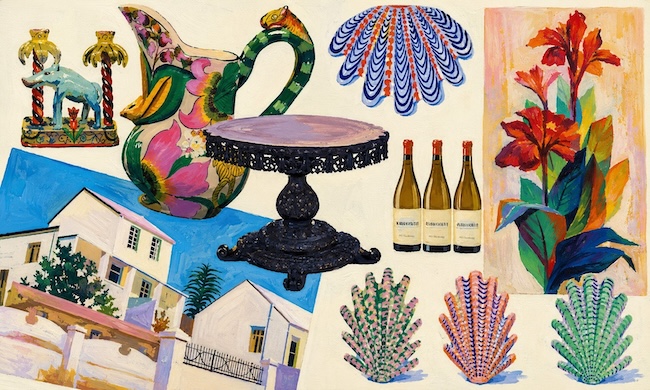
Top image collage: Sarah Buitendach
Sign up to Currency’s weekly newsletters to receive your own bulletin of weekday news and weekend treats. Register here.