Cyril Ramaphosa is still standing not because he is unbeatable. He is standing because he is the main meal ticket for too many powerful people in the ANC.
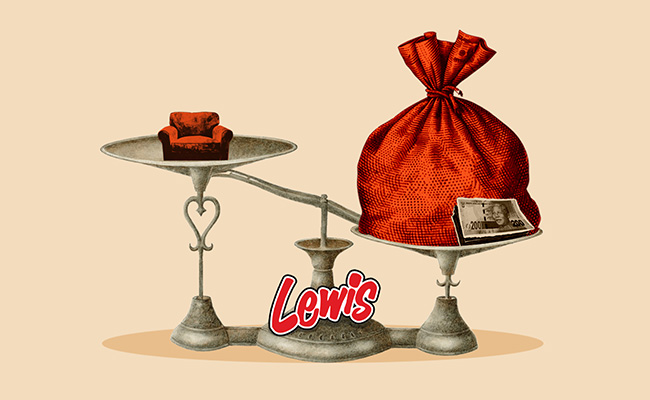
The ANC’s national executive committee (NEC) quickly closed ranks behind Ramaphosa on May 14, after the Constitutional Court reopened the path to his impeachment over the theft of $580,000 from a couch on one of his game farms.
Compare that with what happened to Thabo Mbeki in 2008. Or Jacob Zuma a decade later. Both men were removed when the party believed it could survive without them. Ramaphosa’s position is different.
Much of the current ANC leadership rose through the CR17 campaign that carried him to victory at Nasrec in 2017. Many ministers, premiers, deputy ministers, mayors and NEC members did not build strong independent support bases. They advanced as part of Ramaphosa’s political machine. Their futures became tied to his.
If Ramaphosa falls, many of them fall too.
That is why the NEC no longer behaves like an independent structure capable of disciplining a president from a distance. It is filled with leaders whose influence depends on remaining inside the Ramaphosa coalition.
Mbeki was recalled after losing control of the party at Polokwane. Zuma was recalled by the NEC in February 2018, when state capture scandals had made him an electoral liability heading towards the 2019 polls. Ramaphosa survives because many fear the party may not survive without him.
Political protection at a price
Ramaphosa entered office promising a new dawn built on accountability and clean government. Yet several people linked to scandals exposed at the Zondo commission remain active in the government and the party. Figures associated with Bosasa, which dished out bribes and favours for state contracts, and the VBS Mutual Bank scandal continue to cast a shadow over his administration.
Every time a compromised official survives politically, the public sees another example of the ANC protecting its own. The same alliances keeping Ramaphosa in office also limit how far he can act against corruption.
Ramaphosa’s value now reaches beyond just his party. After the ANC’s poor 2024 election performance, the government of national unity (GNU) became a survival pact. Ramaphosa’s moderate image and business background made him the only ANC leader acceptable enough to opposition parties like the DA. Without him, the coalition could become unstable very quickly.
The DA’s latest show of influence came when it pressured Ramaphosa over social development minister Sisisi Tolashe, who was fired last week. It was a sharp departure for a president who has dismissed only one other GNU minister, and came after DA leader Geordin Hill-Lewis wrote to him on April 30 demanding her removal, and after both the DA and Herman Mashaba’s ActionSA laid criminal charges over undeclared luxury vehicles allegedly linked to the ANC Women’s League.
The precedent now exists for coalition partners to demand action against other compromised ministers.
Ramaphosa also remains the ANC’s strongest national campaign figure heading into the 2026 local government elections. In a fractured political landscape, he still offers a level of stability and international credibility few others inside the party can match.
The ANC is protecting Ramaphosa for the same reason passengers protect a leaking lifeboat during a storm. They are already inside it.
What makes Ramaphosa different
Mbeki was removed because the party believed it could renew itself without him. Zuma was removed because the party feared it would collapse with him. Ramaphosa survives because today’s ANC fears it may not survive without him at all.
But this is not sustainable.
A leader protected mainly because he is everyone’s political meal ticket cannot drive deep reform or ruthless accountability. The alliances that protect him are the same alliances preventing meaningful renewal.
South Africans deserve more than stability built on patronage and selective accountability. Real renewal will only come when the ANC moves beyond factional slates and political dependency, and rebuilds itself around competence, integrity and accountability.
Until then, Ramaphosa will remain exactly where he is. Protected not by invincibility, but by the number of political careers tied to his survival.
Catch more of Zukile Majova’s viewpoints at Scrolla.Africa, a mobile-first news site covering breaking stories fast from communities across South Africa, where he is political editor, in English and isiZulu.
Listen to the latest episode of “Sharp Sharp”, a weekly podcast on South African politics, money and power from Currency and Scrolla.Africa, where Zukile and Rob Rose unpack topics like this – on Spotify and Apple Podcasts now.
ALSO READ:
- Ramaphosa: caught between a couch and a hard place
- Real Politics: There is logic in Ramaphosa’s madness
- Real Politics: Why Ramaphosa has to depend on flawed alliances
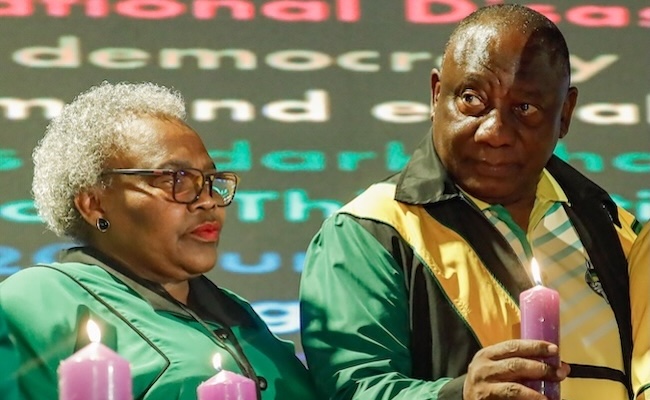
Top image: Sisisi Tolashe and President Cyril Ramaphosa at the ANC’s national general council on December 8 2025. Picture: Gallo Images/Sharon Seretlo.
Sign up to Currency’s weekly newsletters to receive your own bulletin of weekday news and weekend treats. Register here.