
Not for nothing is Warren Buffett considered the world’s greatest-ever investor. A hundred dollars invested in the 95-year-old’s firm, Berkshire Hathaway, in 1965 would have been worth about $6.1m by the end of 2025 – compared to $45,500 invested in the S&P 500 index. Put differently, Berkshire’s share price has compounded at 19.7% a year over that period, against 10.5% for the overall American market.
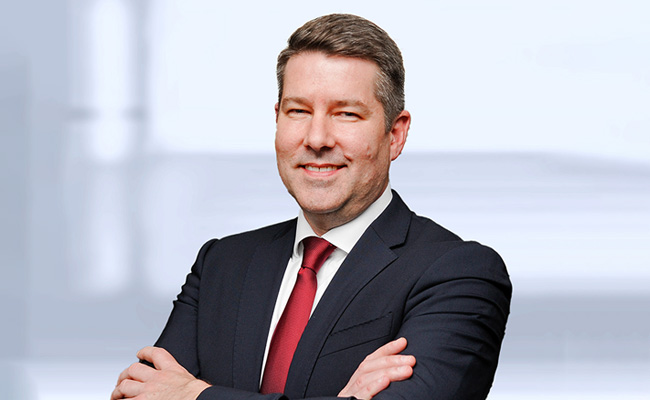
So it’s little surprise that Chetan Ramlall, a portfolio manager with STANLIB’s systematic solutions team, has a quote from the investment godfather practically etched in his memory.
“To invest successfully over a lifetime does not require stratospheric IQ, unusual business insights or inside information. What is needed is a sound intellectual framework for making decisions and the ability to keep emotions from corroding that framework,” wrote Buffett in the preface to the 1986 edition of Benjamin Graham’s legendary tome, The Intelligent Investor.
It’s also, perhaps, an approach that resonates especially strongly with a former electrical engineer. Ramlall started his working life at Illovo Sugar, where he spent a few years working in heavy industry.
“I did a lot of process engineering, and I spent time across mills and distilleries and it was all about building processes. How do you put a system and process together such that you get an optimised output? And I’m always grateful for that period because it taught me a lot about how to think about a problem,” he tells Currency.
It was his interest in markets that saw him start to “dabble” in finance and pivot away from engineering. Ramlall took a one-year break to complete a master’s in mathematical finance, after which he made the transition into asset management in 2019.
Staying the course
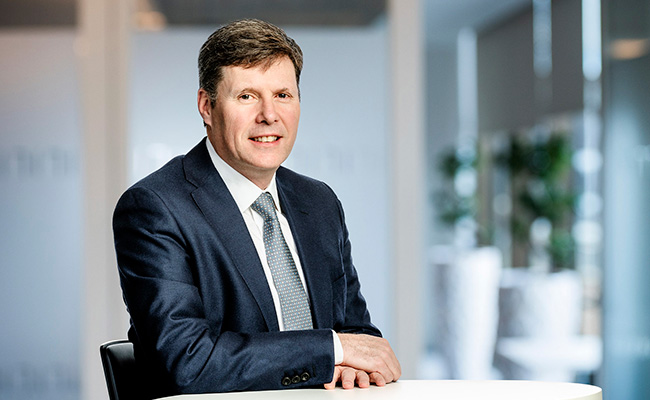
In fact, Ramlall and his colleague, fellow engineer Rademeyer Vermaak, are obsessed with using processes that take both the bias and emotion out of their equity market portfolios. The problem they’re solving for here is how to build a resilient share portfolio that isn’t blown off course by either known risks or unknown shocks.
Their approach is a little different to traditional fund management, which “has long been dominated by accountants and their preferred tool, the discounted cash flow model [which] values a stock in isolation against its future cash flows”, said Vermaak in a paper last year. This, he argued, is “useful, but not sufficient”.
Ramlall, meanwhile, is keen to tout his team’s data-heavy “evidence-based approach” to building an equity portfolio.
Surely though, every investor and fund manager worth their salt is making calls based on the same data at hand?
“I think on one level yes, but remember there’s a very big emotional component with a lot of investors,” says Ramlall. People “are very easily swayed by what we feel”. Instead, their process is about “bringing rigour to bear”, precisely so that decisions regarding investments aren’t made on emotion or bias.
“Process is core because it’s so easy to be thrown astray with all kinds of dynamics that come at us. You’ve got sentiment, financial statements, media – there are so many different pieces at play and the question is what is your anchor, your foundation?”
The Covid crunch
This is especially key in times of market panic – like the response to US President Donald Trump’s tariff tornado last year, or the vicious sell-off that took place when the world went into Covid lockdown in March 2020.
“When your back is against a wall, especially as a manager, it’s very easy to panic and go against a process that’s worked all this time,” says Ramlall. “And in a world of so much uncertainty and fear, what else would you fall back on if you can’t fall back on a process? You’re a ship lost at sea and you don’t really have an anchor.”
Practically, it meant that during the brief but brutal Covid market crash, STANLIB’s equity funds held tight while others lost their heads. For example, investors dumped shares in petrochemicals group Sasol en masse, such that the company’s stock slumped to a gut-wrenching low of R27 after the oil price, for one historic moment in time, turned negative. That was followed by an almost-equally stomach churning recovery.
STANLIB’s Enhanced Multi-Style Equity Fund, on the other hand, did nothing, saving investors both the volatility and the cost associated with selling and buying back a bunch of shares.
“You can’t eliminate market nightmares but you can avoid turning that uncertainty and volatility into permanent damage to your portfolio,” he believes.
Crystallising losses in a moment of blind panic is a no-no, as is “falling in love with a story”, says Ramlall.
“Whether it’s AI or some innovative product, as humans, we love a story. But that may not be based on any sound evidence. A good company may not be a good investment,” he cautions.
The building blocks
Okay: so how do you create a robust investment system?
First up, you need data; reams and reams of data. Or what Ramlall calls the “foundation stone and departure point”.
“It’s identifying the data sources you want – like company financial statements. But then the issue is to have a format that’s usable.”
And here’s another adage at work: garbage in, garbage out. This is where the engineer in Chetan is uppermost.
“You’ve got to have a process where you clean this data and package it in the right way. That’s where you’ll start combining these different components into a signal.”
And this is where a reliance on computing and infrastructure come in. “When you get into the detail it’s nigh on impossible to do this as a human. There are simply too many variables and too many moving parts. We’re moving away rapidly from a world of Excel towards programming, databases and cloud computing,” he says.
Key signals for Ramlall are historical drivers of returns, which also help build a picture of a company’s worth relative to its peers. Then, risk; volatility and correlations.
“Remember all stocks in the market have some relationship to one another. Correlation is not a trivial matter to calculate and measure. So we put a lot of effort into going into real minutiae,” he says.
Taken together with macro-economic factors, “you’ve got a framework that can build a portfolio that is robust and performs through market cycles”, he says.
Systematic investing
Systematic investing isn’t new at a global level and has been in place in the US, in particular, since the 1980s. But it’s not an approach widely adopted by the South African fund management industry, says Ramlall.
“To be clear, we don’t see systematic investing as being different from fundamental investing. We build our process and anchor it on company fundamentals; just as traditional managers do. The difference comes in with how we construct our portfolio and by applying rigorous processes.”
In STANLIB’s case, the Enhanced Multi-Style Equity Fund under Vermaak has been in existence since 2016 and produced “alpha” – or returns in excess of its benchmark – of 1.8% a year since inception. The fund has been ranked in the top quartile of funds in the South African equity Asisa category since inception.
Asked whether their processes have produced a way to avoid all market pitfalls, Ramlall says there are no absolute failsafe models.
“You can have the best model, you can have the best analyses but anything can happen. Anyone who says they can completely avoid a disaster, well, that’s simply not true. What matters is: can you build a process that reduces the chance of self-inflicted mistakes and emotional decisions; that’s the thing.”
For retail investors this means you’re unlikely to suffer a sort of market schizophrenia: one day on top of the performance tables, the next year in the doldrums.
“This approach makes fund management challenging. That’s not a sustainable way to continue managing funds. That’s exactly why systematic processes have becomes so prevalent,” Ramlall believes. “A systematic process isn’t trying to be a crystal ball. It’s about ensuring decisions are made from an evidence-based standpoint and a sound investment rationale.”
Unsurprisingly, this engineer-turned-investor is a big believer in STEM skills: science, technology, engineering and maths.
“It’s crucial because in this world you have to have structured reasoning ability. You’ve got to be able to reason and problem solve because without these skills, the world isn’t easy to navigate.”
ALSO READ:
- The robot soccer fundi revamping South African investment
- The AI difference: Meet the firm buying the last of Murray & Roberts
- Bond maven, author, investing evangelist: Cartesian’s Anthea Gardner
Top image: supplied.
Sign up to Currency’s weekly newsletters to receive your own bulletin of weekday news and weekend treats. Register here.