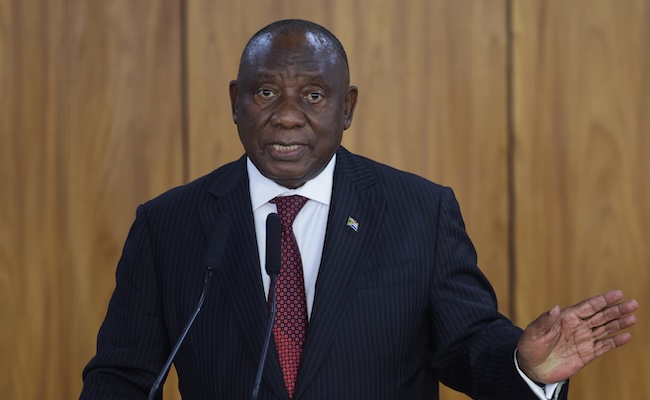

President Cyril Ramaphosa’s decisions may look inconsistent, even contradictory. But they reflect a calculated attempt to avoid deepening factional battles while buying time for structural reform.
At the heart of the criticism is his move to suspend national commissioner General Fannie Masemola while appointing Lieutenant General Puleng Dimpane as acting national commissioner. On the surface, this appears illogical. Masemola is not accused of corruption. And Dimpane, as chief financial officer, was part of the system that failed to stop the very procurement breaches now under scrutiny.
Yet the choice makes more sense when viewed through the lens of political survival and institutional repair.
The president is dealing with a police service that is no longer a unified command structure. It is fragmented, shaped by competing loyalties and internal alliances. Appointing any senior career police officer as acting national commissioner would have risked empowering one faction over another – worsening instability at a time when the credibility of law enforcement is already under strain.
The crisis did not begin with the charges against Masemola. It has been building for years. But it erupted dramatically after KwaZulu-Natal police commissioner Lieutenant General Nhlanhla Mkhwanazi held a press briefing on July 6, 2025. Mkhwanazi described a deeply entrenched criminal network that had infiltrated the police, the National Prosecuting Authority, intelligence structures, metro police, the judiciary and correctional services. He went further, accusing police minister Senzo Mchunu of colluding with criminal elements to disband the Political Killings Task Team in late 2024.
The fallout has been swift. Mchunu is on special leave, though he disputes the allegations. Masemola faces four counts of contravening the Public Finance Management Act, brought by the Investigating Directorate Against Corruption. Lieutenant General Shadrack Sibiya, the deputy national commissioner for crime detection, has also been suspended. The leadership vacuum at the top of the police service is unprecedented in democratic South Africa.
What happened to experience?
Masemola’s case centres on a wellness services contract awarded to Medicare24 Tshwane District – originally valued at R360m, with IDAC’s charges relating to approximately R228m. The company is linked to Vusimuzi “Cat” Matlala, who is in jail and facing charges for allegedly trying to kill his former girlfriend. The charges against Masemola do not accuse him of taking bribes. They focus on his failure to prevent irregular spending. This distinction matters, but it has not shielded him from suspension.
Critics argue that Ramaphosa should have appointed an experienced operational officer from within the police ranks. The service has a clear hierarchy, with deputy national commissioners who have years of experience. Such an appointment might have reassured officers on the ground.
But that option carried significant risks. The police leadership is divided. Alignments have formed around figures such as Mkhwanazi and Sibiya. Any appointment from within that circle would have been seen as taking sides. In a volatile environment, perception can be as damaging as reality.
By appointing Dimpane, Ramaphosa avoided that trap. She is not a career crime-fighting officer. With a financial and administrative background – she joined the police in 2007 as an internal auditor and became chief financial officer in 2018 – her lack of operational pedigree has drawn criticism, but it also makes her a neutral figure in the current factional landscape.
Her appointment signals a shift in focus. Ramaphosa appears less concerned with immediate operational command and more focused on fixing the systems that allowed corruption to take root. The crisis around the Medicare24 contract exposed deep weaknesses in procurement and financial oversight within the police.
Removed from centres of power
A new organisational structure approved in May 2025 will move supply chain management under the authority of the chief financial officer. Previously, this division operated separately and reported directly to the national commissioner – a separation that weakened oversight and created opportunities for abuse. Dimpane’s appointment places her at the centre of that transition.
The Madlanga Commission, investigating alleged criminal capture of the criminal justice system, is a key part of Ramaphosa’s broader strategy. Its findings are expected soon and could reshape the leadership and structure of the entire service. Until then, Ramaphosa appears determined to avoid irreversible decisions that could entrench divisions.
Suspending key figures removes them from positions of influence while investigations continue. Appointing a neutral administrator prevents any one faction from gaining control. It is not a perfect solution – it leaves the police without strong operational leadership at a critical moment. But given the depth of the crisis, his options were limited.
What looks like hesitation may in fact be a deliberate attempt to hold the centre while preparing for broader reform.
For now, Ramaphosa is walking a tightrope. The question is whether it holds long enough for the investigations to do their work.
Top image: Rawpixel/Currency collage.
Sign up to Currency’s weekly newsletters to receive your own bulletin of weekday news and weekend treats. Register here.