
South Africa’s asset management industry has long been one of the pillars of the country’s financial system. It manages the capital of almost 5,000 retirement funds representing roughly 18.6-million members, alongside retail savings and endowments, playing a critical role in capital allocation within the economy. But tectonic plates are shifting.
The recent wave of mergers and acquisitions across the sector is not merely indicative of an opportunistic deal-making cycle. It is a rational, defensive response to a shrinking financial market and a fundamental shift in investor behaviour.
The macroeconomic backdrop is key here: South Africa’s real GDP growth has averaged less than 1% for more than a decade, meaning the economy has consistently failed to outpace population growth. The official unemployment rate remains stubbornly high, at 31.4%.
For asset managers, this macroeconomic reality presents an existential maths problem: when organic wealth creation stalls in the real economy, the pool of investable capital stops growing. Managers cannot rely on a rising economic tide to lift their assets under management (AUM). To grow, they must buy their competitors.
Paradox of record inflows
At first glance, the industry looks robust. AUM in the collective investment schemes sector, which includes products such as unit trusts, surged more than 18% in 2025 to a record R4.58-trillion, according to recent data compiled by the Association for Savings and Investment South Africa (Asisa). Annual inflows hit R196bn.
The headline AUM figure, however, was largely driven by a roaring JSE – the all-share index delivered a total return of 42.4% in rand terms over the 12 months to December 2025, fuelled by soaring precious metal prices and a massive rally in mining stocks. Strip out that market tailwind, and the picture looks considerably less impressive.
In fact, that R196bn in inflows masks a recurring, structural flight to safety:
- The reinvestment illusion: of the total inflows, only R67bn was actual new money. The remaining R129bn came from reinvested dividends and interest – trapped capital recycling through the system rather than fresh wealth entering it.
- Flight to income: investors overwhelmingly parked their money in safe-haven or diversified assets. South African interest-bearing short-term portfolios attracted R56.4bn, while South African multi-asset income drew R52.1bn.
- Equity starvation: the most glaring statistic for the industry is the sustained exodus from local equities. In 2025, investors pulled a net R16.5bn from portfolios that invested exclusively in local shares, a category introduced by Asisa only in October 2024. This capital flight occurred despite the JSE’s fantastic year, confirming it is a structural de-risking trend, not a temporary market-timing decision.
The boutique squeeze
This data precisely explains the consolidation wave. The traditional lifeblood of independent asset managers – local equity mandates – is drying up. The capital is moving decisively into multi-asset funds, interest-bearing instruments and offshore portfolios, which saw R28.1bn in inflows in 2025. Managing these diversified, multi-asset and global strategies requires scale, extensive research teams, and complex compliance infrastructure that small and mid-sized managers simply cannot afford.
According to the 27four DEInvest Annual Survey 2025, corporate activity among asset managers rose sharply – from 4% of firms surveyed in 2024 to 17% in 2025.
Transactions involving firms including Taquanta Asset Managers, Ngwedi Investment Managers, Absa Asset Management, Sanlam Investments, Ninety One, 10X Investments, CoreShares, Old Mutual Investment Group, Vunani Fund Managers and Sentio Capital reflect a broader strategic pivot.
Regulatory burdens, the costs of operating globally, and intense fee compression are making independence an expensive luxury.
The ripple effects extend well beyond the asset managers themselves. Investment consultants and multi-managers – the allocators who construct portfolios on behalf of pension funds and institutional investors – depend on a broad, diverse universe of independent managers to generate differentiated returns. Their value proposition rests on access to niche strategies, specialist capabilities and genuinely uncorrelated sources of alpha.
As consolidation shrinks that universe, allocators face a narrowing opportunity set: greater concentration risk, fewer entrepreneurial offerings, and a growing homogeneity in portfolio construction that could suppress competition-driven innovation.
Fewer independent managers means fewer genuinely differentiated solutions for the retirement funds that underpin the financial security of millions of South Africans.
Consolidation may strengthen individual firms, but it quietly compresses the ecosystem’s diversity around them.
A mirror of the broader economy
Ultimately, the shake-up in South Africa’s asset management industry reflects the broader economy back on itself. In a compressed-fee environment, scale matters more than ever – but scale alone is not a growth strategy. It is a survival mechanism.
The real long-term solution to industry competitiveness does not lie in balance-sheet engineering. Sustainable job creation would expand pension contributions. Revived entrepreneurship would increase institutional capital formation.
Infrastructure investment would unlock productivity. Without these structural drivers, consolidation will remain the sector’s defining feature – not because firms are thriving, but because they have to, to survive.
Rabotho Mathekga is a senior manager research analyst at Novare Holdings.
ALSO READ:
- How Old Mutual’s new boss stitched up R1.87bn 10X takeover
- Inside the tie-up of South Africa’s biggest asset managers
- Meet investment’s ‘Mr Fix-It’
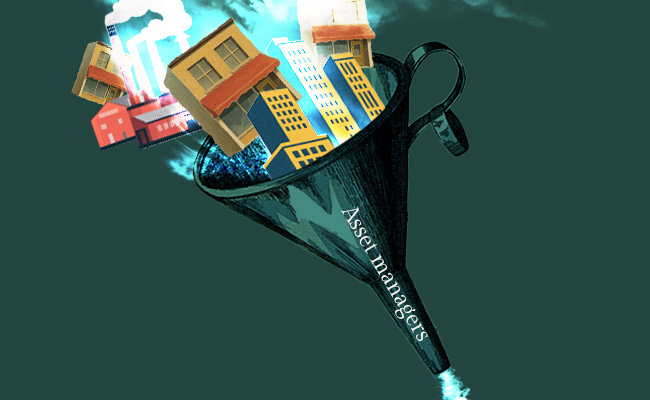
Top image: Rawpixel/Currency collage.
Sign up to Currency’s weekly newsletters to receive your own bulletin of weekday news and weekend treats. Register here.