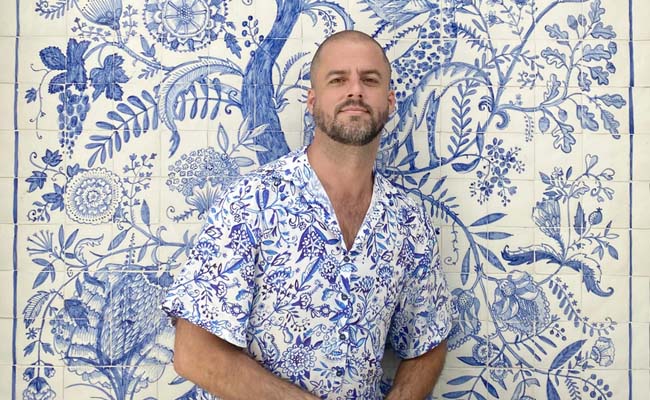
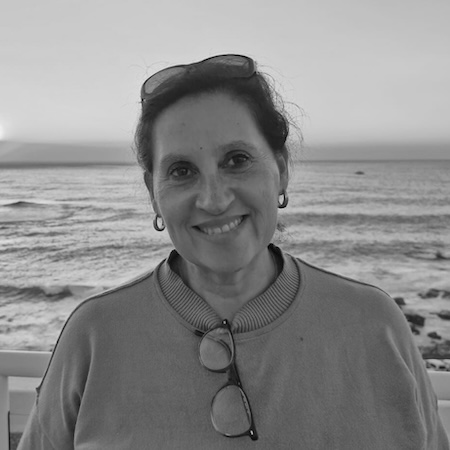
Michael Chandler is one of South Africa’s most distinctive and celebrated ceramic artists. His work has appeared in the Iziko South African National Gallery, at the Grand Palais in France, and on building-sized murals from Miami to Morocco.
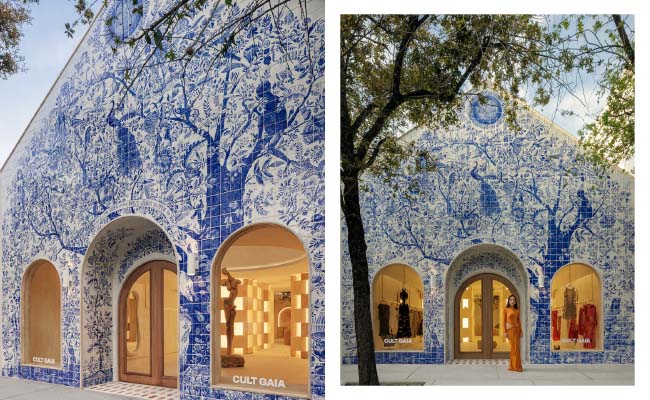
Chandler was commissioned by Jasmin Larian Hekmat, founder of the womenswear brand Cult Gaia, to create the mural façade of its Miami flagship store – 1,800 hand-painted blue and white porcelain tiles depicting a Tree of Life scene. He has worked on commissions for a royal hotel in Morocco, and private homes across the US, South Africa and the UK.
Perchance you’ve glimpsed some of his work on social media or in a magazine or two. Perhaps you’ve even seen it in a stylish friend’s dining room, or in the form of an especially chic house number. Gigantic or bijoux, his pieces are hugely popular.
The charming artist is particularly focused on creating detailed ceramics decorated in the style of Oriental pieces, but what also sets Chandler apart – outside of his technical skill – is his philosophy. Pieces carry layered meaning: the history of blue and white pigment across cultures, the specific moment in time it was made (he marks each work with the degree of the sun on the ecliptic at the moment of creation), and the personal narrative of the person who commissioned it. His work sits at an intersection of art history, storytelling, craft and, perhaps unusually, astrology – all of which inform how and why he makes what he makes.
Making a start
Chandler, originally from KuGompo City (previously East London), never really set out to do any of this. He grew up finding shards of cargo porcelain that had been shipwrecked on the Wild Coast beaches. By the age of 10, he was breeding tropical fish, gardening, doing needlework and drawing – showing curiosity and creativity from a young age.
“I always say we sell stories,” he says in his Cape Town studio in Bo-Kaap, surrounded by hand-thrown plates and antique chairs he suspects once stood at the entrance of Groote Schuur, and were inspired by an armoire housed in one of the upstairs rooms at Groote Schuur.
Chandler studied visual art history at the University of Cape Town, then spent years moving through the Cape Town art world – Stephan Welz and Co in association with Sotheby’s, working alongside furniture specialist Deon Viljoen, learning to read a piece of Cape yellowwood, or one of the many pieces of furniture made from the exotic woods of Asia.
He went to evening classes at the then operational Frank Joubert Art Centre, shared wine with women twice his age at their kitchen tables who introduced him to Uzbek textiles, period furniture and a wider sense of what beauty could mean. Eventually, the paltry salary at the auction house was usurped by the burning need to make things with his own hands. As so he started painting.
A kind of blue
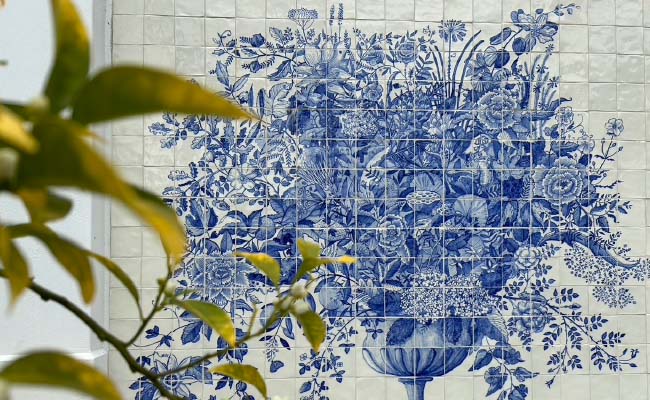
Chandler’s medium is blue and white, though it’s not delft. The permanence of ceramic tiles appeals to him for its longevity. “Ceramics don’t go away,” he says. “When aliens find us in a million years, there will only be two things that remain – stainless steel pots and ceramics.”
He paints the design with a cobalt salt, the tiles then get glazed and fired, and once he receives them back, he installs them with the help of a trusted tiler. This, on tiles and hand-thrown plates rather than making his own surfaces. “Picasso never made his own canvases,” he says.
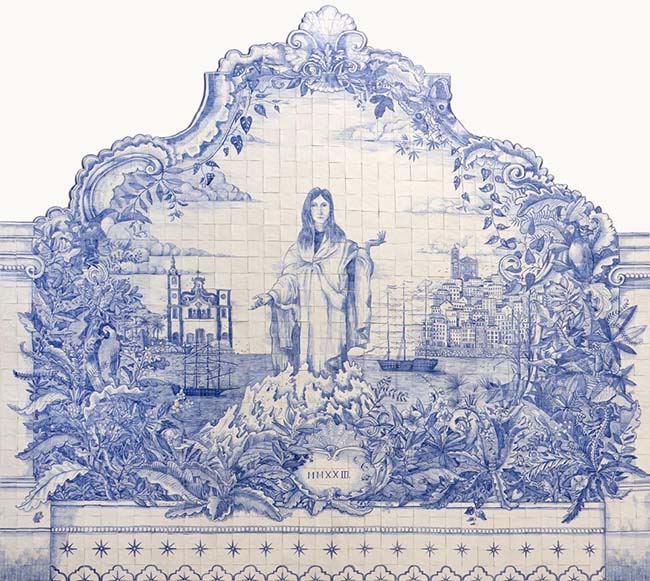
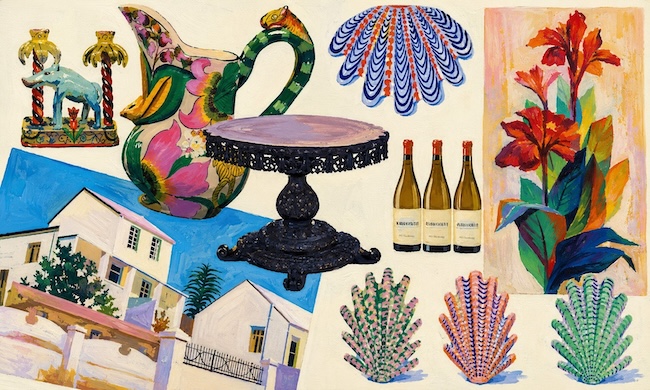
Chandler’s reputation was built largely through Instagram – a platform he’s now essentially withdrawn from because the demand became unmanageable. For several years he produced painted platters for American clients: dogs, houses, hydrangeas, the architectural details of homes in Greenwich and Connecticut and Los Angeles. He’s done more than 400 of them.
It’s not that he’s stopped entirely. The money is good, and he’s shrewd enough not to abandon the market entirely, but he now takes one commission a month, with a year-long waitlist and a surcharge for anything sooner.
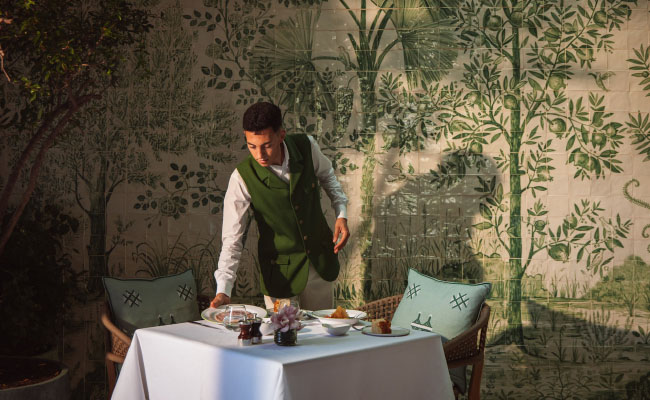
The work that excites him more these days is larger, harder to replicate. A colossal Moroccan commission came through a London-based design firm working on Royal Mansour Tamuda Bay, a new hotel for King Mohammed VI in Tetouan, Morocco.
Having visited the north African country to take inspiration, he painted an entire garden narrative for 11m of wall in a deep, difficult Moroccan green – a pigment he describes as trying to paint with egg white, viscous and resistant, nothing like the ease of cobalt blue. The piece tells the story of every plant in the newly-planted garden.
Star quality
Chandler is also a practising astrologer, and while he has been interested in this domain his entire life, he’s been studying with renowned astrologer Rod Suskin for three years – hence dating his pieces on the ecliptic.
He’s painted plates on the actual nights of blue moons – pieces he calls his “blue moons” – working by the light so as not to disturb the quality of the moment. He believes there are only four such moons left in his lifetime. He’s done two. “Imagine going into a flea market and finding a set of six blue-moon plates, painted on the night of an actual blue moon?!” he says. “That would be the most beautiful thing.”
He also made a plate on the evening that Pluto moved out of Capricorn and into Aquarius – a transition that won’t repeat for 248 years. The plate is downstairs, in a cabinet. It cannot be made again. “I’m interested in making things that have a quality of time, something that could only ever have been made in that moment,” he says.
His studio, Chandler House, is in a 19th-century Cape Georgian house and serves as a shop, gallery and studio. It operates less like a shop and more like a private world that occasionally admits visitors.
“Be careful what shards you make,” he say, “because they’ll end up lasting forever.”
It’s advice that sounds like it’s about ceramics, but probably is about so much more.
ALSO READ:
- Sanell Aggenbach’s beautiful, unsettling take on a fractured world
- Hanneli Rupert’s Okapi is real South African luxury
- The coolest rooms ever: 80 hotels to lust after
Images: supplied.
Sign up to Currency’s weekly newsletters to receive your own bulletin of weekday news and weekend treats. Register here.