


If there’s a term that’s been hollowed out to the point of near-meaninglessness, it’s “luxury”.
Just last week I clocked something described as a luxury alcopop: a very sweet, fizzy drink retailing for R100 a six-pack.
In the traditional sense of the word, meaning great opulence and elegance, it’s almost farcical to imagine anything even remotely luxurious about that.
But that’s exactly the problem. The term now gets flung about with the gay abandon of a cadre’s credit card in a Louis Vuitton store, stretched thin by branding departments trying to make the ordinary feel elevated.
And yet, we do still recognise the real thing when it glistens in front of us.
If you’ve ever stood in front of a piece of high-end jewellery – say, a mid-20th-century diamond rivière necklace by Harry Winston – you understand immediately. The precision, the weight, the setting of each stone, the sense that every detail has been considered and executed at the highest possible level. The price says a lot, but the craft says more. And the finished product is instantly, irrationally alluring.
The real deal
That alcopop and its many dubious compatriots are probably why, when I sat down with Tiaan Nagel, the newly appointed creative director of Cape Town-based brand Okapi, and used the word “luxury”, he winced slightly.
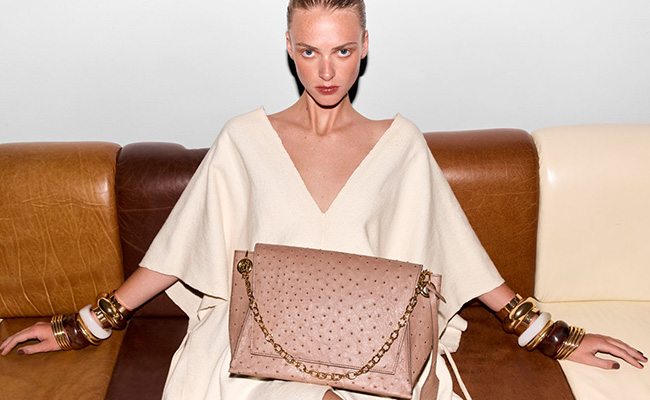
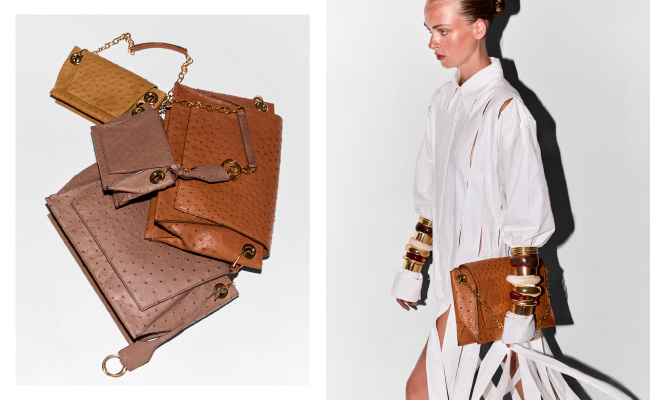
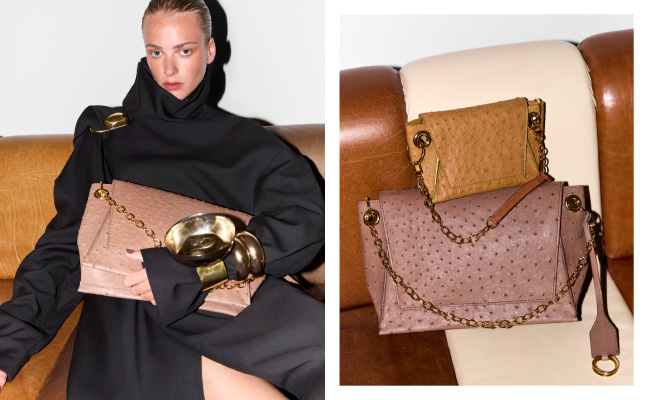
Yet, standing at the brand’s recent launch, looking at the new Cunard collection, a tight, sexy and structural offering of bags in leathers of oxblood, tabac and putty tones, offset by gleaming handwear, it was hard to think of a more appropriate descriptor.
I am not a “bag person”, but have to admit that these beauties, with their price points ranging from a not insignificant R28,500-R41,000, are deeply covetable. The story and business behind them also appeal – least of all because I’d rather own something of this niche calibre than the similarly priced, mass-produced totes and baguettes churned out by big brands every year. For comparison, one of those – a small leather Gucci Marmont tote – will set you back R51,600.
A South African story
The kicker is that all Okapi items are entirely locally made.
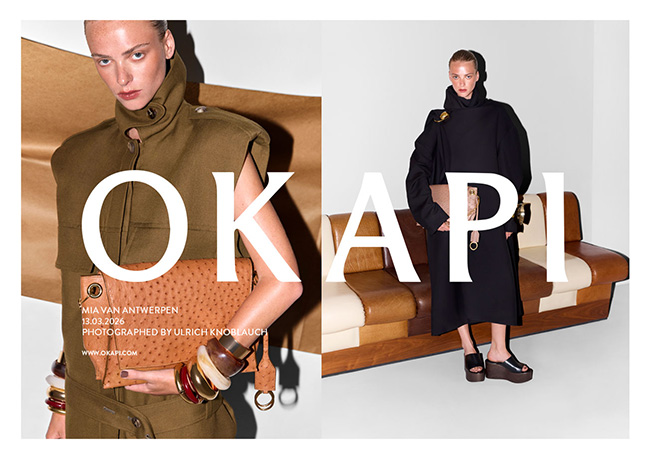
Founded in Cape Town in 2008 by Hanneli Rupert, the company draws, inevitably, on the lineage of one of the world’s most powerful luxury families. The Ruperts, through Richemont, sit behind global names like Cartier, Van Cleef & Arpels and Montblanc.
Okapi itself is not part of that system, but this world of luxury goods and access to the best, is undoubtedly a constant reference point. Rather, Rupert set up the business to celebrate heritage African craftsmanship and sustainability through producing exceptionally made products here. She also owns Merchants on Long, the Cape Town store that’s been selling high-end African design since 2010.
Okapi works closely with local artisans, ostrich farmers and conservation partners to focus on responsible sourcing and full traceability. It might sound like ESG shtick, but when Nagel talks about the process, you realise it’s no greenwashing.
“We start with what’s available – materials, skills, people – and the product comes from that.” It’s slower and less efficient, but arguably more honest, though not to say that it’s a welfare gig or some kind of muddled business model either.
Down to business
“This is not charity,” Nagel says. But, he is quick to point out, nor is it a business designed to extract maximum value at the lowest possible cost. “We don’t have to take advantage of the system,” he notes.
“We develop the product first. We work out the real cost – materials, labour, time – and then we price it.”
That means longer timelines, more hands-on involvement, and a system that prioritises process over scale. It also means that what you’re buying is not just an object, but the conditions that made it possible.
He describes working with a beader who operates from home, without formal infrastructure, producing intricate work in the margins of her daily life.
“If I give her enough time, and I support her properly, she can deliver work of the same quality you’d find in global luxury,” he explains.
A new look
Nagel’s role is not to reinvent Okapi, but to bring coherence to it. If you compare this new range to the previous offering of ostrich leather bags, you can see the clear departure – and the levelling up of sophistication.
The enigmatic creative is well known on the South African scene, and has a background that spans fashion, editorial and design. He also has an unnerving encyclopaedic knowledge of visual and sartorial culture that immediately shows in anything he puts his hand to. Nagel’s appointment is less a brand reinvention than a recalibration, a tightening of language, a sharpening of direction.
“Okapi needed two things,” he tells me. “Creative direction – someone to actually make decisions about how it looks and feels – and continuity. It’s a founder-business that has grown, and it needed that next layer.”
Structure ahoy!
The Cunard collection is his maiden voyage, if you will.
Nagel’s references for the line are characteristically idiosyncratic. First, there’s Nancy Cunard, the avant-garde figure and heiress of the Cunard shipping family, all “arms full of bangles, tons of gold, beautiful leathers”, as he describes it. Her bold aesthetic and advocacy for African art shaped early 20th-century cultural conversations. Nagel also looked to Romanian sculptor Constantin Brâncuși, whose sculptural forms underpin the collection’s silhouettes.
Both these ideas speak to the designer interpreting these lovely carriers of lipstick and phones as sculptural forms that are tactile and, crucially, desirable. As I witnessed, invited guests at the preview oohed and aaahed, and then handed over their credit cards. Already, the Okapi website indicates that some of the limited lines are sold out.
It’s the desirability that matters more than it might sound, because for all the talk of sustainability, heritage and craft, Nagel is under no illusions: “You can have all the right ingredients,” he says, “but if people don’t want what you’re producing, what’s the value?”
A global language
Visually, the collection also resists the clichés of what “African luxury” is “supposed” to look like. There are no obvious motifs – the stuff we expect – Ndebele pattern, fynbos tropes and the likes.
“I can’t represent something I’m not,” Nagel says of this, “but the core is still here.” You feel like you’d see these bags for sale in any exclusive overseas boutique and not just at the local airport departures hall alongside fancy tourist tat.
As Elana Brundyn, founder of Brundyn Arts & Culture, who was instrumental in establishing both the Zeitz MOCAA and the Norval Foundation, says: “Brands like Okapi stand as markers of a rising African confidence. A quiet but powerful belief in the value of our own excellence. Here, design is original, not derivative, and craftmanship speaks with authority.”
It’s fair to argue that this, where the focus is on exceptional local making, not the token aesthetic of something derivative, is exactly the substantive direction we should be leaning into when producing this level of goods for an international market.
The new collection is also a reminder that luxury, at its best, is not about branding or volume or even price, but about doing things properly, and trusting that people will recognise the difference.
For a little more Rupert luxe, see the piece we did on last year’s Cartier exhibit in London.
ALSO READ:
- Keeping it in the family: A conversation with Alexander Mavros
- The investment case for luxury firms
- Would you rather: Jane Birkin’s bag, or Hermès shares?
All images: Ulrich Knoblauch/supplied.
Sign up to Currency’s weekly newsletters to receive your own bulletin of weekday news and weekend treats. Register here.






Great industry