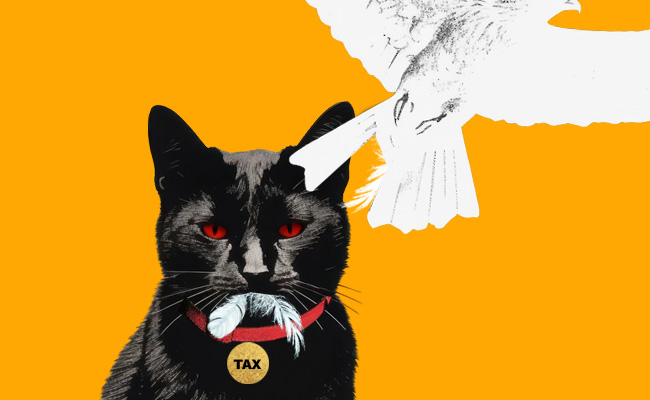


Friday is Tax Freedom Day (TFD) in South Africa – the day on which South Africans symbolically stop working for the government and start working for themselves.
TFD is calculated as the percentage of the year that matches total government taxation as a percentage of GDP. It is a graphic illustration of just how much private wealth the government consumes.
This year, that percentage – 36.6% – falls on May 15. It’s four days on from last year (May 11), meaning it now effectively takes 134 instead of 130 days for the average South African to generate enough wealth to pay for government and be left with something for themselves. Those four extra days have severe implications for personal living standards and national prosperity.
Official estimates usually mention only central government taxation – typically 25%-29% of GDP – whereas the government takes much more than that on average. General government includes all three levels: central, provincial and local. This is more accurate because it shows that citizens surrender over a third of their income or working lives to the state.
We have calculated and publicised TFD for more than 30 years using, for consistency, official revenue and GDP data at current prices. Some other estimates are inaccurate because they add inflation and deficits to give exaggerated impressions, precluding the possibility of consistent long-term tracking. When and to what extent deficits must be funded by future taxes is amorphous and unknowable. And what is sometimes called “inflation tax” is irrelevant because, as the term implies, TFD measures the proportion of income consumed by government regardless of inflation-adjusted currency values, deficits or other variables.
The lesson from ‘Reaganomics’
Advocates of increased government spending presume, mistakenly, that big government is not bad government. But it is clear from the world’s experience that governments which consume large proportions of national wealth are harmful on balance because of the extent to which they impoverish people – not just in general, but especially the poor.
Big government is self-defeating because, beyond a certain point (“the peak of the Laffer Curve”), attempts to extract more revenue result in less. Take two tax rates: zero and 100%. The government gets zero revenue because at the zero end nothing is taken, and at the 100% end no-one bothers to produce what will be taken. At South Africa’s current TFD, higher tax rates start generating declining revenue as a proportion of the economy.
In the early 1980s, US president Ronald Reagan reduced the top marginal tax rate from 70% to 28%. He also reduced the tax brackets and indexed them to inflation to eliminate “bracket creep”, and implemented a range of pro-free-market reforms to incentivise work, investment and productivity.
Such famous critics as John Kenneth Galbraith predicted plummeting revenue and prosperity. They were wrong; Reagan was right. Under “Reaganomics”, tax revenues rose, there were 20-million new jobs (a 20% increase), unemployment plummeted from 11% to 5%, and economic growth yielded prosperity for all.
The lesson is that both our government and the general public would be better off taxing a larger and growing economy at lower rates, than taxing a smaller and shrinking economy at higher rates. Taking from wealth-producing enterprises to fund wealth-consuming activities ensures that the economic pie shared by all will be smaller. Sound economic policy avoids wasted “opportunity costs” and “misallocation of resources”.
Smaller is better
Since government activities generally consume wealth, and private enterprises produce it, government should start by discontinuing or outsourcing what is done spontaneously and more efficiently in free markets, such as healthcare, education, housing, transport, sport, recreation, art, energy and, above all, planning. A widespread myth is that government “plans” are necessary because free markets are supposedly “unplanned”. On the contrary, an enormous amount of better-informed planning goes into everything done privately.
Large, centralised organisations that are not motivated by private risk and the “profit motive” tend to become increasingly bureaucratic, unable to adapt to new situations, and liable to prioritise wealth-consuming, “rent-seeking” activities. An efficient government is one that is dynamic, capable of addressing national emergencies and adapting to new circumstance. Where no price is paid for being wrong, as in government, inefficiency is inevitable. In contrast, the price for being wrong in private enterprise is going out of business.
Small government that concentrates on the essentials is good government. Singapore is one of the world’s most outstanding examples.
Large, centralised governments easily become totalitarian. That is not a trivial concern in South Africa. Many believe that both the apartheid and post-apartheid regimes sought to control every area of society in order to bend it to towards their personal interests.
The TFD paradox is that smaller is bigger. When governments start smaller, with earlier TFDs, they soon become bigger – they are rewarded by having a slightly smaller share of a much bigger tax base. If, however, governments exceed their legitimate primary functions, they stifle economic development, become parasitic and erode freedom.
The reward in starting small is more prosperity for all. That is why early TFDs are one of the most important bellwethers of the country’s future, especially the prosperity of the people – and even the government.
Leon Louw is CEO of Izwe Lami and the Freedom Foundation. Garth Zietsman is a consultant statistician.
ALSO READ:
- A rare moment of budget generosity
- Godongwana’s rosiest budget yet – but watch for the sting
- The disaster that is unrealised capital gains tax
Top image: Rawpixel/Currency collage.
Sign up to Currency’s weekly newsletters to receive your own bulletin of weekday news and weekend treats. Register here.