
The Great Woolworths-Beyers Chocolates/Chuckles War began as a supplier-contract quarrel and has turned, at least in my mind, into a rather revealing South African argument about corporate power, intellectual property, local manufacturing and whether a packet of malted chocolate balls can carry the moral weight of an entire economy. And it’s interesting because from their own points of view, both sides are kind of right.
The facts as I understand them are these. Beyers Chocolates was founded by Belgium-born chocolatier Kees Beyers in 1987, and it supplied Woolworths with chocolates for more than three decades, including parts of the Chuckles range and products such as Sweetie Pie and Amarula chocolates. By Beyers’ account, Woolworths represented roughly R320m of its R650m annual turnover, and the company had about 700 permanent employees, rising to about 1,000 seasonally.
The relationship soured after Beyers expanded into supplying Checkers and Pick n Pay, having bought another chocolate factory. Beyers says it continued to protect Woolworths’ specific products and recipes, and only wanted to reduce its dangerous dependence on one retailer. Woolworths says that, during 2023, it discovered that Beyers was supplying competitors with products materially similar to Woolworths-exclusive offerings, using formulations and product development in which Woolworths had invested.
By January 2025, Woolworths said Beyers was no longer manufacturing its chocolate products. In April 2026, news emerged that Beyers was facing liquidation. That transformed a commercial divorce into a public food fight. That liquidation is now in the process of being put into effect, and the 700 or so employees have almost certainly lost their jobs.
Suppliers getting squeezed
This is extremely depressing, and you’d think all sides would have tried harder to avoid implosion. Woolworths says it tried, for years, but ultimately it lost confidence and trust in its supplier, and in these circumstances an agreement wasn’t possible. That is sad but understandable.
But here is the thing that elevates this debate into something larger. Beyers had an exclusivity agreement with Woolworths, but Kees Beyers said this agreement had expired, which is what allowed him to start supplying other supermarkets. The essence of the disagreement was that Woolworths was insisting he re-sign an exclusivity agreement, and he was not keen.
The reason he was not keen is totally understandable; the leverage that a retailer gains over pricing, supply, product development and so on with an exclusivity arrangement is just huge. This is why there are so many store-branded products out there. Whenever you see that, you know consumers are gaining but suppliers are getting squeezed.
From Woolworths’ point of view, this exclusivity agreement goes beyond squeezing suppliers, which is something all retailers do whether the products are exclusive or not. Woolworths’ position in the market is essentially a speciality producer. Having exclusive products is one of the things that sets it apart from its much larger and much more powerful competitors. Kees Beyers complains that Woolworths carries hundreds of products that are not exclusive to the store. Why, he asks, was it so keen to foist exclusivity on him?
And he has another complaint. The exclusivity does not go both ways. One of the reasons the company was under financial pressure was that some time ago Woolworths had started selling other chocolates, such as the Lindt range, which is not an exclusive Woolworths product. Woolworths does sail close to the wind here, as many other suppliers have attested.
A competition case?
This is all public record, but here is the question I really wanted answered, and inevitably it’s more complicated than you think: should the competition authorities jump in here and prohibit retailers from insisting that suppliers supply them exclusively? It does seem unfair on suppliers; the might of retail distribution stands against producers that are usually desperate to get their products on the shelves. In the negotiations, the retail chains hold all the cards.
DA trade, industry and competition spokesperson Toby Chance wants to bring legislation to amend the Competition Act to address anticompetitive exclusivity agreements in retail. “There is no good economic reason that any retailer should tell a supplier they can’t sell goods elsewhere, and there is no reason any supplier should force a retailer to carry only their brand of a certain class of product,” he says.
The Competition Commission’s grocery retail market inquiry did find an unequal bargaining framework between national supermarket chains and fast-moving consumer goods suppliers, and said national chains are a critical route to market for many suppliers.
I asked an expert in competition law about this, and he said one of the problems is that these kinds of exclusivity agreements are commonplace. If you own a Ford dealership, you can’t just decide to also sell Volkswagens. In fact, most full-time employees are prohibited from working for outside organisations without agreement. There are legitimate branding issues involved.
In addition, it’s arguable that the legislation already exists. One core part of competition law is that firms may not abuse dominance. And exclusivity can also be examined as a vertical restraint: the question is whether it substantially prevents or lessens competition in a market, and whether any efficiency or pro-competitive gains justify it. Is Woolworths here effectively abusing its dominant position? Arguing that case would be extremely difficult. For a start, what is the relevant market? Is it chocolates? Is it sweets in general? Is it chocolate balls?
Occupying the battlefield
It’s essentially a question of the facts of the case: giving a corner shop a freezer for your ice creams looks helpful; giving thousands of shops freezers that may stock only your product, when you already dominate the market, begins to look like occupying the battlefield before competitors arrive.
Competition authorities around the world do not generally say that exclusivity agreements are automatically unlawful. They say, in effect: it depends on who is imposing them, how much of the market they cover, how long they last, whether competitors have realistic alternatives, and whether the exclusivity protects a legitimate investment or merely shuts rivals out.
So, the fair conclusion is probably the least satisfying one: this is not a case for slogans. Woolworths is not wrong to protect its own product development, and Beyers was not wrong to try to reduce its dependence on a single customer. Both positions are commercially rational. The tragedy is that they were mutually explosive.
What competition law should worry about is not exclusivity itself, but coercive exclusivity: arrangements imposed by firms with enough market power to make “choice” a polite fiction. A supplier that freely agrees to make a special product for one retailer is not a victim of capitalism. A supplier that is effectively told that access to the shelves requires economic obedience may be something closer to one.
This story first appeared in the Financial Mail. Currency and the Financial Mail are part of the Financial Mail Group.
ALSO READ:
- When chuckles die: Absa lifts curtain on Woolies-Beyers row
- ProNutro, Chuckles, and the lessons of ‘New Coke’
- Did Woolies really have to buy in2food? And other Sens questions
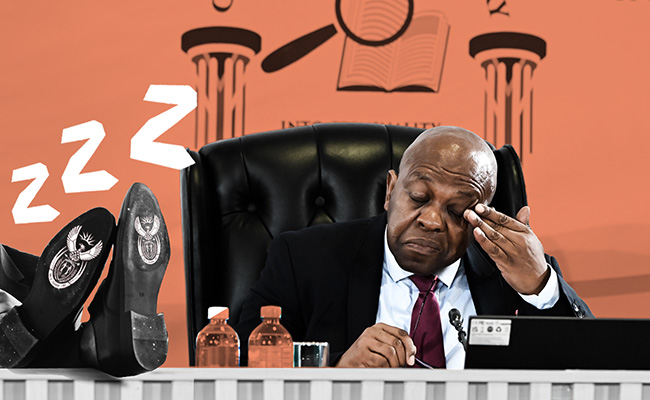
Top image collage: Rawpixel; Currency.
Sign up to Currency’s weekly newsletters to receive your own bulletin of weekday news and weekend treats. Register here.