


There are few better barometers of a company’s health than the way it responds to a very public mistake. Does it ’fess up, and fix it quickly? Or does it shrug off the public outcry with an offhand response that people will sommer get used to it?
Any number of companies have opted for the second road – think Tiger Brands’ crippling inability to admit its own factories caused the 2017 listeriosis outbreak, and the ruinous savaging of its reputation and share price that followed.
This toxic cocktail of arrogance, aversion to history, and allowing lawyers to determine a strategy with deep reputational consequences – a fatal error – doesn’t usually end fantastically well.
For consumer companies, which rub up more directly against people’s often fickle tastes, often in more mundane ways than a life-threatening outbreak of disease, the consequences of getting it wrong can be brutal.
I was reminded of this last week by Piet Viljoen, the veteran asset manager and founder of RECM, who writes a fabulous newsletter.
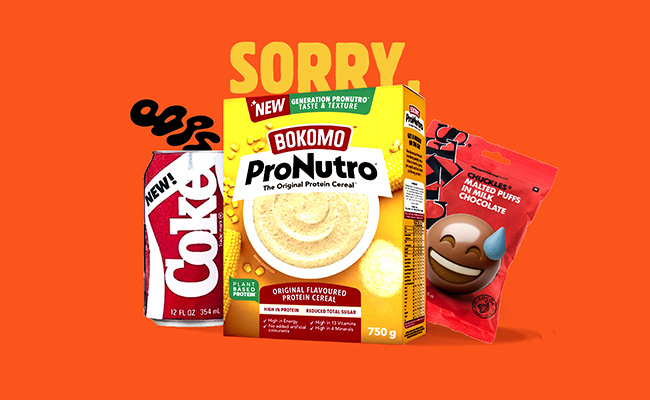
Viljoen wrote of how it was the 41st anniversary of Coca-Cola’s big blunder: replacing its 99-year-old formula with “New Coke”, a sweeter version designed to counter Pepsi’s burgeoning popularity in the 1980s. After a bitter backlash, it took all of 79 days for Coke to admit it had screwed up and revert to “Coca-Cola Classic”.
“This ranks as one of the major misjudgments in corporate history [because] Coca-Cola executives underestimated how much customers would hate losing the original formula,” wrote Viljoen.
It was an apt example of one of the classes of misjudgment tabulated by the late Charlie Munger, Warren Buffett’s business partner at Berkshire Hathaway. Here, it was a failure to realise how much more strongly people react to a loss – the original Coke taste – than to a comparable gain.
“In the investment world, it has been my experience that the best investors succeed not because they are the smartest people in the room, but because they consistently avoid big mistakes,” said Viljoen. “I’m sure this holds true in many other spheres of life.”
Cereal missteps
The Coke story is pretty relevant today after a botched decision by Bokomo, now owned by PepsiCo, to overhaul the recipe for ProNutro. This breakfast cereal, launched in 1962 as “the Wonder Food” with input from the Medical Research Institute of Joburg, was a staple for many kids.
But PepsiCo snuck an overhaul into the market in the past year, sparking a ferocious revolt. “Tasted funny, smells funny,” said one consumer. “A box of crumped chemicals, I threw the entire box away,” said another, asking: “Why change the recipe when we absolutely loved it?” Some people’s dogs apparently wouldn’t touch it, but it seems garden birds are less fussy.
It is somewhat ironic that ProNutro’s overhaul happened at the instance of PepsiCo – the drinks company whose success precipitated Coke’s major blunder – which bought Bokomo’s parent, Pioneer Foods, in 2023.
PepsiCo said the ProNutro decision was “in part due to ageing infrastructure and unreliable equipment performance which, over time, would have negatively impacted the quality of product expected by our consumers”.
But News24’s feisty journalist Wendy Knowler prodded PepsiCo and found out that the first taste tests it did with the new flavour received the thumbs-down from consumers, though apparently a second trial went better.
So how did PepsiCo respond to the widespread revolt at the new taste?
Well, at first, it tried to diminish the change. Then, when the noise got too loud, it put out a statement saying: “We’re sorry – we’ve heard you, and while we can’t bring the old ProNutro back, we are finding ways to improve it.”
Sanctimoniously, PepsiCo sniffed that “change isn’t easy, especially when it involves something you love”, but added that it wants “to win your trust back”.
PepsiCo claims it can’t afford to relaunch the “old” ProNutro, but I wonder how true this is; with customers fleeing, you wonder if it can afford not to. Instead, it says it will try to improve the new version.
Keeping customers sweet
The second story came after the Financial Mail broke the news about Woolworths’ legal clash with its chocolate supplier, Beyers Chocolates.
The chocolatier, wanting to diversify, had tried to supply rivals, including Checkers, but Woolworths was having none of it. As the Financial Mail reported, it slashed its orders with Beyers by R200m, leading to the company going into liquidation.
The problem was that Beyers apparently makes Chuckles – the malted puff balls that are perhaps the definitive Woolworths product – which led to fevered fretting about their possible demise.
Geordin Hill-Lewis, the DA’s new leader, quipped that losing Chuckles would be “a matter for the urgent attention of the GNU – South Africa has been through enough”.
This provoked a predictable slew of flabby what-aboutisms demonstrating an abject lack of humour, as the DA’s critics invoked variations of “But what about Gaza?” and “Is this the most important priority for the party?”
But Woolworths, managing to be both haughty and untransparent at the same time, reassured everyone that there would be “no shortages or stock issues” with its “exceptional” chocolates – though it refused to explain its role in Beyers’ crash.
This is perhaps the more fascinating part. It is not the first time Woolworths has been accused of bullying suppliers, and the truth of this story has much deeper ramifications for the ethics of a company that trumpets its “strong value system” and “good business” principles every chance it gets.
At the very least, though, Woolworths does seem to realise how critical it is to keep its edge in specific products; PepsiCo, not so much.
It’s a timely reminder that executives who think they know better than the market generally don’t. And their companies then end up precisely where the market thinks they should: on the scrapheap.
This story was first published by the Financial Mail. Currency and the Financial Mail are part of the Financial Mail Group.
ALSO READ:
- How Standard Bank’s Ferrari spat went viral
- Discovery, humbled by poor crisis management, does a U-turn
- Now Roedean chair quits as fiasco deepens
Top image: @pronutro_sa/Wikimedia commons/woolworths.co.za/Rawpixel/Currency collage.
Sign up to Currency’s weekly newsletters to receive your own bulletin of weekday news and weekend treats. Register here.







The Kees Beyers story has more to it & from personal dealings with Kees Beyers & his business, not negating WW’s role,you need to look closer
When one reads who the brand manaja…is you’ll understand the *****
Agreed the new pronutro is disgusting i through my box away too and will not buy again until they change it. what were they thinking trying to compete with future life cause that is the consistency im getting. Totally disappointed we used to love Pronutro
the new Pro Nutro is absolutely vile. If you want your customers back, bring back the original. what on earth made you decide to change it to the disgusting rubbish is a mystery.
New generation ProNutro is totally gross. Why fool around with something that works 100%. Last month I bought what I think the last stock of the old ProNutro in Checkers. It was so old… Tastes like old oil (car oil. So I bought a new one, this ‘new’ crap. Good only to fill up potholes. I had to throw away both boxes – and its not cheap! We demand the 1962 ProNutro recipe!!!
This so-called “New” ProNutro is a gluey, lumpy and a tasteless mess! The new company pushed us over the edge with an inferior product, pathetic excuses and stubborn stance on this issue. We want the ProNutro we loved, back! Generations of ProNutro lovers cannot be wrong!
New Pronutro and ALL Woolies chocolates
will never be in my shopping baskets again.
Better for me, financially and calories wise.
Just watched a documentary about Cadbury… Won’t be buying that either.
Will wait for yearly supply of New Zealand Whittaker chocolate…..
….most of us grew up with the ” old ProNutro” THE ONLY ORIGINAL AND WAS THE BEST! It’s become “a generational product” to buy for my family and many many other families this ” NEW” recipe… Not IMPRESSED,NO longer support in buying! You took away MaltaBella which was also a favorite,this just Sad..
Stoppped shopping at Woolworths when they caved to BDS. Chuckles b-up just another reason for staying away.
Great article and spot on.
I also bought the new Pronutro. Opened the box…made the cereal and realise it was gooey and sticky…
Chucked it and made a fresh bowl. Same thing. Tasted it. Had exactly 2 spoonfuls and chucked it also.
Only then I noticed the ‘changed formula’. Very disappointing. I used to eat it before running in road races.
Now I need to fund an alternative.
Pronutru lost me as a longtime consumer.
It’s not only Pronutro which tastes like wallpaper paste now. Sunlight liquid has also changed its formula to add something called Rhamn, a meaningless buzzword and it now cleans less effectively and has less bubbles. Sies is all I can sayn