
When South Africans think about retirement, the dominant emotion is fear. Fear of market crashes, of political shocks, of “losing everything” just when there is no time left to recover. The instinctive response is to retreat into cash and low-risk funds within their living annuities, the post-retirement income products whose returns are tied to market performance, the moment a salary stops.
For Pieter Hugo, chief commercial officer at Stanlib Asset Management, that instinct is what turns retirement into a slow-motion car crash. A 60- or 65-year-old confronting retirement usually sees a single, irreplaceable pool of money and an uncertain future. “They’ll tell you: ‘I’m conservative. This is my one pot of money. I don’t have a state pension to fall back on. I can’t afford to lose this money,’” Hugo says.
The problem, as he sees it, comes down to three levers: how much you draw each year, how much of your savings remains in growth assets, and whether you can hold your nerve when markets turn. Many retirees get all three wrong.
A retiree drawing 7.5% – roughly the South African average, according to industry data – is in what Hugo calls a “fool’s paradise”. The income keeps flowing, the capital line looks reassuring, and there is no immediate feedback that the strategy is unsustainable. “Most retirees don’t realise the longer-term implications of drawing too much,” he says. “The first 10 years after retirement is the ‘honeymoon period’, when living annuities don’t fail, largely irrespective of investment returns and drawdown rates.”
After about 25 years, high drawdowns “start to fail, whatever category is chosen”. And retirement capital must last not just for one partner, but until the last surviving spouse dies – typically at least 30 years after both retire.
Why growth assets still matter at 65
The goal of investing in retirement is to maintain a real income for life. Strip out growth assets, and you give up the only protection against inflation over three decades.
To illustrate the stakes, Stanlib Asset Management compared the historical real performance of five Association for Savings and Investment South Africa (Asisa) fund categories commonly used in living annuities over a 25-year horizon: SA Interest-Bearing Short Term, SA Multi-Asset Income, SA Multi-Asset Low Equity and SA Multi-Asset High Equity. Only SA Equity General funds delivered more than 6% after inflation, roughly the hurdle a living annuity must clear to compete with a well-priced guaranteed annuity. Low-equity multi-asset funds produced only 1%-2% annually after inflation.
Hugo’s team then ran a so-called Monte Carlo exercise – a simulation technique that models the probability of different outcomes across many possible return sequences – using 10,000 simulated living annuities and actual fund returns from the past 25 years, shuffling their sequence for each simulated client. At a 2.5% annual drawdown, failure rates over 40 years were effectively zero across interest-bearing, income and balanced Asisa categories. At 5%, short-term interest-bearing funds began to show meaningful failure rates. At 7.5%, almost every category showed material failure rates, regardless of asset allocation.
The biggest lever retirees still control is the precise fund mix and how much they withdraw each year. “Your drawdown rate is the key, key thing that a client can manage,” says Hugo. “If you draw just 1% or 2% too much, your failure rate just skyrockets.”
International research suggests a safe withdrawal rate of 2%-3.5%. Those benchmarks were shaped by decades of near-zero bond yields in developed markets, where cash and bonds earned almost nothing in real terms. South Africa’s higher real bond yields – government bonds are currently offering about 5%-6% after inflation – provide additional headroom, which is why Hugo’s practical benchmark is slightly higher: target 4%.
“If you can save enough money that you only have to draw down 4%, then you probably have a good chance of not running out of money.” For most South Africans, that is still unrealistic. “If someone starts with not enough money, they say: either I draw 7% and have enough food on the table, or I draw 4%, and I don’t,” Hugo says. “They’ll probably roll the dice and see if they run out of money in 20 years.”
Human behaviour
South Africa’s shift from defined-benefit to defined-contribution funds transferred all investment and longevity risk from employer to employee – something many members never fully understood. Many then compounded the problem by cashing out savings when they changed jobs.
“Mathematically, if you go and work it out, yes, cashing out savings to pay off debt could be a good thing, because you probably have a higher return on your debt than you could earn, provided you can manage your behaviour so you don’t incur new debt,” Hugo says. “But do that two, three times … and then when you get to age 50 you say, ‘I don’t have enough money now, I need to save.’” By then, “you’ve run out of time to make compound interest work for you”.
Hugo is broadly positive about the regulator’s direction. Tax-free savings accounts, the liberalisation of offshore limits under regulation 28 and the two-pot reform – which locks in two-thirds of contributions for preservation while allowing limited access to one-third – all reflect a genuine attempt to address structural problems.
But he warns that persistent bad outcomes in living annuities could force tougher action. “At the extreme, our regulator could reduce the flexibility for a living annuity if they see retirees mismanage them,” he says. “You never want the regulator to step in and reduce flexibility.”
Guaranteed vs living annuities: not either-or
The core product choice is between a guaranteed annuity, a living annuity, or some combination. Guaranteed annuities are priced off inflation-linked bonds – government bonds whose returns are tied to inflation – which historically deliver about 2.5% after inflation. Add a cross-subsidy from the pooled mortality risk of roughly 2%, and the starting income yield works out to about 4.5%.
With inflation-linked bonds now at 3.8% after inflation, that yield rises to about 5.8%, escalating with inflation thereafter. Living annuities offer flexibility and the possibility of a bequest, but no longevity guarantee.
The trap lies in the common practice of starting in a living annuity and switching to a guaranteed annuity 10-15 years later. “Various models have shown that it is not a good idea,” says Hugo. A client who delays buying a guaranteed annuity from 65-70 needs roughly three percentage points more annual growth to compensate. Delay to 80 and the gap widens to about four points. At 80, you join a pool of other 80-year-olds and no longer benefit from the cross-subsidy of those who died younger.
Alternative investments
Alternatives – infrastructure, unlisted credit – are not the core of the retail retirement income story. They are supplementary tools, useful at the margins for investors who can access them, who have the knowledge to fully understand the risks involved and absorb the illiquidity.
Stanlib Asset Management invests in infrastructure – data centres, rail, toll roads; long-duration assets whose inflation-linked cash flows suit a retirement profile well, though access is largely limited to institutional investors.
Hedge funds are more accessible: regulatory reforms have made them available to retail investors via mainstream investment platforms, and Hugo sees strategies that deliver high returns with low volatility as useful for extending the life of a living annuity. He cautions, though, against illiquid or unlisted vehicles without proper advice.
Behaviour matters more than any of this. Hugo points to a contradiction that investors lived through in recent years: equity markets near record highs despite rolling geopolitical crises.
“If you sat in cash assets, you would have had your 5%, 6%, very smooth, but you’re effectively saving yourself bankrupt,” he says. The adviser’s most valuable role, in his view, is not fund selection but coaching clients through the noise.
“What most of them do these days, yes, they help you manage the money, but a much more important part of their job is actually managing the client’s behaviour,” he says. “Sometimes you just need to read the news, understand what’s going on – but what sells newspapers isn’t necessarily good investment strategies.”
The biggest gains still lie in the unglamorous disciplines: preserving savings throughout a career, starting early, and keeping drawdown rates as low as lifestyle allows.
For those already retired, the levers are narrower – reconsider an over-conservative portfolio, rethink a 7%-8% drawdown, seek advice that weights behaviour as heavily as asset allocation. “Putting low-risk assets into a living annuity because you are risk-averse is planning for failure,” Hugo says. The real risk is not short-term volatility. It is running out of money in your 80s.
ALSO READ:
- Hedge funds go mainstream as retirees seek stability
- Retirement: control the controllables
- Tax first, investments after
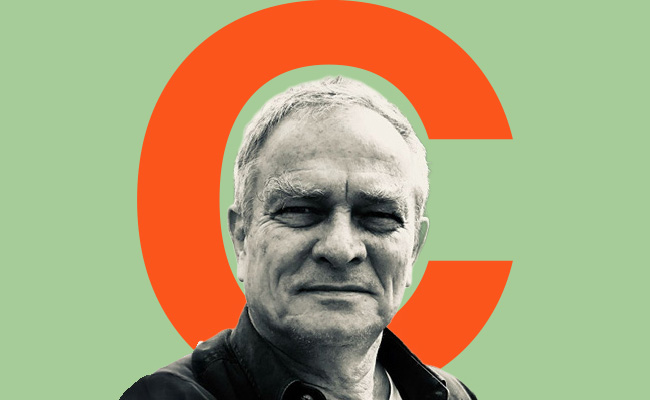
Top image: Stanlib chief commercial officer Pieter Hugo. Picture: supplied.
Sign up to Currency’s weekly newsletters to receive your own bulletin of weekday news and weekend treats. Register here.