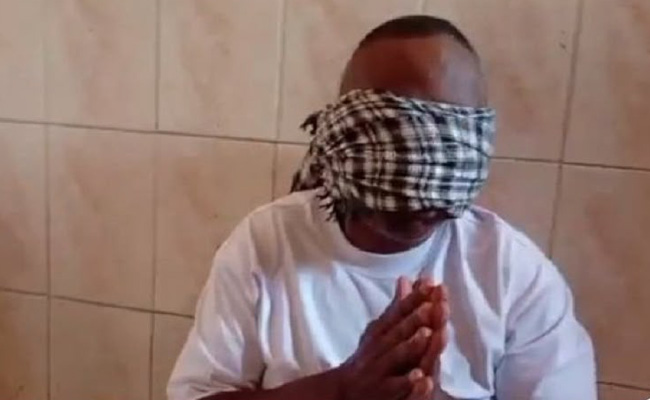


Uganda’s repressive regime has plumbed new depths, with the son of President Yoweri Museveni and chief of the country’s defence force, general Muhoozi Kainerugaba, bragging about illegally detaining lawyer Erias Lukwago.
Lukwago, a high-profile figure in Uganda’s opposition who is also the former mayor of Kampala, represents opposition leader Kizza Besigye, who was accused of “treason” in a trial that lasted more than 18 months. For that time, Besigye was held in prison without proper medical attention.
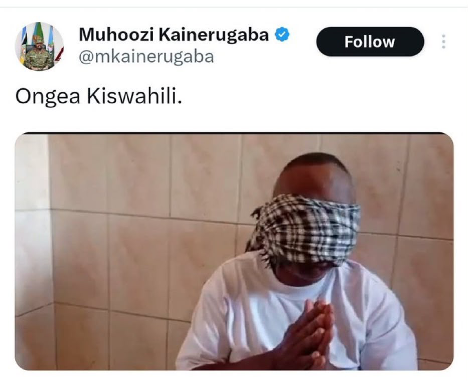
This week, however, Kainerugaba posted a picture of Lukwago blindfolded, with his hands held in a pleading position, and another of him with his hands held to his head in apparent agony.
In the second post, Kainerugaba wrote: “This fool will not sleep tonight.”
This is the latest in a series of openly violent actions by Kainerugaba, who has boasted of killing dozens of opposition activists, adding that he looks forward to killing more.
The posts came as Uganda continues its relentless assault on the opposition, which it began before the January election, which was widely believed to have been rigged. In that election, Museveni claimed to have won 72% of the vote, beating Robert Kyagulanyi Ssentamu, a pop singer better known as Bobi Wine, who had received massive demonstrations of support. This extended Museveni’s reign beyond 40 years.
Soon after, Wine went on the run after his house was surrounded by security forces and his wife assaulted. Fearing for his life, Wine eventually fled Uganda.
At the time, Kainerugaba threatened on social media platform X to castrate Wine, adding to a long history of repressing opposition leaders in the country that has left dozens dead.
Operating with impunity
Kainerugaba, who has aspirations of taking over from his father as president, has become a controversial figure in Uganda. Even his 81-year-old father has at times been critical of his behaviour.
Thin-skinned and vindictive, Kainerugaba had Ugandan journalist and writer Kakwenza Rukira arrested in 2021 by security forces, and allegedly tortured.
At times appearing unhinged, Kainerugaba in October 2022 offered 100 cows as a bride price for future Italian Prime Minister Giorgia Meloni, threatening that he would attack Rome if the offer was refused.
He has also threatened to invade Kenya and conquer Nairobi; his father later made him withdraw the statement and apologise.
In May last year, Kainerugaba claimed the missing activist Eddie Mutwe was “in my basement”, and he posted a picture on X of the shirtless detainee, threatening to castrate him.
After the January presidential election, Kainerugaba bragged that his security forces had killed 22 members of Wine’s opposition National Unity Platform and said he hoped Wine would be the next to die.
The world has turned a blind eye to the rise of Kainerugaba, now described as the “next Idi Amin”, allowing him to operate with impunity and the tacit approval of Museveni, who increasingly relies on rigged elections and repression to stay in power.
Regional regression
The actions of the Ugandan regime have been mirrored in other East African countries that have given up the pretence of democracy in favour of outright violent repression.
In neighbouring Tanzania, the leader of the opposition Chadema party, Tundu Lissu, has been on trial for a year and a half, while elections there saw thousands killed by security forces and delivered a farcical 98% victory for Samia Suluhu Hassan.
Hassan has faced criticism from the international community but steadfastly refuses to end Lissu’s show trial. Instead, she has spent millions of dollars on propaganda videos and hiring public relations experts to polish her regime’s poor reputation.
She oversaw the bloody repression of the opposition during the 2025 election, after which a government commission of inquiry found that 518 people had died – a number that human rights groups believe is far larger. The commission did not assign blame for the killings despite thousands of videos showing severe state repression involving live bullets.
The US has imposed visa restrictions on Tanzanian senior assistant commissioner of police Faustine Jackson Mafwele, barring him from entering the US. This follows what the US called “credible information” that he had been involved in gross human rights violations, including the torture and sexual assault of pro-democracy activists.
Last year, the European Commission suspended €156m in aid following an outcry from the European parliament.
And in Rwanda, pro-democracy leader Victoire Ingabire is facing trumped-up charges of “plotting unrest against the government”.
Her trial comes as the Rwandan academic and government critic Aimable Karasira died in custody as he was about to be released from jail. Rwanda’s increasingly repressive government claimed he died after taking an overdose of his medication, even though he was set to be released.
Michela Wrong, the historian who has written widely about the crimes of the Rwandan regime, was quoted by AP saying: “He told visitors he was being beaten and tortured. Prison eventually proved a fatal experience, as for so many in Rwanda. Now he’s supposedly died of an overdose of his prescription medicine.”
Turning a blind eye
This rising tide of violent repression in East Africa threatens the stability of the region and threatens to roll back economic growth and development, exacerbating already dire youth unemployment.
While some have taken action against the region’s despots, the general approach has been to condone these assaults on democracy and human rights through silence.
In Uganda, investors such as South Africa’s MTN have aided electoral fraud by switching off the internet, thereby preventing exposure of electoral abuses, while other investors have remained silent, preferring to keep their profits flowing even if it means the deaths and torture of Ugandans.
Wine, now in exile in the US, has said of outsiders engaging in Uganda: “Don’t fund our oppressor.” He has written an open letter to top African investors in the country, though profit has clearly trumped human rights in terms of the lack of engagement or of any public statements critical of the regime’s behaviour.
Many businesses in Africa, and especially South Africa, that claim to operate in a way that accords with good governance would have reviewed their role in countries operating in this way. During apartheid, for instance, many did – and today say they would do things differently, had they the chance.
Business now has an opportunity to walk the talk in Uganda, Tanzania and Rwanda. Don’t hold your breath.
Ray Hartley and Greg Mills are with the Platform for African Democrats.
ALSO READ:
- South African foreign policy: vrot with contradiction
- The navel-gazing of the Gucci liberation class
- South Africa’s hypocrisy is not just laughable – it’s Trumpian
Top image: Erias Lukwago, taken from Muhoozi Kainerugaba’s post on X.
Sign up to Currency’s weekly newsletters to receive your own bulletin of weekday news and weekend treats. Register here.