We love putting people into neat little moral boxes. Honest or dishonest. Good or bad. Brave or cowardly. We sit in our comfortable lives, look in the mirror, and confidently assume we know exactly where we stand. I used to think that way too. But the longer I spend working on the ground with South Africans from every imaginable walk of life, the less certain I am.
I’ve seen people with absolutely nothing, show extraordinary generosity, and I’ve watched people with everything abandon their deeply held principles the second things got uncomfortable.
It’s forced me to face a brutal truth: character isn’t a permanent identity trait. It’s a muscle. And under enough pressure, any muscle snaps.
Modern society expects people to remain perfectly principled regardless of their circumstances. When they fail, the armchair moralists look down from above and conclude they were just “bad people” to begin with.
That is pure bullshit. Life is not that simple.
We recently had a wildcat strike at one of our operations. The trigger? A payroll run was delayed by just a few hours. From the boardroom, the initial reaction was predictable: the strike was irresponsible, illegal, completely unjustified. And legally speaking, that assessment was correct.
But when you get out of the boardroom and look at the facts, you realise it wasn’t irrational at all. Many of our employees had already committed every single cent of their wages before they even hit the bank. Loan sharks were waiting, debts had to be paid immediately, and some guys genuinely feared physical violence or humiliation if they couldn’t pay up the second their shift ended. One employee filled his car with fuel on his way to work, only to have his card rejected at the pump.
What looked like a lack of discipline from the top looked like pure survival from the shop floor. The strike was still wrong. But it forced me to ask an uncomfortable question: how many of us are only “principled” because our principles have never been subjected to real pressure?
A few days later, it hit me again. A young university graduate was assisting me in a paint shop. He was intelligent, articulate and clearly capable of doing so much more than the job he was holding down. After helping me, he quietly asked if I could give him a tip. Not out of entitlement, but because he literally did not have the taxi fare to get home.
Think about that. Educated. Employed. Working hard. Doing everything society told him to do to succeed, yet he was still trapped in a level of economic vulnerability that most middle-class South Africans cannot even begin to comprehend.
Taking a violent turn
We talk about employment as if getting a job is the finish line. It’s not. For millions, it’s just the start of a different struggle. Employment without dignity or a living wage leaves people just as desperate as unemployment.
What happens to your dignity, your judgment and your character when 100% of your mental energy is consumed by just trying to survive the next 24 hours?
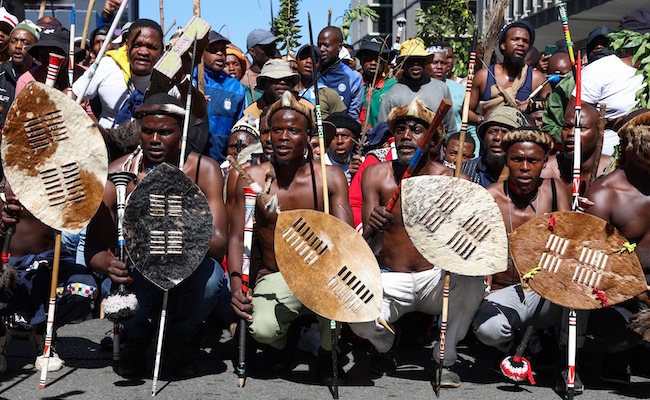
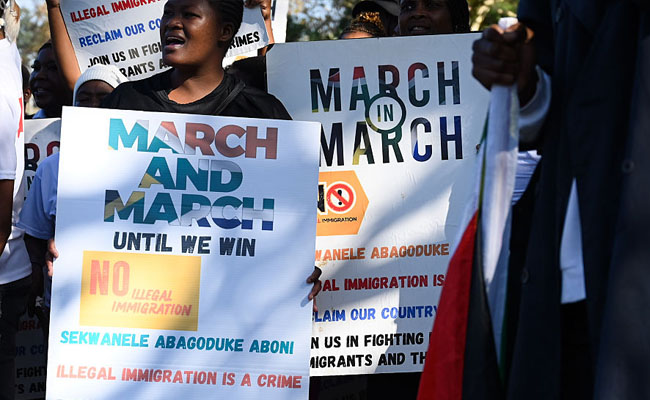
This brings us to the most painful fracture in our society: xenophobic violence. Like most of you, I find this behaviour utterly indefensible. But the simplistic explanations we throw around are completely unsatisfying. How do we reconcile this?
The very same communities capable of remarkable hospitality and built on the foundation of ubuntu can, under different conditions, turn violently on outsiders. The easy way out is to just label them “bad people” and move on. The harder and uglier truth requires us to look at desperation.
When jobs are non-existent, schools are bursting at the seams, clinics are overwhelmed, and hope is disappearing, fear narrows your perspective. Scarcity breeds resentment and desperation turns neighbours into competitors.
This doesn’t excuse violence. Nothing does. But if we refuse to understand the conditions that drive this behaviour, we will never be able to work towards fixing it. The true measure of a society cannot be judged only by the values it proudly proclaims. It must be measured by the conditions we create for those values to survive.
It is incredibly easy to celebrate tolerance when opportunities are expanding. It’s easy to praise generosity when there is plenty to go around, and it’s easy to look like a person of high integrity when honesty carries zero personal cost.
The real test comes when the safety nets are gone.
Creating opportunity
I refuse to buy into the narrative that South Africans have fundamentally changed or become inherently worse people. I see incredible resilience and kindness every single day. Most people are good and they want to do right by their families and live with dignity. But are we asking too many of our people to carry burdens that would break anyone’s moral compass?
I’m done waiting for politicians to fix this when most of them are too detached from reality, trapped in ideological ego battles while our communities bleed. The responsibility falls on us, business leaders, community leaders and citizens with means.
We need to create opportunity, not just entry-level jobs. We need to invest in pathways for real advancement. And above all, we need to choose empathy before we pass judgment.
When you see behaviour that disappoints you, stop asking, “What is wrong with these people?” Start asking, “What kind of pressure are they under?”
Of course, this is in no way me saying that accountability should be eradicated and that any of the actions caused by desperation is excusable. But if someone has to fix it, or at the very least work towards improving the situation, are we really going to sit here debating cause versus effect?
The challenge ahead of us isn’t to change who we are. It’s to fix the desperate conditions that force us to act like people we aren’t, even if we are in the position of “innocent bystander”.
The thing about community and leadership, is that we are all accountable, whether or not we choose to take action. I am not sitting in a position of privilege making excuses for bad behaviour while shouting orders from my moral high ground.
What I am trying to say is this: if I were put into similar boiling pots, could I sit here and say without a shadow of doubt that my morals may not fall down the priority list? I am saying that I cannot guarantee that, not even hypothetically.
So perhaps, if we can restore dignity and opportunity, we’ll find that ubuntu was never lost. It was just buried under the crushing weight of survival.
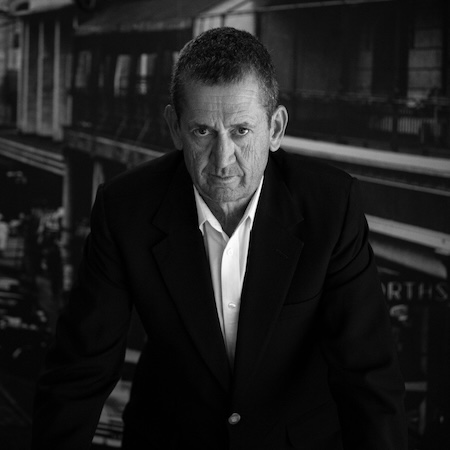
Bernard Swanepoel is an experienced mining executive and chair of the Joburg Indaba and Junior Indaba. This story first appeared in his newsletter, Zero Bull Sht.
ALSO READ:
- PODCAST: ‘Sharp Sharp’ – are South Africans really xenophobic?
- The X-men stirring hatred in South Africa
- Myth-busting: why foreigners aren’t taking local jobs
Top image collage: Rawpixel; Currency.
Sign up to Currency’s weekly newsletters to receive your own bulletin of weekday news and weekend treats. Register here.