

Some years ago I was, for a short period, editor of Business Day. The experience was exhilarating, brutal, exhausting, wonderful and – there is no other way of saying it – pedagogic. All of the other stuff was easy to anticipate, but the educational part was a surprise.
Shortly after I became editor, an old mate, Patrick Bulger, who was night editor of Business Day for a long time, gave me a piece of advice. There are some things only the editor can decide, he said. From my collegiate kind of approach, I was not inclined to believe him wholeheartedly; it seemed a rather slight statement. Yes, of course, but you delegate stuff, right? We are a team! We take joint responsibility.
But actually, he was giving a piece of very wise advice to a complete greenhorn who was too distracted to appreciate it.
Later, it made me think much more intensely about leadership, and Bulger’s dictum kept coming back to me. Leadership sounds grandiose until you do it. And when you do it, you realise it’s almost absurdly hard. And the hardest things of all don’t happen unless you, the leader, decide they will happen. Turns out, the buck doesn’t stop only in the White House.
The hard decisions
I always thought leadership was about becoming a reliable catch-all, a diplomat colleague, and a good, quick decision-maker. A friend to staff and customers and investors.
But, of course, it’s more complicated. The root problem is obviously not the easy decisions, but the hard ones. And this drew me to a conclusion of sorts: leadership is not leadership unless it’s painful. That’s just the truth. This is because only you can set the ultimate direction of the organisation; only you can allocate scarce resources, which always involves trade-offs; only you can embody and shape the culture; and only you can determine the senior team.
So now, when I look at leadership in the many organisations I come across as a journalist, I don’t ask only if they are “well led” in a holistic way, but in a more specific sense, how is the leader facing up effectively to their hard decisions, of which there will inevitably be a whole stinking pile.
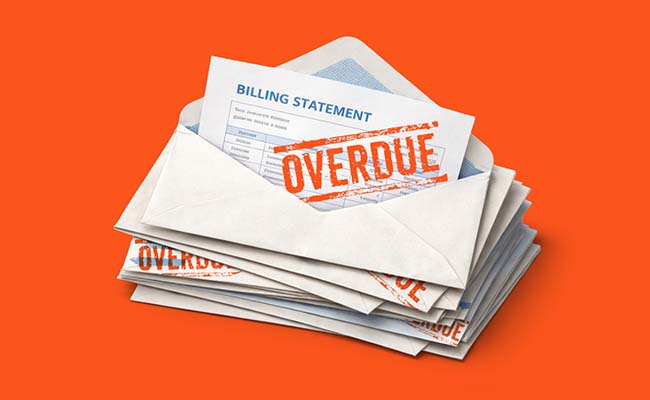
Of course, it’s not only business leaders under the microscope here: it’s political leaders too. And this leads me to my main point. South Africa is facing a crisis of nonpayment, and not just a small one, it’s verging on the existential.
We know this: we have all been talking about this for decades. What people call South Africa’s “culture of nonpayment” is, in practice, an arrears chain: one public body does not pay the next, which then cannot pay its own creditors, and the rot moves through the system.
Systemic risk
We all know about the arrears chain in Eskom. Eskom is still the single biggest problem, and Eskom itself describes municipal nonpayment as a systemic risk. In its 2025 interim results, it said municipal arrears had risen to R105bn by September 30 2025, up from R90.1bn a year earlier, and that more than 85% of municipalities in the debt-relief programme were not meeting the condition of paying current accounts on time.
By early 2026, reporting about the Treasury’s latest local-government figures put municipal debt to Eskom at R110.5bn, with only 10 of 71 municipalities in the relief programme compliant on current payments. Eskom had started formal steps against 14 municipalities that had not paid for electricity used over the previous 18 months.
That’s worth emphasising; only one in seven municipalities in the relief programme is compliant. The others are not. So what happened is that they didn’t pay, they were put on terms, and they still didn’t pay.
It’s easy to be super-critical of the 71 municipalities, but the muncipalities struggle to enforce payment on their own constituents because Eskom’s service was until recently sporadic. And now it’s consistent but very expensive. Between 2007 and 2026, Eskom’s tariffs have increased by more than 700%, far outstripping inflation and wage growth. The most recent hike, in April 2026, was 8.76% for direct customers and 9.01% for municipalities.
But Eskom, it’s becoming increasingly clear, is only the start. In Treasury’s 2026 Budget Review, using figures as at December 31 2025, municipalities reported total creditor obligations of about R161bn. There is Eskom’s R110.5bn, but there is also almost R10bn owed to the department of water and sanitation, R21bn to water boards, almost R21bn to the South African Revenue Service, R1.44bn to pension-fund related obligations/Financial Sector Conduct Authority-linked items, and R908.4m to the auditor-general.
A culture of non-payment
Nonpayment is everywhere now. Some situations verge on very dark humour. Recently the City of Joburg, which is itself in default of its water board payments by about R377m, launched a disconnection drive against government departments and entities over unpaid municipal accounts, saying the combined arrears were about R1.4bn.
Joburg was not alone. The City of Tshwane said national and provincial government departments owed it about R1.9bn and targeted government accounts in a recovery drive. Reporting said this included sites linked to correctional services; forestry, fisheries and the environment; state IT company Sita; and other state properties, though some departments pushed back and said the billing or ownership position had been misidentified.
And it is filtering out into the public sector too. The sharpest current example of this supplier nonpayment problem is Eastern Cape health. A report in 2026 said the department had built up roughly R1bn in unpaid pharmaceutical bills, that 21 vital supplier accounts had been suspended and that Afrox was pursuing legal action over unpaid medical-gas accounts. The same report said the department’s accruals had swollen so much that a huge share of its budget was already committed just to covering old bills.
Not stepping up
I hate to say it, this is one of those leadership issues – surely one of the most crucial of them all. It would not be true to say that President Cyril Ramaphosa has ignored the issue. In his 2026 state of the nation address and subsequent parliamentary replies in March 2026, he explicitly called the practice of supplying electricity and water without payment “unsustainable”.
But “unsustainable” is not a description that assigns blame or fault; in the circumstances I think it’s wimpy (though he has even suggested that the government would begin using the National Water Act and Water Services Act to lay criminal charges against municipal managers who fail to collect revenue or pay bulk suppliers).
But honestly, I don’t see him, or the various municipal, provincial or political leaders, really owning the issue. It’s long, long past time for them to step up and just grab this thing by the neck and shake it, as you would a snake, which is what it is.
There are some things only leaders can decide, and this is one of them. And we know that it’s hard, and nobody wants to do it, which is why it requires leadership. Not just words. Leadership.
This story first appeared in the Financial Mail. Currency and the Financial Mail are part of the Financial Mail Group.
ALSO READ:
- Borrow now, pay later: Joburg’s budgetary balancing act
- Coalface collapse: Why our municipalities are broken
- Eskom says it’ll stop bleeding South Africa dry
Top image: Rawpixel/Currency collage.
Sign up to Currency’s weekly newsletters to receive your own bulletin of weekday news and weekend treats. Register here.





“… leadership is not leadership unless it’s painful. That’s just the truth.”