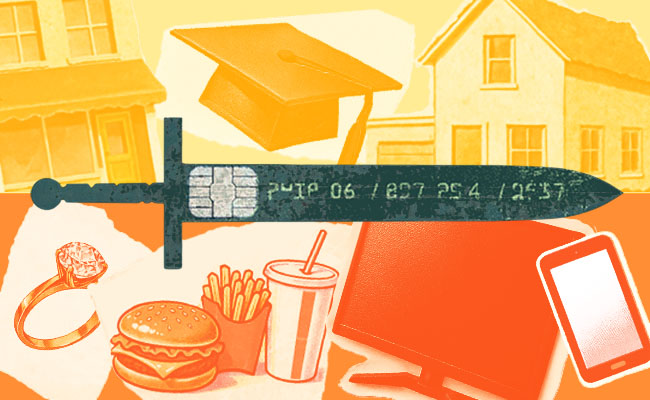

When it comes to managing money, most financial advice assumes we’re all rational actors making logical decisions. But anyone who’s ever made an impulse purchase or avoided checking their bank balance knows that our relationship with money is deeply psychological.
While researchers have long connected our relationship with money to the “big five” personality traits – openness, conscientiousness, extroversion, agreeableness and neuroticism (Ocean) – this framework only tells part of the story. It helps explain how people tend to behave with money, but not always why.
The traditional view: personality traits and money
Research linking the Ocean model to financial behaviour offers valuable insights.
People high in openness tend to embrace investment risk, viewing financial markets as opportunities for growth rather than threats. Conscientious individuals are more likely to budget, save consistently and avoid unnecessary debt. Extroverts and highly agreeable people often spend more freely, driven by social connection and the desire to please others. Meanwhile, neuroticism is frequently associated with financial anxiety, impulsive decisions or avoidance.
Understanding your baseline personality helps you work with your nature rather than against it.
The missing piece: life experience and learnt patterns
Our financial behaviour is shaped not only by temperament, but by the emotional patterns we learnt growing up. Families, cultures and social environments quietly teach us what money means: security, freedom, control, love, status or safety. Over time, these meanings turn into triggers that are independent of our innate personality.
Consider two people with identical “big five” profiles. One grew up in a household where money was discussed openly and budgeting was taught explicitly. The other learnt that talking about money was taboo, with financial stress erupting in explosive arguments behind closed doors. Despite sharing personality traits, these individuals will likely develop vastly different money relationships.
Family roles compound this effect. The people-pleaser who learnt early to maintain harmony through generosity may overspend on gifts and experiences, even when struggling financially. The peacekeeper might avoid financial confrontation entirely, preferring to pay an unfair share rather than have difficult conversations with partners or family members. The family scapegoat might unconsciously sabotage their own financial success, replicating the familiar role of being “the irresponsible one”.
These patterns manifest as emotional triggers rather than logical choices. A spending trigger might look like treating colleagues to expensive lunches because your worth feels tied to generosity. An avoidance trigger might manifest as unopened bank statements accumulating in a drawer. A scarcity trigger could mean hoarding resources even when you’re financially secure, unable to shake the childhood fear of “not enough”.
The social mirror: how relationships shape spending
Our social circles create their own gravitational pull on financial behaviour. Keeping up with friends who vacation in Bali when your budget suggests camping creates constant tension. Social media has amplified these dynamics – carefully curated feeds showing restaurant meals, home renovation and luxury purchases create comparison triggers that even the most conscientious person struggles to ignore.
Beware of the shadows
For the people-pleaser, watch for overspending on others to maintain relationships or prove your worth. Check in with yourself before committing financially: “Am I doing this because I truly want to, or because I’m afraid of disappointing someone?” Set clear boundaries around lending money or splitting bills unequally.
For the conflict-avoider, watch for unopened statements, avoided conversations and small problems snowballing into crises. Schedule regular financial check-ins, even when uncomfortable, perhaps with an accountability partner who won’t let you dodge the difficult stuff.
For the scarcity minded, watch for hoarding behaviours, an inability to enjoy your resources, or anxiety despite objective financial security. Practise conscious spending on things that genuinely bring joy or value, like donating to causes you care about or investing in experiences that enrich your life.
Highly-conscientious individuals should watch for financial rigidity that prevents them from enjoying life or taking calculated risks. Build “fun money” into your budget without guilt. Those high in openness need to watch for excessive risk-taking or chasing every new financial trend. Research thoroughly before committing and maintain a balanced portfolio.
Finding your financial fingerprint
Money personality is best understood as the interaction between two forces:
- Disposition: your natural tendencies, shaped by temperament and personality traits.
- Conditioning: the emotional and social lessons learnt through lived experience
Disposition influences what feels comfortable; conditioning influences what feels necessary. Understanding both is the most effective path to better money management.
Someone high in openness may enjoy investing and exploring new financial ideas, but if they grew up witnessing financial loss or instability, their conditioning may trigger excessive caution. Likewise, a naturally conscientious person may value structure, but if they were rewarded for self-sacrifice in childhood, they may struggle to spend on themselves without guilt.
Start by identifying your baseline personality traits. Are you naturally organised or spontaneous? Do you seek excitement or security? Are you motivated by social connection or independence? Free tools like the BigFive Test can help with a more rigorous assessment.
Then dig deeper into your conditioning. What messages did you receive about money growing up? What role did you play in your family system? What emotions arise when you think about your bank account? When do you spend money that you didn’t plan to spend, and what preceded that decision? In What’s Your Money Personality, Vangile Makwakwa writes authoritatively on how Black South African families manage their money.
The path forward
Personal finance is often framed as an analytical problem. In fact, it’s a complex system influenced by emotion, memory, identity and social context. Budgets fail not because they’re incorrect, but because they don’t account for who we are and what we’re responding to.
Once you recognise your triggers, you can separate emotional impulses from intentional decisions and create systems that work with rather than against them. Financial management then becomes less about discipline and more about design – you stop fighting yourself and start building systems that support your real behaviour.
Your relationship with money is uniquely yours – a complex interplay of who you are and what you’ve learnt. It’s not about becoming a different person; it’s about understanding the person you already are and choosing habits that help you thrive. That’s where lasting change happens – not through willpower alone, but through self-awareness.
Thomas Brennan is a co-founder of Franc, a South African fintech that helps people invest easily and affordably.
ALSO READ:
- Know thyself: Your edge in smarter investing
- Healing your money trauma
- FIRE: A formula for early retirement
Top image: Rawpixel/Currency collage.
Sign up to Currency’s weekly newsletters to receive your own bulletin of weekday news and weekend treats. Register here.