
Omnia 2026 is a far cry from Omnia 2019, when the fertiliser, explosives and chemicals group nearly collapsed under the weight of its R6.8bn debt. Back then it was forced to tap shareholders for R2bn in cash at a mere R20 a share – a fraction of its record high of R161.
Seven years later, and the group has announced a special dividend of 280c a share, in addition to a 470c final dividend, with a share price now back above R100.
And far from being a casualty of the Iran conflict, Omnia is likely to reap the benefit of higher ammonia costs this year as it passes those on to its farming and mining customers.
“The first challenge [of the war] was disruption, and we didn’t see any disruption in March. Since then a number of our competitors and suppliers have declared force majeure, but we’ve been able to create alternative supply and blend [stock] so we’re positioned quite strongly,” said CEO Seelan Gobalsamy at a media call on the company’s year-end results on Monday.
Competitive advantage
Omnia’s ability to do so is also directly thanks to a vastly stronger balance sheet than in “the dark days”, as Gobalsamy, who was made CEO in 2020, calls the company’s flirtation with financial ruin.
And it is Omnia’s business in both explosives and agriculture that makes the difference, he argues.
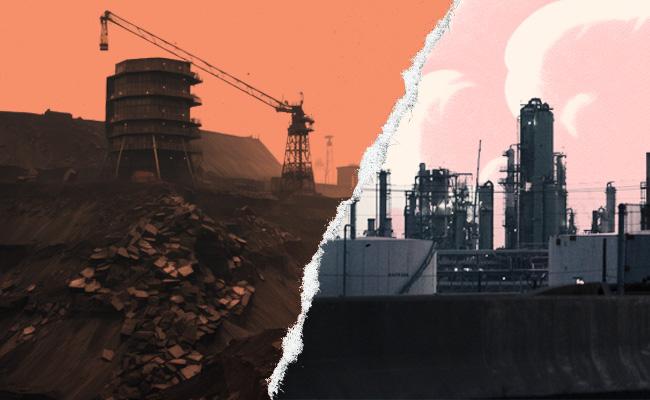
“We can import raw feedstock – which is ammonia – but we can also import finished goods in different parts of our chain. What we’re able to do is take these two big businesses that use the same feedstock and optimise between them. So that’s the heart of our competitive advantage.”
Whether Omnia’s customers will be able to absorb these higher prices is another matter, though.
“I don’t think you’re going to have any mine not blast; the explosives cost is a small percentage of blasting. Would mines go out of business because of the input costs of explosives? No. I think there’s a high demand for metals in the green economy and energy to support the AI drive, so we don’t foresee any challenges there,” he says.
Element Investment managers’ Keith McLachlan agrees.
“Producing mines are really price-takers for explosives, as shutting them down is just too expensive,” he tells Currency.
Then there’s the fact that Omnia’s clients are mainly large commercial farmers and mining houses; “we’re not in the smaller end of SMME farming and start-ups”, said Gobalsamy on Monday. “Farmers will plant as long as the soil conditions are good – and we’ve had very good rains,” in Southern Africa especially.
Higher up the food chain
But McLachlan doesn’t share Omnia’s confidence when it comes to agriculture.
“For farmers with a high fertiliser prices, I think the jury is out. [Gobalsamy] may be right, but I certainly would not bank on volume growth in agriculture [this year],” he says.
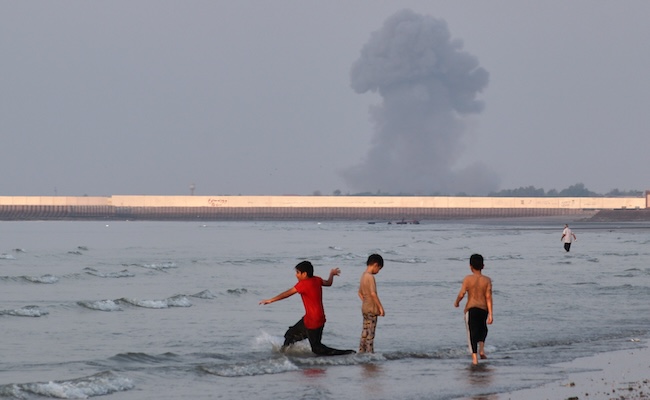
It’s not as if prices rallied only moderately, either. Ammonia prices spiked 70% at the start of the conflict and are still about 50% higher than before the war started. That’s because the Strait of Hormuz remains a critical chokepoint; 23% of world ammonia supply flows through the waterway, as does 50% of sulphur and 35% of urea.
Still, says McLachlan: “Omnia has focused on improving the quality of their underlying business over the last couple of years, shifting it both up the food chain (pun intended) towards higher-margin, less commoditised products, and to grow the group’s volumes through (mostly) organic global expansion. All of these are proving successful.”
The company has finally managed to turn a profit – of R4m – on its problem South African chemicals segment, too.
Still keen on green
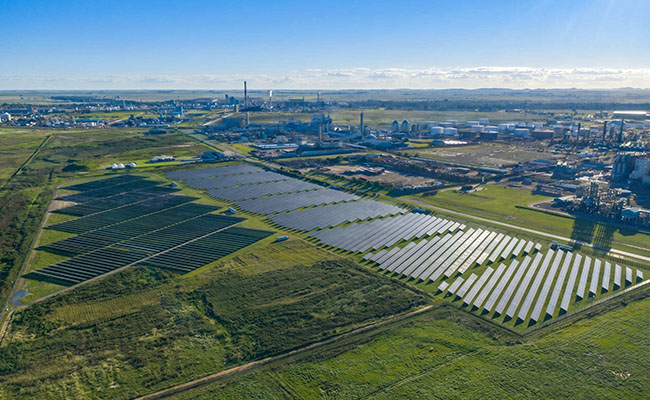
Unusually for corporates recently, Omnia is still keen to tout its ESG achievements. It says its use of solar-powered energy increased by a fifth and carbon emissions fell 7% thanks to its renewable energy use. The company’s carbon emissions intensity, in fact, has halved since the 2022 financial year.
This is partly after years of intensive investment in its own infrastructure; Omnia has spent almost R700m on its solar and water plants in the past few years.
Recycling oil, meanwhile means that, in its explosives business, “for every 1l of used oil we take out of the environment we save a million litres of water,” says Gobalsamy. “As citizens of the world we’ve got a big role to play in ESG.”
Interestingly, Omnia reckons it has the largest soil-testing lab in the southern hemisphere, from which it treats about 500,000 soil samples a year.
“We help farmers understand how much water and fertiliser to use to enhance yield. We would then test the sap of a six-week-old plant and we can accurately predict the crunchiness of an apple from a six-week apple tree to a 95% accuracy. So we can tell a farmer whether an apple will land up in a tin of canned fruit or in a five-star hotel,” says Gobalsamy, adding that the group has 40 years of data to “demonstrate the enhancement of yield and crop quality”.
Start-up costs
Results for the year ended March show that Omnia parlayed a 6% rise in revenue, to R24.2bn, into a 28% jump in operating profit, to R2.17bn. Headline earnings per share came in at 849c. Most of the profit growth took place in its agriculture division, while mining, which still accounts for half of Omnia’s profit, was flat after a “significant” currency loss in Zambia as the kwacha strengthened.
The company also had set-up costs for its fledgling mining businesses in Canada and Australia, but these “will move to profitability and remove the cost hole in the coming years”, promised Gobalsamy.
A latent pick-up in the uranium markets, especially in Namibia, has also helped offset a slump in Botswana’s diamond mining, says Omnia.
A recent note from Standard Bank Securities put Omnia on a valuation range of between R93 and R117 a share, though in the April report it warned that a prolonged conflict in the Middle East and a higher oil price “would lead to higher inflation and a reduction in economic growth rates and a likely lower valuation for [its] … non-mining operations”.
McLachlan though, is pretty upbeat.
Omnia, he says, “is earning a superior return than its local peers, has an ungeared balance sheet and a pivotal and strategically superior supply chain that all should benefit it”.
ALSO READ:
- Why South Africa is so vulnerable to the Iran war
- The Hormuz shock didn’t break markets – it repriced them
- Trump administration sows confusion as it tries to reopen Strait of Hormuz
Top image: supplied.
Sign up to Currency’s weekly newsletters to receive your own bulletin of weekday news and weekend treats. Register here.