
The South African Reserve Bank (SARB) is toying with making low-cost, person-to-person cash transfers mandatory for banks, which still earn billions in fees from their various payment platforms.
These transfers have revolutionised the payments systems in countries like Brazil and India. Yet banks’ embrace of the technology has been slow in South Africa, even though, says the SARB, this measure alone could boost economic growth by up to a percentage point.
The desire to lock in that gain is why the SARB is so concerned about the slow take-up of the PayShap system, which is already more than three years old. While low-friction, low-cost payment systems have exploded worldwide, the most successful systems have generally followed aggressive central bank or government intervention.
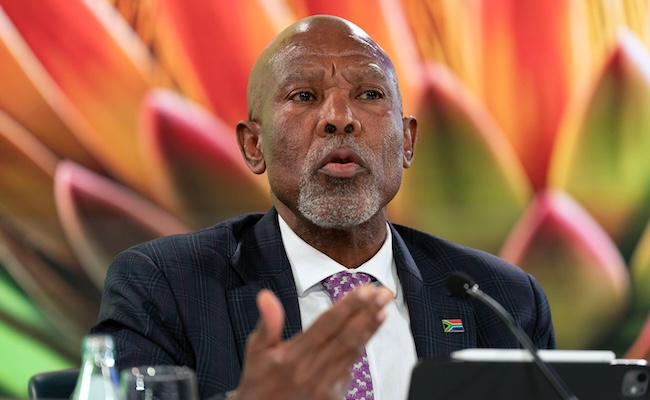
Which is why, says Pradeep Maharaj, the SARB executive leading its payments ecosystem modernisation programme, “ultimately, we are mulling the proposal to mandate [its] acceptance”.
According to Maharaj, PayShap processes about 60-million transactions a month; a number that sounds impressive until you divide it by South Africa’s population. In which case, it equates to just one payment per person per month. By comparison, Brazil is now approaching 30 fast payments per person per month, with India in the high 20s.
“The reality is that it has made very little dent in our stated objective of PayShap being a fast-payment system that starts to displace cash in the economy,” Maharaj says.
The banks, however, argue that PayShap is actually growing rapidly.
Rapid take-up
Responses from Absa, Standard Bank, Nedbank, Capitec, FNB and Investec depict a system gathering momentum as customers migrate away from traditional immediate payments and ordinary electronic transfers.
Keenan Mayet, who heads retail international banking and payments at Absa, says its PayShap volumes have risen 70% in a year, while Standard Bank has reported an increase of 76%. Capitec and Nedbank also describe growth as strong or exponential.
Yet their answers also demonstrate one of the difficulties in assessing PayShap’s success: almost nobody will disclose the numbers needed to determine its actual importance.
Currency asked banks for their latest monthly transaction volumes and values, the proportion of their person-to-person payments carried by PayShap, the number of active users and the revenue potentially threatened by cheaper transfers.
None provided a current monthly transaction volume or value. Standard Bank gave growth rates without the underlying base; Capitec gave no figures; and Nedbank said explicitly that it does not disclose institution-level volumes or values.
Absa was the partial exception. It says its retail customers processed more than R56bn in PayShap transactions over the past year, and that more than 65% of its person-to-person payment volumes now relate to PayShap. It also tells Currency that ShapID registrations have increased by more than 30% and the number of payments made using ShapIDs jumped 200%.
ShapID allows customers to make payments using an easy-to-remember identifier rather than sharing bank account details, helping to improve both convenience and usability.
But Absa doesn’t provide the absolute number of transactions beneath that percentage, a current monthly value or a comparison with the total PayShap market.
Still, it acknowledges that PayShap is displacing established – and more lucrative – payment products.
“Absa supports the industry objective of creating a more inclusive and efficient payments ecosystem, even where some existing fee streams may be displaced,” it says.
Cannibalising fees
That is an important concession: the debate is not merely about whether customers like fast payments, but about whether banks are prepared to drive a transition that may cannibalise parts of their existing transaction-fee income.
Banks have long been cagey about the income they earn from cash transfers, but industry insiders put the figure at R1bn-plus per bank, per year.
At the moment, Absa’s PayShap ceiling is about R3,000, reflecting the system’s original focus on small transactions; but it says it intends raising the limit “early next year”.
Standard, meanwhile, suggests not only that more customers are using PayShap, but that they are beginning to send larger amounts through it, with value of payments made up 127% in the past year, according to Andrew van der Hoven, Standard’s personal and private banking chief digital and product officer
But without an actual number or rand value of the transactions, a 127% increase can be formidable or fairly modest, depending on the starting point.
Nedbank supplies perhaps the most revealing illustration of how differently banks have implemented what is supposedly a common payment system.
While Absa and Standard Bank operate around a R3,000 retail threshold, Nedbank allows individuals to make PayShap payments of up to R50,000 through its Money app. Businesses can transfer up to R5m through the Nedbank Business Hub or its application programming interfaces.
“Transaction limits are designed to balance customer convenience with risk management, fraud prevention and regulatory considerations,” it says.
A wide, open rail
Those amounts show the considerable technical capability of the PayShap rail, which is not intrinsically restricted to splitting a restaurant bill or sending someone taxi money. It can potentially carry significant consumer and business payments.
But Nedbank is also the most explicit about what it will not reveal. “We do not disclose customer transaction volumes or values at an institution level,” it says, while also declining to disclose ShapID adoption, active users or revenue earned from individual payment categories.
Asked whether it supports making PayShap acceptance compulsory, Nedbank says the success of a payment solution is “ultimately driven by customer value and market adoption”.
Capitec’s response perhaps explains why it appears to have established such a strong position with customers – long before PayShap arrived. That’s because Capitec customers could send money to one another through the bank’s pay-to-cell service. PayShap extended that familiar behaviour across banks, allowing Capitec customers to receive money from customers of other institutions using a cellphone number.
It is now focusing particularly on small and medium-sized businesses, which may be the critical bridge between PayShap as a person-to-person transfer system and PayShap as a substitute for cash at shops, market stalls and other merchants.
Capitec does not, however, disclose its PayShap volumes, values, active-user numbers or share of person-to-person transactions.
In FNB’s case, about 77% of its customer base has registered a ShapID, “demonstrating strong adoption of simpler and more convenient real-time payment experiences”, says Christelle Pretorius, FNB’s chief operating officer.
As for the possible hit to revenues, Pretorius says FNB has PayShap transaction limits “to strike the right balance between enabling customers to transact conveniently and maintaining a safe and secure payments environment”.
She argues that “sustainable adoption” is “best achieved through delivering compelling customer and merchant value propositions, supported by ongoing collaboration across the industry”.
Investec says while PayShap currently represents a growing portion of digital payments activity, traditional EFTs and Faster Payments still account for a significant chunk of its transaction volumes and values.
“Adoption is accelerating, with transaction volumes rising almost threefold in the first six months of this year,” the bank says.
Investec’s own tweaks to the system include enabling corporates to use PayShap for collections, which allows phone numbers to serve as proxies for bank accounts, which can help companies send consumers requests to pay directly through their banking apps.
Own set of rules
The difference in approach between South Africa’s biggest lenders goes to the heart of the problem the SARB is trying to tackle: that each bank has implemented PayShap differently.
“Each bank has decided its own set of rules,” says Maharaj. “They’ve set their own limits. They’ve set their own approaches to how you can register for it. They set their own rules as to where you find it in the app to use it.”
Which is why the SARB is empowering PayInc, the operator of PayShap, to establish minimum participation requirements. PayInc was previously BankservAfrica, of which the SARB bought a 50% stake in November, with the banks collectively retaining the other half. The plan is for PayInc to become the formally licensed owner and operator of the PayShap system, allowing it to impose more consistent rules instead of leaving every bank to design its own version.
The SARB also intends to introduce a common QR Plus standard, so that a merchant can display a single interoperable payment code rather than separate codes for different banks and payment providers.
All the banks Currency spoke to say they support merchant expansion in principle, but none disclose when customers would routinely be able to use it across merchants or what merchants would be charged.
And that is not a small omission. Cheap merchant acceptance is what turned systems such as Brazil’s Pix and India’s UPI from convenient ways to repay friends into genuine alternatives to notes, coins and cards.
Not an ambush
The SARB’s position is not a sudden assault on the banks. Vision 2025, published years before PayShap was launched, identified affordability, interoperability and financial inclusion as central objectives of the national payment system.
It explicitly warned that transaction fees could either promote or obstruct adoption. More pointedly, it stated that when the interests of the national payment system and the narrower commercial interests of an individual institution diverged, the national system should take precedence over “the maximisation of profit by any single entity”.
Yet the global trend is unmistakable. Bank of International Settlements (BIS) data shows that fast payments made up 49% of all cashless payments in developing economies in 2024, up from 43% a year earlier.
But the BIS also warns against assuming that cash is about to vanish. Withdrawals are declining, yet cash in circulation has stabilised in many countries because it remains useful as both a payment method and store of value.
It is the replacement of cash with digital payments, however, where Maharaj sees the boost to economic growth of up to 1%. As he explains, it is in reducing the cost and inconvenience of handling cash, making tiny transactions easier, recording activity that previously took place informally and creating financial histories that may give households and businesses access to other services.
So while banks may initially surrender some payment revenue, Maharaj argues that they could gain far more from customers who begin saving, borrowing, investing or buying insurance through the formal financial system.
ALSO READ:
- Borders without banks: how necessity forged Africa’s fintech boom
- The bank deal that isn’t. Really. But what if …?
- Inside Capitec’s big bet on fintech
Top image collage: Rawpixel; Currency.
Sign up to Currency’s weekly newsletters to receive your own bulletin of weekday news and weekend treats. Register here.