You just can’t please everyone. Not economists, or currency traders anyway. The rand weakened as much as 2.2%, blowing past R16.75 to the dollar on Thursday after a surprise decision by the South African Reserve Bank (SARB) to hold rates – notwithstanding a steep rise in the latest inflation numbers.
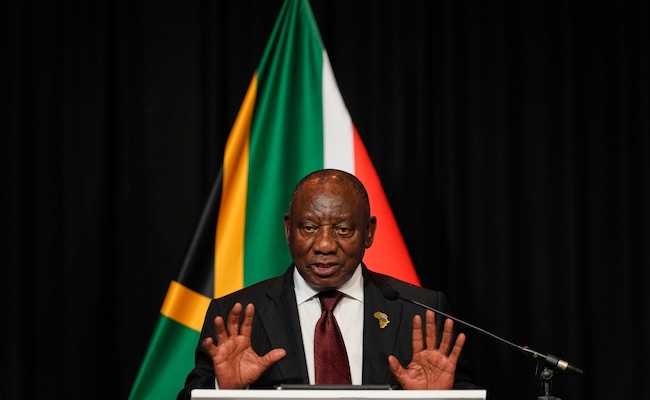
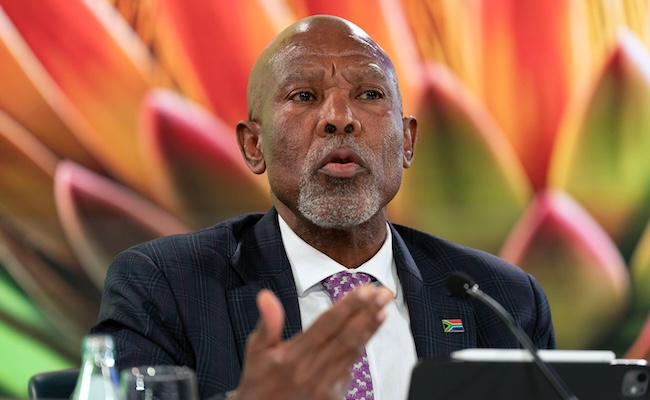
“There is nothing we can do about last month’s inflation – the focus is on the horizon”, Reserve Bank governor Lesetja Kganyago told reporters after the monetary policy committee (MPC) meeting. “And that’s why you see us taking a view that is a few quarters ahead.”
Asked about the consensus view for a rate hike of 25 basis points, Kganyago told reporters: “It’s not a nice thing to get the call of the central bank wrong, but it is a dismal science that we are playing, and in this uncertain environment you can forgive people for missing what they had expected.”
Yet the MPC was not entirely in agreement over the decision: four members voted in favour of keeping the repo rate unchanged at 7%; two voted in favour of raising the rate. One of the biggest variables keeping everyone guessing is the war in Iran, which has flared back into action after an uneasy truce; on Thursday, oil prices surged back above $100 a barrel after Iranian-backed Houthi militants attacked two Saudi Arabian oil tankers in the Red Sea.
A rate hike had seemed all but inevitable, Keabetswe Mojapelo, head of economic research at Old Mutual, tells Currency.
Diego Barnuevo, a market analyst at global financial services firm Ebury, questions whether the committee wasn’t being too optimistic with its baseline inflation outlook. “We’re still not ready to rule out further tightening this year and are encouraged that two committee members also share this view,” he says in a note.
Smart move?
“With a huge dollop of hindsight, it’s not a bad thing,” says James Turp, fixed-income portfolio manager at Ninety One. “I think they made a smart move here.”
On Wednesday after the release of inflation data, PSG Financial Services chief economist Johann Els argued that there was “very little, in fact almost no” evidence of second-round inflation effects beyond fuel-related categories in the latest consumer inflation data, where CPI rose 5% in June. The SARB, in fact, lowered its inflation forecast for this year to 4% from 4.4% previously, at the same time lifting its growth forecast to 1.4%
“The statement was, in my opinion, far less hawkish than I expected,” says Els. “I thought they would put much more emphasis on the renewed Middle East conflict and the risks that higher oil and fuel prices pose to inflation.”
Instead, “they treated that as one of a number of risk scenarios. The same applies to El Niño and the potential impact on food prices – they see these as risk factors, rather than building them into the central forecast.”
Kganyago also left the door open for rate cuts down the line, calling present interest rates “appropriate”.
That is not a scenario that others share.
“They’re not going to be cutting any time soon, that much I can assure you, but that can also change. But, as we stand, markets are pricing in another three hikes from here,” says Turp. “That’s aggressive, but we’re not in a movie of cutting rates. This problem in the Middle East has to pass first.”
Proactive
The bank hiked rates in May as a proactive measure, before Tehran and Washington agreed to a ceasefire, which Els argues was the correct decision.
“It also seems to me that they believe the pre-emptive rate hike in May was the right decision. That is probably why, as I expected, they saw no need to raise rates again today,” says Els. “The governor repeatedly said the current policy stance remains appropriate, referring specifically to the stance established after the May rate hike.”
Back in May, the SARB assumed an average oil price of $91 a barrel this year. That has since dropped to $82 a barrel, which may appear wishful thinking, with oil back above $100.
For Mojapelo, second-round inflation effects are definitely a worry. “You could even argue it’s becoming a third-round effect in terms of domestic workers because they’re responding to other prices that have already increased. If you look at goods inflation, it has ticked up somewhat and that’s one of those sleeping problems for the MPC,” he says.
“We’re now in a period where we’re uncertain about how uncertain we are regarding when this war will end. You wake up on Friday and hear there’s a memorandum of understanding and diplomatic discussions under way, you think maybe we’re getting somewhere, then Monday arrives – boom, everything changes.”
Mojapelo believes there’s no use in pretending to know what to do. “You can only confidently say the hiking cycle has ended if you can confidently say this uncertainty around the war has disappeared. I’m uncertain when the war will end. I don’t want to predict it,” he says. “We’re economists, not war experts.”
ALSO READ:
- Inflation shock puts SARB rate hike on the cards
- Inflation expectations put SARB’s next rate call on edge
- Dizzying reversal in oil prices has rates in and out of play
Top image: Reserve Bank governor Lesetja Kganyago at the International Monetary Fund headquarters in Washington on October 16 2025. Picture: AP Photo/Jose Luis Magana.
Sign up to Currency’s weekly newsletters to receive your own bulletin of weekday news and weekend treats. Register here.