
Before I was a journalist, I ran a walking tour company in the Johannesburg inner city.
It was 2009. I was 25, fresh out of an honours degree at Wits and gloriously naïve. For the next 12 years, I walked the city almost daily. Along the way, Johannesburg’s inner city captured my heart. I grew into adulthood alongside it, becoming more aware of its challenges but no less captivated by its people, its architecture – and its stubborn resilience.
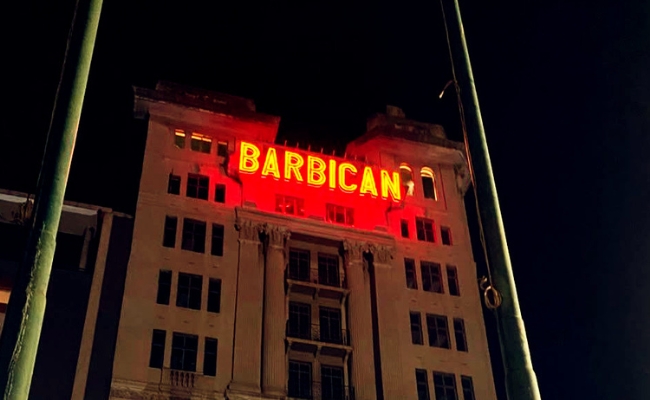
It was also in 2009 that I fell head over heels for a building: the Barbican. I became a regular, stopping outside to tell tourists its tale. At the time, it had seen better days. Its façade was grimy, windows were broken or bricked up, and the building seemed all but forgotten. Yet it had an undeniable magnetism, standing tall on the corner of what are now Rissik and Helen Joseph streets, opposite the historic Rissik Street Post Office and City Hall.
Construction on Joburg’s Barbican began in 1929 and was completed in 1931, announcing a new era of ambition for a city looking beyond its mining-town origins and towards the soaring skylines of America. Designed in a blend of eclectic classicism and Art Deco, the building housed ground-floor shops, a first-floor tearoom and several floors of offices, bringing together commerce, leisure and modern city life under one roof. Its elegant columns, ornamental cornices and decorative railings made it one of the city’s most striking buildings.
I often wonder what it must have felt like to stand on this corner in 1931 and look up at the Barbican for the first time. My late grandmother used to talk about visiting the city’s first toy shop in the building next door, while the intersection itself was already making history as the site of Johannesburg’s first traffic lights. For generations, this corner exemplified a city embracing modernity, ambition and possibility.
The next chapter
By the time I began working in the inner city, much had changed. Apartheid had ended and a city once planned around racial exclusion was now open to everyone. Yet Johannesburg’s centre had also endured decades of disinvestment, with businesses relocating to the northern suburbs and countless historic buildings left behind.
The Barbican was one of them. Abandoned in the 1990s, it slipped steadily into decline. By 2009 vandals had moved in, stripping out steel-framed windows and scavenging anything of value that remained.
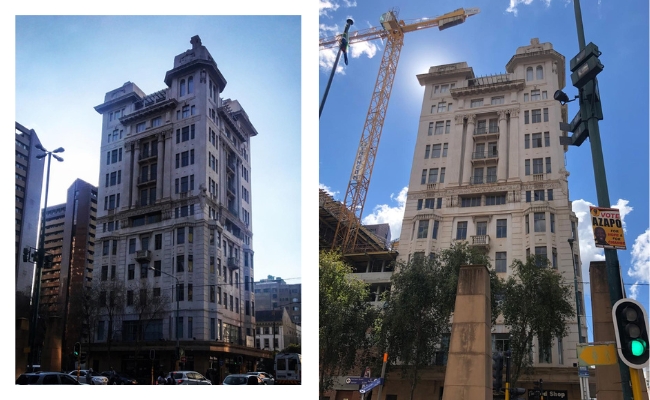
As my business grew, so too did my affection for the city. Changes were also afoot at the Barbican. In 2010, following a major refurbishment, the building was relaunched by Old Mutual. For a moment it seemed as though its fortunes had turned.
They hadn’t. The building remained largely empty. Old Mutual sold it to FNB, and after the Covid-19 pandemic the bank reassessed its property strategy and decided to offload the site. I’d already made the leap into journalism but kept an eye on the old girl.
By 2022, despite its prime position and architectural significance, the Barbican had stood empty for more than a decade, waiting for someone to believe in it again.
The lights are on again
Which brings us to June 2026, at which point things look very different. I’m standing in a bustling penthouse apartment at the inauguration of the Barbican, looking out across the city on a Friday evening as guests celebrate a structure that many had long since written off.
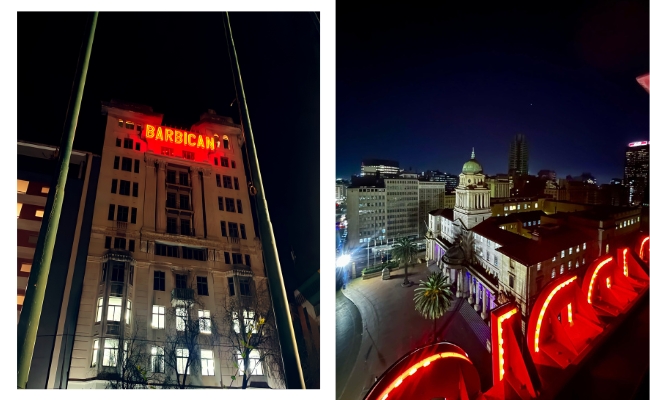
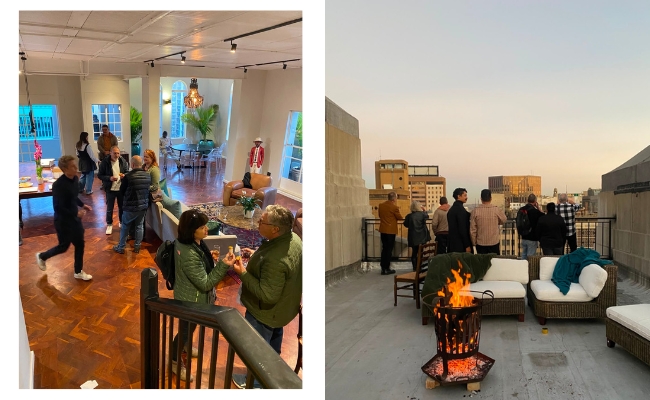
Outside, preparations are under way to switch on the building’s new rooftop sign. Inspired by the original signage that crowned the Barbican when it first opened, this version is bigger and brighter. In a city so often defined by neglect, its glow feels like a symbol of confidence and possibility. It’s also, quite simply, a lot of fun.
And for anyone who remembers the Barbican’s darker days, it is a remarkable moment. The lights are on, people are moving in, and one of Johannesburg’s most beloved buildings is finally getting the future it deserves.
Among those gathered this evening are owner Michele Ciani, architect Brian McKechnie and one of the building’s tenants, Griffin Shea, bibliophile and owner of Bridge Books. They are joined by would-be mayor Helen Zille, contractors, heritage activists including national treasure Flo Bird, property owners, city lovers, even a beautiful new baby.
The comeback kids
For architect Brian McKechnie, Joburg’s Barbican is more than just another restoration project. His relationship with the building stretches back more than two decades.
In 2002, while studying architecture, he used the Barbican as the subject of a university design project. The building was boarded up and largely inaccessible, but he climbed to the top floor and was hooked. “I was completely captivated by the ruins of a once-grand edifice,” he recalls.
The building stayed with him. He later used it as the focus of his master’s thesis, exploring heritage as a catalyst for urban regeneration. By 2009, concerned by its continued decline, he contacted owner Old Mutual but was told there were no plans to intervene. Instead, he wrote an open letter to the city’s heritage director, copying in inner-city champion Neil Fraser. Within days, the issue was making headlines and McKechnie found himself discussing the Barbican on radio as public pressure mounted.
“The corporate owner later told me they worked out that restoring the building would cost less than the reputational damage of letting it rot,” he says. “There had been many previous efforts by many people to save the building. I just happened to add the last straw that broke the camel’s back.”
Getting in on the act
More than 20 years later, McKechnie now finds himself helping to shape the Barbican’s future.
If McKechnie has been one of the building’s longest-standing champions, Michele Ciani is the man helping to secure its future. The Italian property investor began his career in marketing, working for global brands including L’Oréal, Coty and the Clarins Group before turning to real estate.
Johannesburg had been on Ciani’s radar for years. On paper, the city offered an unusual combination of low property prices and strong rental yields. But it wasn’t until his first visit in 2021 that the relationship became personal. Staying at the Rand Club and exploring the inner city, he found himself drawn to the city’s architecture, history and sense of possibility. He was so taken with Johannesburg that he bought his first local property, a Braamfontein penthouse, during that very trip.
The Barbican soon followed. Many Johannesburg residents recognise the building instantly, even if they don’t know its name, and Ciani was no exception. Yet his attraction to it was also deeply personal. As a child, he was fascinated by superheroes and the dramatic cityscapes of classic comic books. “When I first saw it, I immediately thought of Gotham City,” he says. “It had the same grandeur, mystery and larger-than-life character.”
He laughs at the comparison but admits it sparked something deeper. “I didn’t simply see a building. I saw a story, and I wanted to become part of it.”
Initially, he was told another buyer had already secured the property and reluctantly let the idea go. Then it came up for auction. “The moment I saw it, I knew I couldn’t resist. I had to try.”
Today, what makes him most proud is not the restoration itself but the community that has formed around it. “If the Barbican can help inspire confidence in Johannesburg, support local talent and play a small role in the revival of the city centre,” he says, “then I will consider it one of the most rewarding projects of my life.”
The heart of the building
For McKechnie, restoring the Barbican was never just about the building itself. It was also about finding the right tenants. “We wanted a sexy space on the ground floor,” he says, rather than the kind of retail typically associated with the inner city.
That vision led to the return of Bridge Books. The independent bookshop had relocated to Linden, but owner Michele Ciani persuaded founder Griffin Shea to bring it back to the city centre. McKechnie and designer Alet Verster developed a new colour scheme, reworked the lighting and displays, sourced furniture from auctions and Facebook Marketplace, and commissioned new signage from Bradley Kirshenbaum of Love Jozi. Ceramic planters from Liebermann Pottery and artwork curated by Shea completed the transformation.
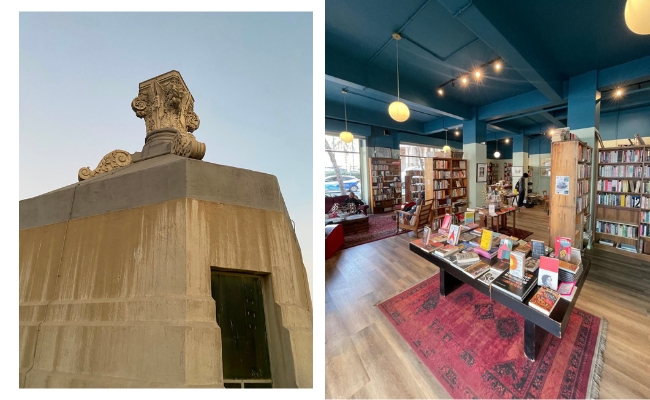
Today, Bridge Books is far more than a bookshop. It has become a cultural anchor for the area, hosting literary events, supporting educational initiatives and drawing people back to a once-forgotten corner of the city. “It’s a wonderful place to meet, have a coffee and spend time,” says Ciani.
The building’s middle floors are home to David Tlale’s offices, studio and fashion academy. “Every time I walk through the building, I see young people learning skills, developing their talents and preparing for careers in the fashion industry,” says Ciani.
For him, that activity is the real measure of success. His goal was never simply to fill a building with tenants, but to create a place where culture, education, entrepreneurship, and community could coexist under one roof. Judging by the activity unfolding around us on this Friday evening, that vision is already taking shape.
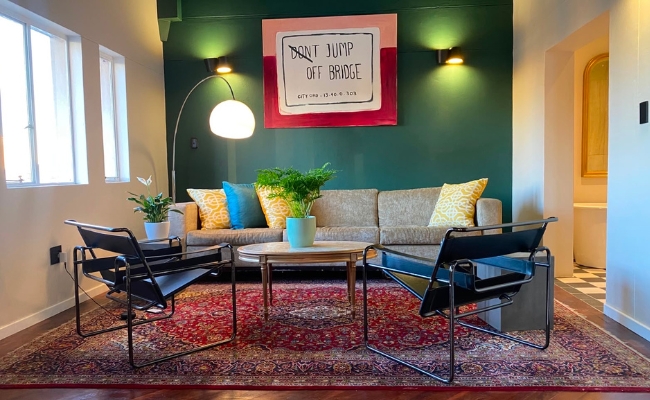
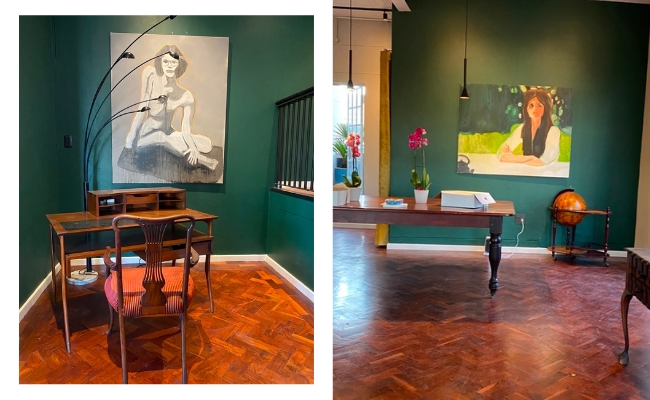
The final piece of the puzzle may be the dramatic penthouse and rooftop garden that crowns the building. Originally conceived as Ciani’s Johannesburg home, he is now considering a range of possibilities, from a residence to a venue for events, exhibitions and creative projects. Fittingly, for a building that has reinvented itself more than once, the Barbican’s story is still being written.
Images: Jo Buitendach, Candice Nightingale, Brian McKechnie
Sign up to Currency’s weekly newsletters to receive your own bulletin of weekday news and weekend treats. Register here.