


If you’ve ever struggled to make sense of the stratospheric sums our CEOs are awarded each year, it might be comforting – or not – to know there actually is little sense to it.
(The just-implemented amendments to the Companies Act might introduce some logic, but there’s no guarantee.)
The latest report from Labour Research Service (LRS) reveals that the strength of the relationship between revenue, profit and pay is “modest” at best, says Salomé Teuteberg, author of the report.
Indeed, profit explains only 28% of why one CEO earns more than another. The rest comes down to board discretion, contract terms and long-term incentive (LTI) time.
There’s also the fact, says Teuteberg, that pay policies are set over multi-year cycles and do not reset each time financial results change. This is particularly the case for LTIs, which are frequently the most generous part of a remuneration package. (It’s worth pointing out that LRS/Active Shareholder’s research covering a 10-year period also failed to establish much relationship; in other words, don’t bother looking for a determining pattern – the whole thing is much more whimsical.)
It’s a bit difficult not to sometimes suspect the remuneration committee decides what they’d like to pay their CEO colleague and works backwards from that generous figure to find reasons to justify it.
Weak pay-to-profit correlation
If you’re inclined to think the system must surely be more robust than that, you should check out the LRS report, which was released just days before the new legislation became effective. It covers remuneration for the JSE top 40 CEOs in 2025.
LRS warns in the very first paragraph of the weak pay-to-profit correlation. Crucially for the shareholders funding this largesse, this means “paying a CEO an enormous remuneration package does not necessarily mean that company is making huge amounts of profit”.
In addition, from what Currency could glean, neither does high pay necessarily mean the share price is booming. A strengthening share price does, of course, lift the value of the CEO’s LTIs, which are share-based. But even without a growing share price, the CEO will score well.
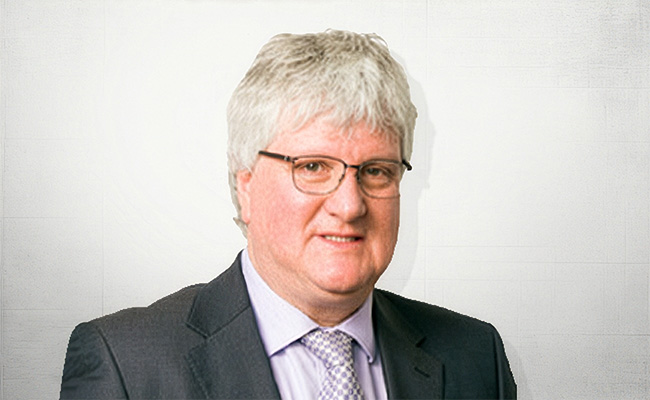
This is apparent from one of the more surprising nuggets of information in the LRS report. Bidcorp’s Bernard Berson, one of the lowest-profile CEOs on the JSE, also happens to be one of the highest paid, ranking seventh on the top 40 list, just behind companies mostly with their primary listings on international exchanges.
For whatever reason, Berson’s remuneration has avoided the spotlight up to now despite it being significantly richer than all the other top payers such as the banks or retailers. Berson’s eye-popping R148.5m almost dwarfs that of Shoprite CEO Peter Englebrecht, who bagged just R87m.
It should be noted Berson’s R148.5m is only slightly more generous than the R148m of Absa’s Kenny Fihla, but Fihla’s payment includes the hefty R98m he was paid to compensate for the awards he apparently lost out on when he switched from Standard Bank. Presumably Absa will rein things in a little from here on.
The Covid effect
In case you were wondering, there’s little chance of Berson’s remuneration being moderated in future, as the R148.5m is in line with previous payments. The 2025 package was not an aberration. It’s just 10% ahead of what he was awarded in 2024.
This was a relatively generous payment, given revenue was up only 4.3% and headline earnings per share grew just 6.5%. And it wasn’t as though the share price performance justified the largesse either; Bidcorp shares gained all of 7% between June 2024 and June 2025.
Where Berson is making a killing is on LTIs, which are bumping up his annual remuneration by scores of millions each year – R78m in 2024 and R91m in 2025. Covid helped this.
As with many other companies, Bidcorp rewrote chunks of its remuneration policy when Covid hit the share price so badly that LTIs awarded a few years earlier became almost valueless. It meant that performance conditions were removed on share options which were now priced at Covid lows – so the executives couldn’t but win.
In Bidcorp’s case, shareholders were not happy about this. At the AGM late in 2020 an unprecedented 68% of them voted against the remuneration policy and the remuneration implementation report. After a bit of a hiatus in financial 2020 (R42.2m) and 2021 (R38.5m), Berson’s remuneration got back on its very high track. In 2022 he was awarded R81m and in 2023 received R100.9m, followed by R134.8m in 2024.
These are the sorts of figures that Bidcorp founder Brian Joffe might only have dreamed of.
However, before you sniff at Bidcorp heading the list of overpaid executives rather than some banking or mining lord, remember this is the industry from which Natie Kirsh just inked a $29bn sale of Jetro.
As the LRS report highlights, the fact Bidcorp derives most of its turnover and profit from offshore operations helps to bump up Berson’s payout.
The rich list
Five of the six companies whose CEO pay is even more generous than Bidcorp’s have their primary listing outside South Africa. The highest paid – by a country mile – is Michel Doukeris of AB InBev, who bagged a truly staggering R1.8bn in 2025. It’s really difficult to know what to make of this generosity, given the AB InBev share price is still uncomfortably below the level at which it made the ill-considered SABMiller acquisition all the way back in 2016. And that’s despite some active share repurchasing.
That mega-deal was done at about the time huge swathes of consumers around the world decided alcohol was not good for them. The volatile to weak AB InBev share price tells the story of that decision.
Next up is Naspers/Prosus’s Fabricio Bloisi, with just over R1bn. That’s without allowing for the $100m “moonshot bonus” he stands to receive in 2028.
At about a quarter of what was dumped on Bloisi is Nicolas Bos at Richemont, who bagged R228.4m; in fourth place is Northam Platinum, where Paul Dunne scored R223.6m; then British American Tobacco, where Tadeu Marroco’s package was worth R155m; and, in sixth place is recently retired Mike Henry, of BHP Group, who was awarded R151m.
The lowest paid in the top 40 is Sasol CEO Simon Baloyi, whose R25m in 2025 is likely to bounce up in 2026 thanks to the war in Iran.
Such a whimsical world.
ALSO READ:
- The gravy train economics of CEO pay
- JSE CEOs: caviar pay, sardine results
- How rubber-necking execs gamed the JSE’s pay disclosure system
Top image: bidcorpgroup.com.
Sign up to Currency’s weekly newsletters to receive your own bulletin of weekday news and weekend treats. Register here.



That AB In-Bev pay cheque is an obscenity. I was one who had SAB shares and when I received my payout I chose to use half to buy AB In-Bev shares. Boy, what a mistake that was. I STILL haven’t broken even!