
Every results season, someone asks me whether the South African consumer is finally falling over. My answer is usually the same: no, they’re not falling over – they’re being careful. Those are not the same thing.
This latest round of retailer results makes that point better than any chart could. Several companies reported into the same environment, with the same squeezed shopper walking through their doors, and yet the outcomes were completely different.
When trading is easy, a mediocre operator can look perfectly respectable. There is enough growth around to hide mistakes. But when conditions tighten, you start to see who can really run a business. So, when a company disappoints, my first question is not whether the consumer let it down. It is whether the business earned its result.
What good execution looks like
Pick n Pay is the obvious place to start. The group is still losing money, with a R386m loss in FY26, though that is R22m better than the year before. I think the leadership is credible and the progress is real, but we should be honest about the shape of that progress. The losses are narrowing slowly, and the date it expects to break even has quietly moved from 2027 to 2028, and now to 2029.
The bright spot is Boxer, the soft-discount chain, which grew sales by more than 12% and delivered R2.6bn in trading profit. The problem is that the core supermarket business alongside it lost about R1bn. To fund the turnaround, Pick n Pay has been selling down its Boxer stake, from 65% to 53%. In other words, it is using its best asset to repair its weakest one.
That buys time, but it cannot be the long-term answer. None of this is really the consumer’s fault. It is a long, difficult self-help story, and it is taking longer than the market would like.
Pepkor, reporting into the same economy, shows what good execution can look like. Revenue rose 13% to about R55bn in the first half, and the group now has more than 6,600 stores. Its footprint is concentrated exactly where consumers are trading down hardest: lower- and middle-income communities.
What is interesting is what Pepkor is building on top of that footprint. Clothing and general merchandise grew operating profit by 4%, while financial services grew it by 63%. There is phone rental through FoneYam, lending through Capfin, insurance covering more than 1-million lives, and Reserve Bank approval to launch a bank next year.
Pepkor is building a financial services business around a customer base it already understands deeply. The consumer is not being especially generous to Pepkor. Pepkor is simply doing something useful with the position it already has.
Mixed bag
Lewis is my favourite kind of result: the quietly unfashionable kind. It sells furniture, beds and appliances to working South Africans, much of it on credit, which makes it one of the cleaner reads on the lower-income consumer.
Revenue rose 11%, earnings rose 18%, and the business has doubled earnings per share in three years. But the number I keep coming back to is the credit rejection rate: 42%.
Lewis is turning away four in every 10 applicants. When you lend to a stretched consumer, that discipline is the whole game. The growth is coming from lending to people who can actually pay, not from pushing credit at anyone who walks through the door.
The group opened a record 58 stores last year and is moving towards 1,000 stores. The share still trades below five times earnings, with a double-digit dividend yield. It is not glamorous, but it compounds.
Dis-Chem’s headline number looked poor, with earnings down 17%, but the result was more mixed than bad. Much of the miss came from a deliberate R445m investment in data, healthcare and a new loyalty programme. Underneath that, the stores themselves became more profitable per rand of sales.
I would rather own a business investing through a downturn than one cutting its way through one.
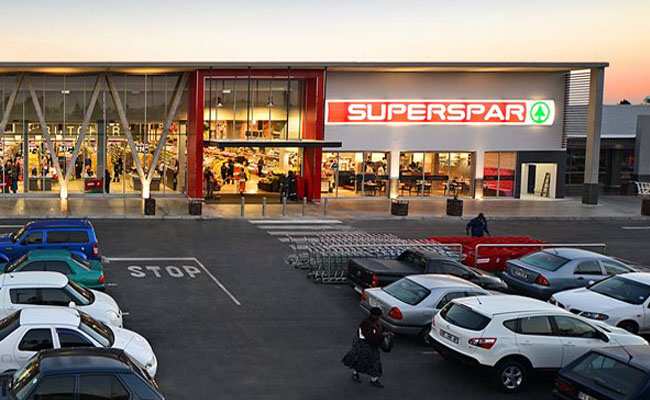
Spar went the other way, warning that earnings would roughly halve. Again, most of the problem was self-inflicted: a distribution-centre failure and an over-aggressive Black Friday strategy, not simply “the economy”. The consumer did not write that result; management did.
Same shopper. Same pressure. Very different outcomes.
A reason to return
Put it all together and the picture of the South African consumer is clearer than the noise suggests. People are under real pressure, but they are not behaving irrationally. They are still spending, but they are guarding the essentials, looking for value and walking away from businesses that waste their money.
The companies that did well this season were not necessarily the ones that sold the most. They were the ones that got leaner, lent more carefully, invested where it mattered and gave customers a reason to come back.
In a tight economy, it is tempting to treat every soft number as proof that the consumer has finally given up, but I do not think that is right. Consumers are still doing what they have always done in difficult times: adjusting, prioritising and becoming more selective. The harder question, and the more useful one, is whether management teams are adjusting just as well.
Alyssa Viljoen is the MD of Merchant West Investments.
ALSO READ:
- A good year for Lewis, Tiger and Nampak. The rest, not so much
- Inside Shoprite and Pepkor’s fintech pivot
- Roll on 2029 as Pick n Pay delays breakeven, again
Top image collage: Rawpixel; Currency.
Sign up to Currency’s weekly newsletters to receive your own bulletin of weekday news and weekend treats. Register here.