
Last week, the US Federal Reserve kept interest rates unchanged, and US borrowing costs shot up.
This seismic schism, say traders, was overwhelmingly due to Fed chair Kevin Warsh’s decision to say less, not more, and leave the guessing as to the Fed’s intent on interest rates up to the markets.
It is a decisive break with decades of US central bank policy that has relied on carefully crafted communication and forward guidance to shape expectations.
“He wants the markets to assess data rather than him signalling,” says James Turp, a fixed income portfolio manager at Ninety One. “That’s a big change, whereas previously they’ve had dots, as they call it, which gives you an idea where monetary policy is going.”
Chris Hattingh, executive director at the Centre for Risk Analysis, agrees that Warsh’s core philosophy is to eliminate forward guidance and to shorten policy statements to force market participants to react to economic data, rather than what they think the Fed will say.
“So, if you compare him to people like [Ben] Bernanke and [Jerome] Powell, where every single word of their statements was scrutinised and taken as a signal and what it could mean, Warsh is trying to break with that cycle.”
The silent type
“He’s a bit like Trump in that way; he’s going to do the strip down messaging even if it makes markets jump a bit more,” says Hattingh.
But for Johann Els, PSG Financial Services’ chief economist, this is a negative “because less transparency creates more uncertainty and, ultimately, more market volatility”, he tells Currency.
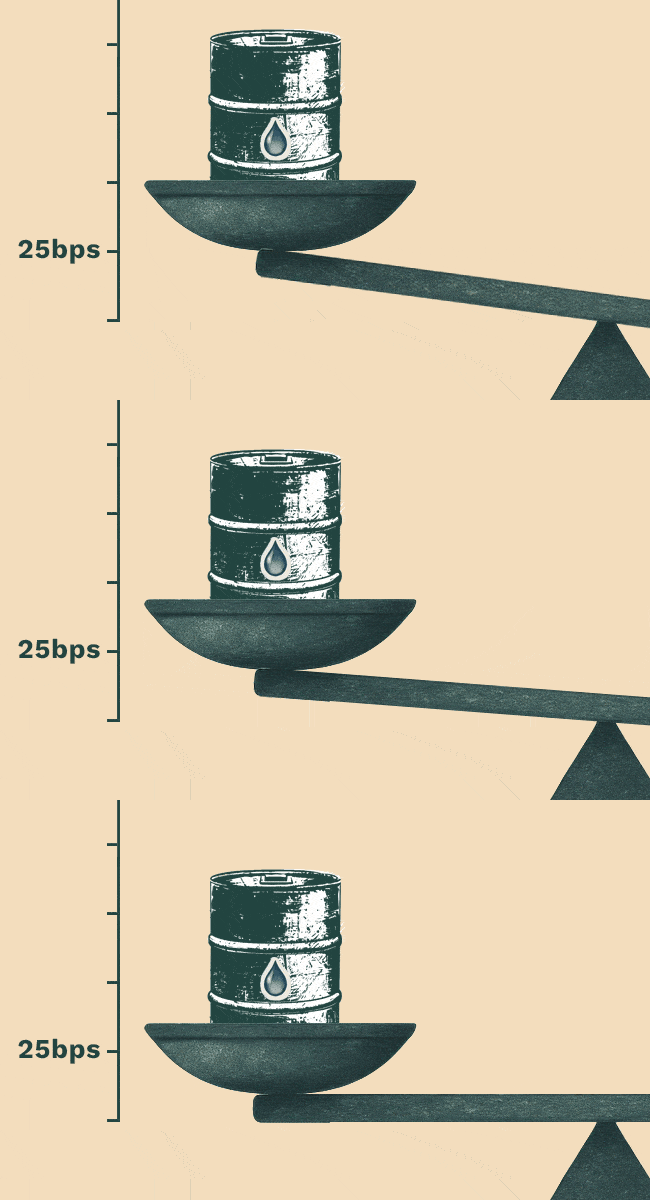
As to whether rates should have been held steady or hiked, there was clearly internal dissent, too. Of the 12 voting members on the Federal Open Market Committee [FOMC], three had pushed for a rate hike of 25 basis points.
“Warsh seems to like the idea of dissent and discussion within the FOMC as opposed to wanting it all to be unanimous, so that’s another seeming trait that he introduces,” says Turp.
The dissenters, ironically, may have got their way: because mortgage rates in the US are linked to longer-term bond yields, when those yields move higher, mortgage rates also rise and consumers feel the impact. “In other words, financial conditions have tightened even without another Fed rate hike,” says Els.
One local strategist grappling with the apparent contradictions of last week’s Fed meeting is Old Mutual’s Izak Odendaal, who noted that while Warsh made “several dovish comments that implied he does not favour rate hikes”, he also seemed to welcome the higher longer-dated bond yields.
“He might therefore be satisfied with the outcome, but if it is tighter policy you’re after, why not raise rates? Or explicitly lay out another plan for getting inflation under control,” Odendaal reasonably asks.
This all matters because more volatile US bond markets affect global capital flows, influence the dollar, the rand and, ultimately, South Africa’s inflation outlook.
Communication still key
Over the long-term, Hattingh believes Warsh’s “policy” is a “macro-philosophical” style that markets will get used to. “I don’t rule out that central banks can reduce communication without increasing market volatility,” he says. “If markets get used to reading shorter Fed communicating statements, then focusing on other data, over time you can shift that pattern but it’s going to take a while because obviously it’s very different from what came before.”
And having held rates steady for five consecutive meetings, Els believes the Fed won’t hike interest rates this cycle.
“The leading indicator has been weakening since early 2022, the labour market has softened recently, and inflation has surprised slightly to the downside, and it also looks as though most of the tariff impact has now worked its way through inflation,” he says.
The analysts Currency spoke to suggest that more central bankers may now follow in Warsh’s deliberately ambiguous footsteps.
“It wouldn’t surprise me if Argentina’s central bank did the same for example, but I don’t think most other central banks and their chiefs will do that yet. But again, this might be a long-term trend that we see developing but we’ll need to look at data points over a long period of time,” says Hattingh.
Uncertainty around the Fed’s decisions could take more than one direction regarding the rand. “It’s been holding up quite well lately, notwithstanding that the SARB didn’t hike rates,” says Turp. “The rand is not as vulnerable as it’s been because our fiscal position is in a better place; [it’s] not behaving like the rand of old.”
Els doesn’t necessarily see more pressure on emerging markets or the rand. “If anything, less transparency could simply add to dollar weakness over time. We continue to expect a weaker dollar cycle, and even the recent dollar recovery has been fairly modest by historical standards,” he says.
This bodes well for emerging markets.
“If there’s a bit more volatility and uncertainty, it might make investors more comfortable about holding emerging-market risk maybe,” says Hattingh.
“If the yields on African government bonds continue to come down, which they have since the formation of the government of national unity, that puts us in a stronger position, and should US bond yields continue to increase it might give the rand some breathing room,” he says.
This story was produced in partnership with Stanlib Asset Management.
ALSO READ:
- Kganyago joins revolt against Trump’s Fed threat
- Trump-Powell tensions flare as DOJ targets Fed
- Dizzying reversal in oil prices has rates in and out of play
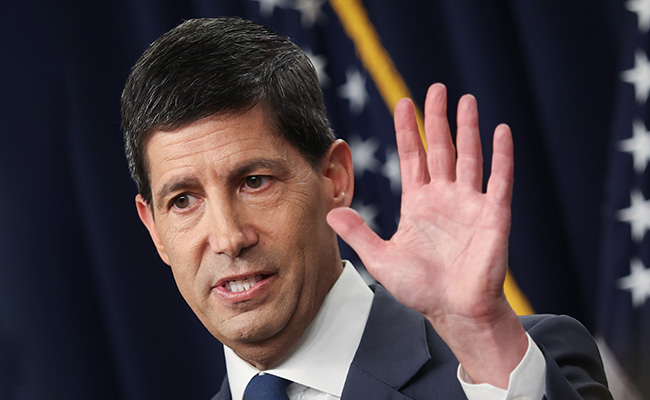
Top image: Federal Reserve chair Kevin Warsh. Picture: Win McNamee/Getty Images.
Sign up to Currency’s weekly newsletters to receive your own bulletin of weekday news and weekend treats. Register here.