For many parents, the first conversation about education starts with a simple question: where should we send our child to school? It is often asked years before a child’s needs or interests are clear. Yet behind that question sits one of the most significant long-term financial responsibilities a family will carry.
Education funding is a predictable, inflation-sensitive commitment that forms part of a household’s financial foundation. When it is not planned deliberately, it begins to compete with other core goals – most notably retirement.
Education pathways today are varied. Families may consider fee-paying public schools, former Model C schools, private schools or online options. Planning early does not lock in a decision. It preserves flexibility when decisions need to be made.
The data provides perspective
Between 2000 and 2025, average consumer inflation in South Africa was approximately 4.85% per year, according to Stats SA. Between 2012 and 2023, school fees have increased at roughly 2.6% above inflation annually. Education costs have therefore been rising closer to 7%-8% per year over extended periods.
That difference compounds.
Based on publicly available fees from former selected Cape Town Model C schools (such as Rondebosch Boys’ Schools and Westerford High School), the average Model C school costs about R70,000 a year. Over 12 years of schooling, that equates to R840,000 in today’s terms – before annual increases and additional costs such as uniforms, sport and cultural activities.
What often surprises families is not the first year’s fee, but the cumulative effect over more than a decade. As increases compound, education becomes one of the largest expenses many households face outside of housing.
The 2024 Wonga Consumer Spending Survey found that about 10% of monthly income is allocated to school fees. Education is already embedded in household cash flow. When costs rise faster than inflation and families do not plan explicitly, pressure builds elsewhere in the financial plan.
What would you need to save from birth?
If 12 years of former Model C schooling costs about R840,000 in today’s terms, what would you need to do to fund it?
A parent who saves from their child’s birth and achieves a long-term real return of inflation plus 4% would need to invest approximately R2,300 per month in today’s rands. Over 18 years, that equates to total contributions of roughly R500,000, with investment growth funding the balance.
The earlier saving begins, the more compounding does the heavy lifting. Starting at age 10 instead of birth would require a materially higher monthly contribution because the time horizon is shorter.
If you have not yet started, the opportunity has not passed. As the well-known saying goes, the best time to invest was yesterday; the second-best time is today.
Where the pressure shows up
Recent retirement withdrawal data offers insight into how funding gaps are being absorbed. Research shows that once individuals access retirement savings early, they are likely to do so again. Education accounts for 25% of withdrawals, with peaks between December and February when school fees fall due, according to an article posted by Moonstone Information Refinery.
The instinct is understandable. School fees are immediate and visible. Retirement is distant.
If a parent withdraws an amount equivalent to one year’s average former Model C school fee – approximately R70,000 – from retirement savings at age 35, the cost extends far beyond that amount. Assuming a real return of inflation plus 4% over 30 years, that capital could have multiplied several times by retirement. What is forfeited is not only the capital, but the compounded growth on that capital.
This applies whenever education is funded reactively from long-term savings. Capital intended to compound over decades is redirected to meet a short-term obligation.
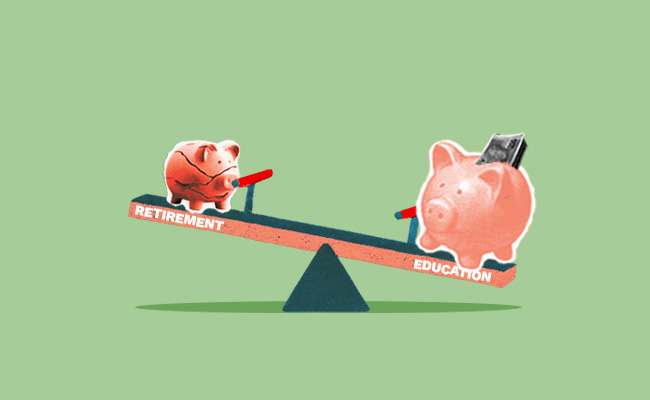
When asked to rank children’s education against retirement, most parents will prioritise education. The better question is whether planning began early enough to avoid that trade-off.
What to do
- A practical approach: Education funding does not require complexity. It requires structure and consistency.
- Start early: Time reduces pressure. Beginning when a child is born allows smaller contributions over a longer horizon. Delaying increases reliance on current income or other savings. If you did not start at birth, the opportunity has not passed. Starting now – even with a modest amount – is more effective than postponing the decision.
- Invest with the right objective: If school fees are rising faster than inflation, savings must grow accordingly. Over longer periods, this typically means diversified growth assets rather than relying solely on cash or fixed deposits. Cash has a role in the short term. Over 10-15 years, however, it often fails to keep pace with education cost inflation.
- Ringfence education savings: Separating education funds from general savings reduces the temptation to access them during periods of financial strain.
- Budget deliberately: Education should form part of long-term cash flow planning, alongside bond repayments and retirement contributions. Financial management is learnt behaviour, not a function of income.
The retirement implication
South Africa faces a retirement adequacy challenge. Many households are under-saving relative to what they will ultimately require. When retirement savings are accessed to fund education, that challenge deepens.
Education spans just over a decade. Retirement may span 25-30 years or more. Using retirement capital to solve short-term funding gaps interrupts compounding and reduces long-term security.
Small withdrawals may appear manageable in isolation. Over time, their cumulative effect can materially reduce retirement capital.
Planning removes the tension
Parents will continue to prioritise their children. That instinct is not in question.
The role of sound financial planning is to remove tension between competing goals. When education funding is structured early and consistently, it becomes manageable. When it is deferred or funded reactively, pressure builds and difficult trade-offs follow.
Education and retirement do not need to compete. With deliberate planning, they can coexist within a sustainable financial framework.
Craig Lawrence is a certified financial planner at BDO Wealth.
ALSO READ:
- Retirement dreams, real numbers: Are you truly prepared?
- Smart money tips from your first payslip to the last
- These are South Africa’s priciest schools for 2025
Top image: Rawpixel/Currency collage.
Sign up to Currency’s weekly newsletters to receive your own bulletin of weekday news and weekend treats. Register here.