
It is difficult not to venerate the fig, even if their companion wasps (only the size of a sesame seed) give you the heebie-jeebies.
The oldest fruit on the planet, figs developed when dinosaurs were roaming around Pangea, some 80 million years ago. Thankfully, they were sturdy enough to weather the impact of an asteroid, global extinctions and continental drift.
This hardiness and heartiness prompted our ancestors to cultivate figs from as long as 11,000 years ago, which means that they predate the domestication of wheat, barley, and legumes.
Pliny the Elder describes 29 species
Just before Vesuvius blew its top, Pliny the Elder described 29 exotic species of figs in Volume 3 of The Natural History. Some were conical and the size of pears, some round and red and small as an olive. The latter’s tree had a stem a cubit thick (that exacting measurement the size of a pharaoh’s forearm) and delivered 270 modii of fruit. I know. Whatever.
Today there are around 800 fig species and nearly as many of monogamous wasps to pollinate them, some of whom fly 150 kilometres for the pleasure. More than 1,200 mammals and birds rely on figs.
Indonesians believe two deities carved the first man and woman from a fig tree. The Buddha found enlightenment under a fig; Vedic texts refer to these trees as the body of the gods, using their wood in fire rituals and their leaves in medicine; and a myth from the Congo Basin has it that a hunter born from a fig tree used its bark to fashion cloth for going out in public. People in parts of Uganda still strip, soften and beat the bark into textiles. Because it’s generally tropical, the fig is a contested fruit, along with pomegranates, for the roll of “apple” in the Garden of Eden since, after all, Adam and Eve’s first catwalk sashay involved their leaves.
What to eat with figs
Figs are a generous and compatible pome, palling around with nuts, cheeses, chocolate, honey, oranges, vanilla and rich meats like duck and liver. As slurpy when perfectly ripe as a sweet, plump oyster, they are especially friendly with warm spices and fatty, salty ingredients like blue cheese or prosciutto. (Piggy-Figgy was an appropriate name for an antipasto platter I once shared.)
Mariana Esterhuizen, who ran the delightful eponymous Stanford restaurant, served hers with goat’s cheese and biltong. And as someone who enjoys gilding lilies, I can recommend the addition of a noble late harvest or fortified sweet wine reduced to a sticky syrup drizzle.
Cooking with figs
Figs can be pickled, roasted, baked into cakes and tarts, and can be a key ingredient in starters, mains and puddings.
The French open them fresh, entomb a whole shelled walnut inside, pinch them back together and then leave to dry in the sun. They call it nougat du pauvre – poor man’s nougat.
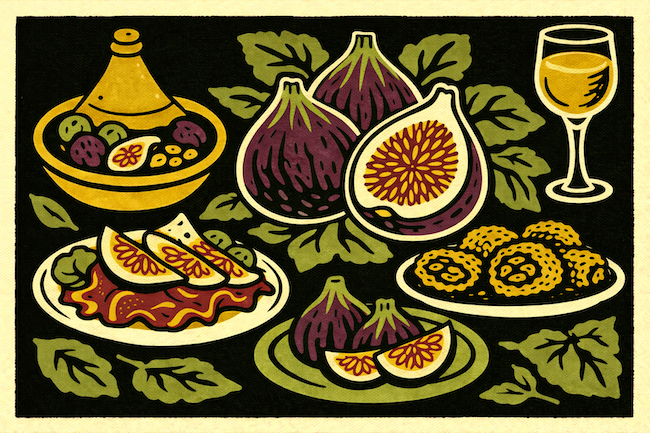
In Spain, little tapas cakes called pan de higo are made from almonds and figs, spices and honey, and coated in sesame seeds to serve with cheese. In Fez, you’ll find figs in a tagine of chicken and walnuts or grilled to caramelise after sprinkling the insides with lemon juice and caster sugar.
And fig salads made with blue cheese, or feta, or grilled halloumi, with rocket, fennel and a thyme-honey vinaigrette are nearly universal.
Figgy pudding from the ancient English Christmas song requires pyrotechnics that would satisfy the family arsonist, and combining dried figs with cream cheese and a little salt is even better when the addition of anise seeds creates pops of liquorish fireworks.
Stew figs and dice them into rice pudding topped with butter-toasted pine nuts and cinnamon. Haul out the food processor to make dried fig and olive tapenade with rosemary and balsamic vinegar. Combine late-season plums with figs, cinnamon and cloves in a jam or conserve. Preserve figs in rosemary and port. For the less adventurous in the kitchen, go ahead and dip some figs in melted dark chocolate and sprinkle with sea salt to add an exclamation point to your meal.
The Zuni café in San Francisco makes a chicken braise easy enough for weeknights. Or try stuffing a pork tenderloin with some toasted breadcrumbs softened in stock along with sautéed cubes of fennel, onion, and garlic. Mix in fig jam and a little balsamic. Tie, brown and roast.
Figs can be extremely persuasive: Pliny the Elder also recounts in his Natural History that Cato had been rabble-rousing in the Senate for a third Punic war, ending all his speeches (no matter what the topic) with “Carthago delenda est” (Carthage must be destroyed). He finally stirred his toga-clad colleagues to take up arms by holding up a fresh fig plucked there a day or two before to illustrate how close Carthage was to the gates of Rome.
Love our Rural Cook on figs? Try her on tomatoes next…
Top image: Currency graphic
Sign up to Currency’s weekly newsletters to receive your own bulletin of weekday news and weekend treats. Register here.